Showing posts with label writing blog. Show all posts

Tuesday, September 14, 2021

Sorting Out Point of View


One of the most difficult things for new writers to learn is the Point of View in writing fiction. Today's post is a repeat with a few additions, but still important now. The importance of the point of view, or whose story is this, cannot be stressed enough. My article below:

 A no-no in fiction writing is changing the Point of View back and forth in one chapter. When you are writing a novel, you need to choose one person who will help the reader 'see' the story through his/her eyes. There are, of course, other characters who help move the story along and who are important to the story itself. If you change the Point of View back and forth between characters, you'll be doing what is often called 'head-hopping.' All it does is serve to confuse the reader and sometimes irritate them. If Jennie is your protagonist, let us see the story through her eyes. Let the readers know how she reacts, what she thinks, her relation to the other characters. 

Does that mean we can't ever know what the other characters are thinking and more? The writer can let the reader see these things in the other characters by the way they act, through dialogue, and showing rather than telling. Let your protagonist 'see' what is happening by showing what another character is doing or saying. 

There is a way to have more than one Point of View character, and that is to change that POV character chapter by chapter. One chapter could be all seen as Jennie sees what's happening. The next one might be Charlie's POV. It takes an experienced and talented writer to pull it off. Some even attempt to use three POV characters

POV is a complicated issue. If you're at all confused, google a more detailed article or a book on the topic.  Keep in mind that your Point of View is the way you see things. Just you. No one else.

Monday, September 13, 2021

Writers As Mountain Climbers


On our writing journey, we have one happy day after another. The sun always shines on our writing. We are gleeful day in and day out. 

If only all the above were true! Instead, our writing journey is filled with potholes and other roadblocks. Our poster today tells us that everything is going to be alright. That's soothing. But then, the little girl says '...maybe not today but eventually'  That's the hard part.

Our own common sense tells us that all those problems we run into when we write will be fixed or look better later, not necessarily today. What we must do is to remember that and not let what feels like an insurmountable problem knock us right off our writer's pedestal. 

Writer's pedestal--you know that place we put ourselves when we're feeling good, when everything is going well, or when we've just received an acceptance, or published a book. And why not? When life is positive, we should enjoy whatever is happening. We know we'll slip right off the pedestal when the next trouble spot arises.

The writer's world is one of ups and downs. If you drew a graph showing same, it would look like a series of mountains. Isn't that what we do as we write? Climb one mountain after another until the problem is solved. The successful writer is the one who keeps climbing after she/he has slid down from one of the peaks. The writer who gives up sits at the bottom and stops trying to climb to the top of the next mountain.

We sometimes need an attitude adjustment when writing woes get us down. Once again, determination is key to solving our writing problems. That and knowing that it is up to us to get through whatever trouble spot we're in. 

We also must keep in mind that eventually, everything's going to be alright.

Wednesday, September 1, 2021

Your September Writing Life


A brand new month

Did you turn your calendar page this morning? It's always a good feeling when I do that. The month is fresh and waiting for me to fill it with numerous things. Lots of groups that took the summer off will start up again. Fall sports will beckon those who like watching them in person or on tv. The grocery stores will have fall decorations and fall foods featured. And yes, Halloween decorations will be for sale, a full two months prior to the date. 

What about your writing life this month of September? Will it stay the same or might there be some changes? If you check that list of goals you made last January (you did do that, didn't you?), which ones did you fulfill and which are you still working on? Maybe it's time to set a few goals for this month only. Make your list short so you aren't overwhelmed. 

Will your writing be fall oriented? Or will you continue with whatever writing projects you have been working on? When the weather changes and leaves begin to change color or even float softly to the grouond, you might be inspired to write something that matches. Do anything you can outside, for soon it will be chilly, then cold and wintery, and your outside activities will be limited. While you're out walking this month or watching a high school football or soccer game, use your writer's eye to find new story ideas. New season breeds new ideas. 

This month we start to ponder fall foods. Apples, pumpkins, and squash come to mind. Soups and stews sound more appealing than they did in the beach and sun bathing months. Have you ever written about the foods you prepare and eat in this early fall month> There would be a market for them in food magazines or ones that feature remembrances. 

Even if the 21st is the official beginning of this season, most of us think of it as soon as we see that September calendar page. So shift gear into fall starting today. Labor Day weekend is right round the corner. Most of us consider that holiday weekend as the end of summer, the onset of fall. 

Turn your calendar page today and celebrate the beginning of our fall season in as many ways as you can, but please do consider your writing world, too.


Thursday, August 26, 2021

Writer--Don't Be So Hard On Yourself


(NOTE:  This is a repeat of a post from a few years back. It's still worthy advice.)

For those who are regular readers of this blog, you've heard me say that lots of negatives in our writing life are good lessons for us. The one thing they are not is a 'life without pardon' kind of sentence. Go ahead--make mistakes, learn from them and move on.

We learn from rejections, especially multiple rejections on the same submission. At least, we hope we learn something and we will if we give it a few days to rest and then go through whatever was written with an objective eye. Pick out the parts you think did not appeal to an editor. Maybe it was a lot of mechanical errors. Or perhaps the clarity factor was pretty low. It might have been a dull report without any emotion or sensory detail. 

Consider yourself fortunate if the editor returns your work with a note telling you why it was rejected. There is no question then as to what you must correct but not all editors take the time, or are kind enough. to do that. Don't let it be the end of your writing world. Move on!

What if you received a brutal critique from another writer? Ouch! It does hurt and any good critiquer will be fair and honest and deliver with a dash of kindness. However, not everyone is like that. You don't have to like what the person told you, but you can learn from it. There is no need to back into a corner and put your hands over your eyes and let forth with a piercing scream while you contemplate your next step in life. Sadly, there are writers who have given up writing after an experience like this. Today's quote is perfect for them. It was one person's opinion and perhaps a good lesson. But you should never feel that you must quit over a singular incident such as this.

Did you ever have a teacher who scribbled cruel words across your essay or poem that you slaved over for your English class? I know people who have a mental block when it comes to writing because of just such an experience. Again, it's a lesson, not a life sentence. As a teen, it was probably hard for us to take that objective look and figure out what was wrong, what lesson was learned. But, now as an adult, it something like this still haunts you, put it in perspective. Don't let one person keep you from being the writer you wanted to be. An attitude of I'll show them! Will serve you better here.

It's much harder to look at problems like these as a lesson to be learned than it is to give up. Giving up is easy; working at the lesson is a tough job but, oh, so beneficial. 


:

Friday, August 20, 2021

Let Seasons Figure in Your Writing


Summer Flowers

It's the 20th of August with summer days dwindling to a precious few. September brings the official beginning of fall, but not until a month from now, so we can continue to enjoy summer days until then. 

We talk often about a sense of place in writing, but what about a sense of time? The time of the year can play an important part in what you're writing. You should try to portray a sense of the time of year in your fiction and your memoir or family stories. 

Let's look at what you might include:

A.  Summer:  flowers, heat, swimming, baseball, biking, hiking, mowing grass, mosquitoes, storms, certain foods eaten more in summer, roller skating, 4th of July, sweat, sunburn, convertible with top down, and more, picnics

B.  Fall: colored leaves, falling leaves, cool days, bonfires, Halloween, sweaters and sweatshirts, apple and pumpkin recipes, football, soups and stews, other foods eaten in the fall, school days, Thanksgiving, Christmas preparations in early December, fall flowers

C.  Winter:  snow, sledding, pro football, basketball, Christmas, New Year's Eve and Day, icy roads, skating, heavy clothes, foods eaten in winter, Valentine's Day, St. Patrick's Day, bare trees, garden catalogs to read, fireplace, gets dark early, holiday foods, sleet

D.  Spring:  spring flowers, kites, lighter jackets, tornado season, warmer days, but still some cold ones, Easter, Mother's Day, Father's Day, end of school year, graduation, May Day, lighter in the evening, 

There are many parts of each season that you can bring into your stories, memoirs, and poems. Noting all these things we think of at different times of the year will give your reader a better picture of when the story happens and lets them relate to the particular parts of each season. 

I once wrote a poem about summer days aiming at a children's magazine, but it's one adults can relate to, as well. My aim was to define summer in a simple way. 

Summer’s Song


Sing to me of

marshmallow clouds

and rainbow skies,

of baseball games and 

ice cream cones,

buttercups and

ladybugs


Tell me about

white sand beaches

and clear blue lakes,

county fairs and

lemonade stands,

lightning bugs and

thunderstorms


(c) Nancy Julien Kopp


Friday, August 13, 2021

Bring a Sense of Place Into Your Writing


Several years ago, I listened to an editor of a travel magazine give a presentation on the sense of place in writing. I'd never given a great deal of thought to the topic, but ever since, it is something I watch for in my writing and others' work, as well. 

When we weave a sense of place into our short stories, books, and personal essays, we give the reader a clear picture. I recently read a book that left me wondering about the physical characteristics of one of the main characters. I wanted to 'see' her more clearly. It's possible that I could relate to her and the story better than I did. It's the same when we bring a sense of place into our work. We want the reader to feel like they were there, that they can see the place where the story happens very well.

Don't spend several paragraphs describing the place where the action occurs. That's telling and a bit boring. Show the place as you weave bits and pieces into your story.

Place does not always have to be a state, country, or land. It can be a block, a neighborhood, a house, a business, or even one small room. Place is what surrounds your characters. It may even make your characters act a certain way. 

I grew up in a 3-story apartment building that housed around 65 singles, couples, or families--mostly families. That building affected my life in many ways. Below are two paragraphs from one of my family stories that might illustrate this point. It's about a special lunch we always had at least once when my grandmother was visiting. 

(From Love on a Plate)
I lived furthest from school so traveled alone on the final two blocks. The sight of our large red-brick apartment building usually made my stomach growl with hunger. I'd walk a little faster, adding a hop, skip, and a jump now and then. Cars rumbled past on the brick street, and trains that ran parallel to the road often rolled and clattered by. Our vestibule doorway was one of seven entryways surrounding the formal grassy courtyard in the center of the U-shaped building. My degree of hunger set the pace as I scurried around the bushes and green area that led to our entrance.

I knew the day that  Grandma made a special lunch had arrived when the aroma of hot date muffins greeted me the moment I opened the vestibule door. At the first sniff, my heart skipped a beat, and I felt a flutter of excitement deep inside my stomach. My nose twitched with genuine pleasure as the scent of the hot muffins floated down all three flights of stairs. My feet slid quickly across the cold, tiled entryway door to the softer, carpeted stairs. My fingers touched the smooth stairway railing only once or twice as I flew up the steps to the third floor following that ever-stronger fragrance.

I wanted to show the reader the place where we lived as well as the joy of the day Grandma made date muffins for lunch. My home was different than many of my classmates who lived in single dweller homes. Some lived in what we called a 'two-flat' which had one apartment on the ground floor and one on the second. 

The place where you lived as a child has great bearing on your family stories. Whether it was a farm, a ranch, by the seashore, or in a big city makes a great deal of difference in those stories you tell about your growing-up years. 

Don't tell us that Ella walked through a forest. Give us a sense of what that forest was like. Show us how the forest affected Ella as she walked. If Phillip is running away from the bad guys in a tenement area of a major city, that place influences what he does, where he goes, and whether he escapes or not. 

Place can almost be considered another character when you are writing fiction or even a family story. Give place the importance it deserves. 


Wednesday, August 11, 2021

Orphans in Our Writing Files


Question for today:  How many unfinished pieces of writing do you have in your files?  The follow-up question is:  Why are they not completed?

If you answered yes to the first question and " don't know." to the second, you're not at all unusual. Most writers have numerous stories, essays, articles, and poems that are not finished. Can you answer that 'Why?' question honestly? 

Maybe you merely lost interest in the project. It happens when we aren't satisfied with what we've written, or we hit a problem area, and it seems to be too much work to fix it. The easy way out is to put it in a file for 'later.' Maybe it wasn't as good an idea as you originally thought. Easier to move on.

Perhaps you honestly meant to go back and finish a story, but a new idea came up, so you worked on that and then another one and it kept on going. The little orphan story stays in the file, possibly forgotten.

Maybe it was a Christmas story, and it was January when you started it. You filed it thinking there was plenty of time to work on it before summer when it should be submitted. Then you get busy and just plain forget it. 

My suggestion is to make it a once-a-month practice to go through the file of unfinished pieces. Pull one and give it your full attention. Finish it! Submit it! You benefit by having a new piece of writing that is completed and ready to market as well as the satisfying feeling you will receive. Don't try to do them all, one after the other. Once a month is fine. That still gives you plenty of  time to work on new story ideas.

Don't neglect those unfinished pieces. Maybe the problem areas will suddenly become more clear to you as you search for solutions. Maybe the initial excitement for the project will rise up again and inspire you. There are all kinds of 'maybes' involved in reworking old stories. Give it a try. Start checking your files for unfinished work and see what you can do to complete each one so it is no longer of orphan status..

Sunday, August 8, 2021

Are You Happy With Your Writing Life?


Do problems in your writing world make you upset, unhappy, or angry? Do you feel more frustrated than satisfied when you are working on a writing project? 

It might be time to step back and take a good look at your writing life. The list of questions below could be of some help.

A.  Do you look forward to starting a new writing project?
B.  Does writing to deadlines make you nervous or sick to your stomach?
C.  Can you eventually solve most of the problems you encounter when writing?
D.  Do you still get a thrill when your work is accepted for publication?
E.  Have you learned how to handle rejections?
F.  Is writing a chore or a pleasure most of the time?
G.  Do you spend a lot of time worrying about your writing life?
H.  Do you get excited when you begin a new writing project?
I.   Are you happy when you're writing?
J.  Is finding time for writing a major problem?
K. Do you enjoy attending writing workshops and conventions?
L.  Does finding a new story idea make you feel excited?
M. Does your family support your writing journey?
N.  Do you deal with self-doubt on a regular basis?
O.  Do you detest the process of revising and editing?
P.   Do you feel satisfied when you finish a writing project?
Q.  What made you want to be a writer?

There are more questions that you can ask yourself, but the list above will help you see a picture of your writing life. Are the positives and negatives fairly well-balanced? Or were your answers heavier on one side or the other? 

If the heavy side was the negatives, then it's time to ask yourself whether you want to continue with your writing journey or call it quits. Don't be in a rush to say you probably should quit. Instead, ask yourself how you can change some of those negatives into positives. Attitude plays a role here. If you want to continue to pursue your writing journey, you can change things slowly but surely. Set small goals and work to achieve them. 

If your answers resulted in a long list of positives, feel satisfied and keep on writing. If you had even a few negatives, consider working on them to make that positive list even longer.

All writers have moments when we feel like we shouldn't continue, moments when we are unhappy with our writing life, moments when we don't know how to solve the problems. It's part of being a writer, but when those feelings completely take over your writing life, it's time to step back and make some decisions. 

Tuesday, July 20, 2021

The Importance of Sensory Details in Your Writing


Today's post is an article that I wrote for a Children's Writer's Newsletter a few years ago. Although originally geared to people who write for children, the information works just as well for those who write for adults. I interviewed two people I considered experts in their field for the article. 

The Icing On The Cake

A cake with no icing is about as appealing as toast with no butter. The basic food is there, but the special something that makes it taste so good is missing. The icing makes the cake sweeter, prettier, and more appealing like the birthday cake pictures in today's post. A story may have a good plot, but without the little extra, it may end up being rather ordinary.

Sensory details enhance a story like the icing on that cake. We use our five senses hundreds of times a day without being conscious of doing so.Think about the many everyday things you do that involve your senses.When you look out your kitchen window and see a bird, your mind registers more than the fact that you saw a bird. You know that it is a bird, you know the color, the size, and perhaps the sound it makes, you know how oft the feathers would feel if you stroked it. We see, hear, smell, taste and touch with our daily experiences, so why not include them in our stories?

Children relate to things in their personal surroundings. They know that the bristles of a brush might feel scratchy. They squeal with delight at he sound of the ice cream vendor, and they wrinkle their noses when taste-testing a new food not to their liking. Include these experiences in the stories they read, and you could end up being a sought-after author-the writer who made the story come alive.

Margaret Shauers, author of many children's stories and regular columnist at Write4Kids, says "The way humans communicate is through shared experiences and emotions, and we experience life through the five senses."Ms Shauers has a word of warning. "We rely too much on sight and need to hone our skills at the other four. Keeping a sense diary helps-a short sentence or two about each sense every day." She admits that it is easiest to include sight and sound in children's stories. Touch runs a close third, but taste and smell are senses she must concentrate on when she writes.

Look at the sentences below. Which example in each set is more interesting?>

A.  Sam saw a big wave.  Or   Sam's heart leaped in his chest when he spied the huge wall of water headed his way-taller than his basketball goal at home.

A few added words allow the reader to see the wave headed for Sam.

B.  Sally heard thunder.    Or   Sally covered her ears when thunder boomed overhead and echoed across the prairie. The wind whistled through the tall grasses as she raced toward home.

We know that the noise is very loud if Sally has covered her ears, and we can discern the sound in the grass, too, through the active verb form.

C.  The dead mouse smelled bad.    Or    The rotten stench of the dead mouse made Susie gag, and clap her hand over her nose and mouth.

Gagging and covering her nose and mouth illustrates the nasty smell so much better than simply telling the reader the mouse smelled.

D.  Tommy didn't like the vegetable.    Or    The slimy, green spinach sat on Tommy's tongue and refused to move any further. He'd never be able to swallow the bitter stuff.

Here we not only know what the taste is, but we can also see the vile veggie Tommy is trying to eat.

E.  Jody petted the cat.  Or   Jody giggled when the cat's soft fur tickled her hand as she stroked him.

The senses of both touch and hearing are evident in this last sentence.

Did you notice that the first sentence in each group was a telling sentence, while the next one showed what happened. Using sensory details remedies too much telling.

Picture book author, Barbara Santucci, pays close attention to sensory details in her three picture books--Anna's Corn, Loon Summer, and Abby's Chairs.Ms Santucci says "The more sensory details we include, the richer our writing becomes, and the more able we are to show and not tell the story plot and the emotions we are trying to convey." Anna's Corn is a story built around the sound of corn growing in Anna's grandfather's field.There is, of course, a good deal more to the story, but the music of the corn Anna remembers figures strongly in this tale of loss.

Ms. Santucci adds "Our writing should create concrete and vivid images in the minds of readers that help them experience the emotions of the characters, thereby creating a mind and heart connection between the story and the reader."

That "mind and heart connection" is what a children's author strives for. People who write for adults want the same connection.

Adding lively sensory details will achieve that connection more easily.For most of us, it's not a given. We need to practice writing those sensory details so that they become second nature when writing a new children's tale. Let sight, sound, smell, taste and touch be the icing on the cake in your stories.

Exercises:

   Keep a Sense Diary. Write a short sentence or two about each sense daily.

   Practice writing phrases that include sensory details

   Watch for sensory details when you read.

   Be observant. Take note of the sensory details in your daily life.

By Nancy Julien Kopp Nancy - November 25, 2014 (original publishing date)  


Monday, July 19, 2021

Passive vs Active Verbs


NOTE:  I think we are not going to stop getting two copies of each post until July is over. I have tried to eliminate one to no avail. 

We all use many passive verbs in everyday conversation. Consider how many times you include the words was, is, were or some variation of them. We do it subconsciously as a method of economizing our speech. Those words are short, and we know the point of what we’re saying lies in the words that surround those bland verbs. Hmm, maybe we can even call them 'blah' verbs. They all derive from the passive ver 'to be.'

But as writers, we need to find verbs that show the reader something, verbs that bring out sensory details. Using too many passive verbs is the mark of a new writer. I profess to guilt in that department, too, when I first started writing. It is also the mark of a lazy writer. The passive verbs come so easily while the active ones take some thought.

Which of the following sentences do you find more interesting? Which ones give a better picture to the reader? 

A. She is sad.

B. Sadness engulfed her.

A. We went to the beach.

B. We motored to the beach.

A. We were hot in the sun.

B. We roasted in the blazing sun. 

A. Alice turned around; her skirt moved, too. 

B. Alice twirled until her skirt billowed. 

The B sentences all bring a mental picture to mind and allow the reader to get into the scene far better than those passive verbs in the A sentences. In the final set, A has semi-active verbs, what we might call weak verbs. Again, the ones used in B are far more interesting and give a more vivid picture.

When you finish the first draft of a story or essay, look through it and mark the passive verbs. Then try to find active verbs to replace them. Use a thesaurus if you need some help. Read your work from beginning to end, and you’ll see how much stronger and more interesting it sounds once you change many of those passive verbs. Work on using active verbs whenever possible. 


.


Friday, July 16, 2021

About Those Adjectives We Use


The man in the poster is a writer at work. Let's suppose that he is revising and editing a first draft. He knows something is missing in the story he's written. But what?

It could be that his descriptions are pretty generic, that his adjectives don't give a clear picture to the reader. Or that he rarely uses adjectives. 

Conversely, he might be guilty of adjective overload. He thinks that one adjective looks a little lonely, so let's add a few more. What does he have in the end? An overly done piece of work. 

Let's look at a few examples where A is pretty generic and B gives a better picture:

A.  The woman sat in a chair at the ball game.
B.   The old woman sat in a folding chair at the baseball game. 
In A, we have the basics, but B let's us see the woman more clearly. We know her age category, the kind of chair she is sitting in, and what kind of game she is watching.

A.  The kitten lapped the milk in the bowl.
B.  The black and white kitten lapped the warm milk in the blue pottery bowl.
We see much more in B than we do in A. 

A.  The tree faced the mountain, and Jem placed her hand on the trunk as she gazed into the distance.
B.  The huge tree faced the snow-capped mountain, and Jem placed her wrinkled hand on the rough trunk as she gazed into the distance.
B tells us the size of the tree, the age group of Jem, a bit about the mountaun, and something about the tree's trunk. A tells us none of that. 

A.  Jimmy ran into the forest, determined to find his pet before dark.
B.  Jimmy ran into the dense forest, determined to find his faithful dog before the scary dark approached.
Again, B gives us a picture that is more clear and adds some interest, as well.

Now, look at these sentences. Which ones would you add something or take away words? Are there any you would leave as is?

A. Glenna rode the white stallion along the deeply rutted road, hoping he would not stumble and throw her into the deep canyon to her right. 

B.  George put on his very most favorite tie and then slipped into the navy plaid skinny fit sport coat as he got ready for the beautiful, exciting, wonderful dance in the park pavilion.

C.  Susan walked in the garden.

D.  The house leaned a little.

E.  Her ragged dress stood out among the girls who wore ruffles and lace. 

F.  Buildings crowded together in the downtown area of the city. 

Some of the sentences have too many adjectives, while others are pretty generic, telling the reader very little. Any one of the sentences can be changed or left alone. That is the writer's choice, but look at them again. Which ones do you prefer? 

Remember that one adjective per noun is generally enough. Make it two or three, and you may be heading for overkill.  Use none, and your reader is left with some questions in their mind. Adjectives help describe; they help show, but they should be used sparingly. 

Thursday, July 15, 2021

Everyone Can Write About Mothers


I have heard my mother's words slip out of my mouth more and more as the years go by. I think it happens to a great many of us. Sometimes the things we say that mirror our mother's comments are ones that irked us when we were younger. Sometimes, they are bits of wisdom she offered to us.

Rather than merely repeat things our mothers said, why not write stories about your mother? Most of you who read this blog regularly know that I am a great proponent of writing your family stories. But today, I'm narrowing it down to your mother. 

You can write about your mom for yourself, for your family, or for publication. I have written many stories about my mother for our family, but a good number of them have also been published in anthologies. Writing the stories for your extended family is a wonderful gift. 

If you have any thought of writing to publish your work about the woman who raised you--it could be your birth mother, a stepmother, or a mother who adopted you--start now to submit within the next few months for Mother's Day. Magazines usually want a 6 month window prior to the holiday you are writing for. So, if it's a Christmas story, send it no later than June. For Mother's Day, get it submitted by November. 

Write funny stories about your mom, or a sad time in her life, or a time when you were in big trouble with her. How did she react? What did she look like? What expressions did she have in the situation? Did she ever lose her temper? Did her sense of humor save the day at times? 

Write about her cooking skills or lack of them. Her housekeeping--good or bad? Was she a carpool mom or did she tell you to walk to school? What were her hobbies? Her favorite movies and songs? How did she dress? 

When you write a story about your mother, include details that give a picture of her. In these stories, you want to show, not merely tell the story. Let your reader, whether family members or readers of a publication, 'see' her through your words. 

Not everyone has a wonderful mother. Some people don't get along well with their mothers. Should they write stories about her, too? I would encourage them to do so. Not necessarily for publication or even to share with other family members. They should write it for themselves to help understand the difficulties in question. If she is no longer living, it can be a step in healing those hurt feelings than tend to linger.. 


Wednesday, July 14, 2021

Writers and Attitude


(Blog Note:  I think (hope) I have deactivated the feedburner email subscription so you should now start getting only one copy of each day's post from MailChimp) 

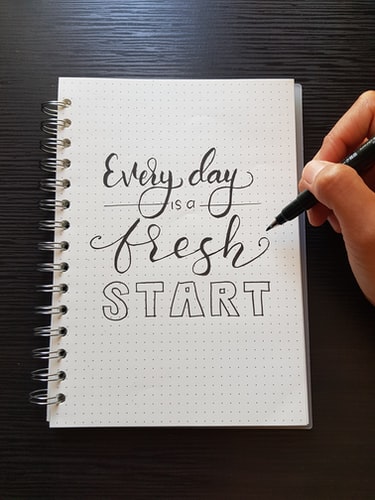
EVERY DAY IS A FRESH START. I think that sentence, taken from today's poster, is worth being written in caps. It's that important that we make the sentence an important one, perhaps even our mantra. Maybe we should ask our muse to wake us up each morning whispering in our ear: Every day is a fresh start. 

Think about it. Writers have problems to contend with on a daily basis. If you write, you have to skirt around roadblocks. You have to get across bumps in the road and learn how to handle what feels like an earth moving situation now and then. 

What problems do I mean? Rejection is one of the biggest. Mostly because we can allow a rejection to deflate us like a pin-pricked balloon. There's no question that rejections hurt us, anger us, or send us into temporary depression. Any of those things depends on our outlook. View it as defeat, and you're in trouble. Look at it as a lesson, and you can weather the storm much better. No matter what day you receive a rejection from an editor, remember that 'every day is a fresh start.' Put yesterday behind you. It's done. You're on to new and better things.

We all have problem areas when we write a story, essay, poem, or even a factual article. I've recommended many times that a writer walk away and leave whatever trouble that presented itself. The longer you sit and ruminate, the worse things can look. Leave it and remember that 'every day is a fresh start.' The solution may seem more clear if you wait until a new day to tackle the problem.

What if you're looking for new story ideas and you come up blank? It happens even though there are stories all around us. If you can't find anything new to write about on Wednesday, Thursday might bring some success. It's a new day and a fresh start. 

Remember that nothing in this writing game comes easy. We have to work hard to come up with story ideas and writing that is clear, concise, readable, and more. It doesn't happen every day of the week. But it might occur tomorrow when you have a fresh start. Put the problems behind you as you begin each new day, each chance for a new beginning. 

We can apply this quote to other things in our lives, as well as our writing journey. We can leave a trail of 'what ifs?' and 'why did that happen?' behind us. It's the positive person who prefers to look ahead and start each new day as a fresh start.

Monday, July 12, 2021

Set Your Writer's Voice Free


I've often posted a freewrite exercise here. For those who aren't quite sure what that is:  We use a prompt, usually a single word or a phrase. The writer is to start writing, no thoughts ahead of time. Write continuously for a minimum of 10 minutes without stopping. It doesn't matter what you write. Let it come from the recesses of your mind to your fingertips. Set a timer to help you know when to stop.

One of the big benefits of this type of exercise is that you may pull deep thoughts from your subconscious, ones you keep buried under normal circumstances. You also free your emotions and can bring forth some strong writing. When working on a story or essay, many writers tend to keep their emotions in check, refusing to let the reader see the real writer. It's then that someone critiquing your work will tell you to 'dig deeper.' They are trying to tell you that you've only skimmed the surface of your subject. It's more common than you think.

It's when we release those deeper thoughts and emotions that our writing becomes stronger and worth being published. As the poster for today says, it sets your writer's voice free. Suddenly, the real you appears. The more often you do a freewrite exercise, the easier it will be to let your writer's voice shine through. We establish a habit.

What if the majority of what you write in that ten or fifteen minutes seems like gibberish, worth nothing? It can happen, but you can also end up with the bones of a story or personal essay. You might find that you've written some excellent phrases. Those phrases might end up in a poem sometime.

Remember to write continuously without stopping. That is key for this exercise. Keep your thoughts moving as though they are on a wheel that keeps spinning. 

Prompts for a Freewrite Exercise

 A. Words

blue

lemons

regret

shock

flowers

bulldozer

Phrases for a Freewrite Exercise

a sip of tea

running through  a rainstorm

the grace of a woman

the strength of a man

a soothing lullaby

a bloody battle withiin


Wednesday, July 7, 2021

Dialogue Makes or Breaks a Story


A post from my files of the past. I noted that I had written numerous times on the topic of writing dialogue. That only shows that I feel it an important topic. Dialogue can make or break a story. Read more below...

Dialogue in stories is simply communication. You and I have been communicating ever since we uttered our first word--probably 'mama.' We do it so naturally when going through our everyday world, but when writing a story, there are a few things to keep in mind about dialogue. 

Let me preface my remarks by saying that Chicken Soup for the Soul editors like submissions that use dialogue. And they are not alone. Why? What does dialogue do for a story, either fiction or a true tale?

It helps move the story

It helps define the characters and their relationships

It illustrates the emotions of the characters

It makes a nice break in the narrative

It helps show rather than tell

It helps to create tension

It adds the human element

The Bits and Pieces of Dialogue:

Make it natural  There is nothing worse than stiff, stilted dialogue. If you're writing a story about kids who live in a blighted area of a large city, you better not use the language of a college professor. The way your character speaks helps to paint a picture of who they are. Using slang is fine if your character would most likely use it. Using vocabulary that only a word freak would use for these kids would be totally inappropriate. 

It's fine to use contractions because that is the way we speak to one another. I don't care if you can't go. It doesn't matter to me. That sounds more natural than I do not care if you cannot go. It does not matter to me. 

Tags  Beginning writers use various tags to show who spoke and how they said the words or how they felt. Some of the tags most used are uttered, yelled, whispered. Using said is the method of choice. That said becomes a word readers slide by. It's there but not noticed. Some will ask how do you show the way in which the words were spoken if all you use is said. Put an action or defining sentence before the dialogue. Pete slammed his hand on the table. "What do you think you're doing?" That preceding sentence lets the reader know that Pete is mad so he is probably going to yell, isn't he? It also does a good job of showing rather than telling as in this example. What do you think you're doing? screamed Pete. 

You don't need to use a tag after every piece of dialogue. If two people are in a lengthy conversation, use the tag after some but not all. The reader can usually keep track of who is speaking. Use a tag every now and then to keep things straight. 

How much dialogue A few writers have attempted to write an entire story using nothing but dialogue. A noble experiment, but it might be overkill for readers. I prefer to see a healthy balance between narrative and dialogue. What about using it in memoir  Memoir writers are depicting happenings of years prior to the time they are writing. They are writing true stories, so how are they going to remember the exact words someone spoke 25 years ago? It's almost impossible for them to remember word for word, but they do remember the gist of what was said. It's alright to create dialogue as long as it stays true to what the writer is remembering. 

Beware of adverbs  If you use adverbs with your tags, you're taking the lazy writer's way out. As stated in the section on tags, it's far better to use an action to show how the person is saying the words or is feeling than tossing up an adverb and letting it flutter down behind the said. You could say You've made me a laughing stock in this town, Susan said angrily. Instead, try something like Susan clenched her teeth and both fists. "You've made me a laughing stock in this town. The second sentence shows that Susan is angry while the first one tells the reader she's angry. 

There are many things to consider when writing dialogue. When you're reading for pleasure, be aware of the way dialogue is used. Note what you like or don't like. Then put it to good use when you write your own stories or memoirs.

By Nancy Julien Kopp Nancy - April 25, 2019  (original posting)


Tuesday, July 6, 2021

Travel Articles and Essays

Where in the world...?

If money was no object, responsibilities, and more proved no object, where in the world would you like to go? Why? How? With whom? And more!

The above is a lead-in to writing about your travels. Readers like travel stories which take them far from home through the words and experiences of a writer. Most of us do have limitations on travels, but that doesn't mean we can't dream about going. 

As writers, we can help people feel like they have visited an exotic place on our earth or just a local attraction.You can write a good travel article on a town 10 miles down the road from you. How you write the travel essay is key. Write a chronological day by day diary, and it's probably not going to be too exciting. I don't enjoy reading about another person saying things like 'we went here' and 'then we went there.' I want them to bring me with them, let me see and feel what they did. 

Good travel stories have emotion, vivid description, historical background on occasion, and something meaningful to the writer. The writer should make the reader feel like they are visiting the place side by side. Easy to say, but not so easy to do. Believe me. I've written several travel essays, and some turned out better than others. None are fantastic. I'm still working on that! 

The old show vs tell works in these kinds of articles/essays just as it does in fiction. Telling me about a marketplace in Morocco is one thing, but showing it to me is quite another. Showing me will allow this reader to feel like I am there with you. 

We know that creative nonfiction uses fiction techniques in relating an experience. You can use those same techniques in travel essays. If you are only planning to write an article, you might want only factual material. Make it a creative travel essay, and the world is yours in how you can approach it.

My husband and I visited Nova Scotia one summer. I wrote a travel essay about our visit to a very special little village. I'll paste it below for you. Is it more than factual for you? I hope so.

A Morning in Peggy’s Cove
By Nancy Julien Kopp

Early morning traffic in Halifax, Nova Scotia is not difficult to maneuver with two of us in charge. My husband, Ken, drives, and I read maps and signs, acting as navigator on this sunless June day. We make our way easily through the Canadian coastal city and travel beyond to the road that will take us to Peggy’s Cove.

I’m eager to see this tiny fishing village which friends have recommended, and I check the map once again to gauge the distance.

“You must be sure to go to Peggy’s Cove,” said one friend upon hearing we were planning a driving trip to explore Nova Scotia, one of Canada’s easternmost provinces.

“Don’t miss Peggy’s Cove,” said another.

Thus, the village is high on our list of places to visit.

Road-signs mark the route clearly, and soon we turn off the main highway onto a secondary road. We wend our way along the curving stretch of road. I search the sky for an absent sun and silently wish it would make an appearance. More clouds roll in, some dark and seeming to threaten rain. It is the first such weather we experience on our trip. Prior to today, the sun has spread its gentle warmth and renders our daily excursions most pleasant.

I wonder, as the car makes each twist and turn in the road, what can be so beguiling about Peggy’s Cove. I know that it is the site of the 1998 Swissair jet crash, but surely more than that steals into the hearts of those who visit.

One more bend in the road, and the fishing village appears. It is small and picturesque, the few homes and fewer businesses situated on hills near the water. The town seems to stand guard as the ocean slaps against flat-topped boulders that line its edge. Sea terns perch serenely on rooftops and dot the hillsides, while fishing boats line the harbor area.

We come to the end of the road, and Ken parks the car. We emerge into air that carries a chill and a fine mist, as well as that special scent of the sea. There is no doubt in my mind that I will traverse those huge boulders to the lighthouse standing near the water’s edge, but I wish I had worn sturdier shoes.

I pick my way carefully across the boulders to the whitewashed lighthouse, which sports a cheerful red top. A few other tourists step cautiously across the great boulders. Some sit silently on the rocks gazing out to sea, their thoughts known only to themselves. What a wonderful place to ruminate, I muse, as I study those who are seated, their thoughts sealed within themselves.

I reach the lighthouse and peer inside the open door. To my amazement, I find that it is now a government post office. I exchange greetings with the clerk, purchase post cards and Canadian stamps, then retrace my path a short distance. I can see the ocean waters on my left and on my right, even though I am facing the village. As though called, I turn and look out to what is now a calm and friendly-appearing sea. The mist has ceased, and the sky brightens a little.

I watch this piece of nature that sustains the village inhabitants who fish its waters daily. The sea calls to them like a siren of mythical tales. She promises a bountiful harvest, entices them into deep waters, and produces more fish than can be counted at times. But in the wink of an eye, she can become menacing and dangerous. Churning waves tossed upon the flat-topped boulders, angry and vengeful, have swept more than one person to a watery grave. Signs posted here warn of such a possibility. Hard to believe, as I gaze at the now peaceful scene before me.

Only the day before, I noted the detailed story of the tragic Swissair crash while reading a Halifax newspaper. The widow of the pilot, who guided the doomed flight, was featured in the article. She and her children have visited Peggy’s Cove more than once since the accident occurred. On their first visit, men from the village transported the Swiss woman and her two small children out to sea where the plane crashed. The family scattered flowers across the water, and the small son said he is glad his daddy is in such a beautiful place. The Sea, I think, must have smiled to hear his words.

I say a silent prayer for all who perished at Peggy’s Cove, then slowly make my way back across the unique path of boulders, passing close to an iron anchor imbedded in the rocks. The air feels warmer as the clouds part, and a welcome sun emerges.

I meet Ken, and he holds out a hand and helps me travel the remainder of this precarious pathway. We meander slowly down the narrow road together to visit a small gift shop, take pictures of the fishing boats, and investigate a magnificent sculpture carved in stone which depicts the life of the fishermen who live here.

Finally, we visit the memorial site of the Swissair victims commenting softly to one another, as we stand shoulder to shoulder, reading the plaque. A few other tourists join us, but no conversations take place. Instead, each one focuses on a personal meaning of the site which tragedy visited. The entire village resembles a place of meditation rather than the usual tourist chatter and banter.

Walking back to our car, I inhale the scent of the sea once more, and I know that this small village and the sea around it are now etched in my memory and on my heart forever, yet another of life’s blessings. Quaint, picturesque, charming, even somber--it is all of these and more. I am now another who will urge travelers to be sure to see Peggy’s Cove in Nova Scotia. 


Monday, July 5, 2021

Telling Stories and Making Memories


Telling Stories


Making Memories

Yesterday's holiday reminded me of this past post. 

We've talked many times about writing your family stories, putting your memories into print form. It's wonderful to tell stories like the photo that shows an elderly woman with her family at the dinner table. Is she quietly listening to their conversation, or is she entering into the chatter and offering stories about her younger years? The young family out on a cold day creating a snowman is making memories for their children.

Telling stories and making memories should be a goal we all strive for. Let's look at telling stories first.

My parents were wonderful storytellers. When we finished eating Mom and Dad enjoyed their after-dinner coffee, and we kids were subjected to many stories about their childhoods, their parents who had died before we got to know them, and their friends. Sometimes, we kids got a bit tired of those stories, but we heard them often enough to remember them as adults. And now that our parents passed on many years ago, those stories are precious gems. I've incorporated many into my writing and have also made a book of family stories. I duplicated it for each of my three brothers and mailed it to the various parts of the country where they lived. It was probably the most appreciated gift I ever gave them. 

Seniors enjoy looking back and relating stories from a lifetime. Some of them won't do so until questioned. If you have older family members, ask them to tell you what life was like when they were growing up, about their siblings and parents, aunts and uncles, their chores, school, dating, and more. If they are past the point of writing the stories, do it yourself or pick another family member, but please have them written somewhere. Those stories are part of your family history.

The picture of the young family out in the snow shows us how memories are created. The little boy will most likely remember the time, or times, his family built a snowman on a cold day in the snow. Someday, he will tell his own children about the fun he had with Mom, Dad, and little sister.

When we attend a wedding or even a funeral, we are making family memories. When we look back, we should tell younger family members about the event. The same with picnics, fishing trips, road trips with a whole family cooped up in the family car, flying to an island resort with the family, the vacation when it rained the entire time, and more. Those memories are the stuff from which family stories are made. Don't waste them. Don't let them sink into your mind so deep that you forget them. 

I really should tell my grandchildren about the time a painter left his paint cans and brushes where a little girl could easily see them and try them out. The painter had finished all the railings and steps on the three floors of the building where the little girl lived. The paint he''d left was for another project and a different color. That little girl pried open a paint can, dipped a brush, and proceeded to paint over the steps in a lovely color instead of the dull gray he'd used. The little girl got in a whale of trouble after the painter yelled at her mother. The little girl never touched paint cans again, and the painter never spoke to her when he saw her.

So, tell the stories and create memories. Share them with other family members. And please write those stories. 

Tuesday, January 29, 2019 Original 

July 5, 2021


Thursday, July 1, 2021

A Door to the Writing World

What is behind the door?

When I opened my devotional booklet this morning of July 1st, the writer began with thoughts on the booklet's name--Portals of Prayer. She said a portal can be a passageway, an approach, an entrance, a gate, or a door. Being the writer I am, thoughts of all those synonyms for portal made me ponder on all of them as they relate to the writing world you and I belong to. 

When we approach a door, we don't always know what is behind that entry. If it's a familiar place, of course we know what we will see when we grasp the handle and push it open. On the other hand, in our writing world, we often stand outside an entryway not knowing what is on the other side nor having any confidence that we are making a good move to enhance our writing successes. We must find the keys.

Let's look at the writing itself. When we first begin our writing journey, we stand on the outside of the portal, hoping to write our way into the writing world. The only way to do that is to write, edit, then submit in hopes of unlocking the door. With our first success, the door stands ajar. To open it all the way, we need to keep writing, editing, and submitting. No haphazard writing here and there, but regularly.

If we want to continue down the path that leads from the inside of the entryway, we must keep on finding story ideas. They're all around us, but it's up to us to use our writer's eye to find them, pull them in, and think long and hard about where we might go with the kernel we've seen..

The door to the writing world is never going to open if we only stand in front of it and wish we could open the entrance and find the path behind it. Thoughts alone will never give us the key. I can't tell you how many wannabe writers spend years only thinking about writing. The desire is there, but so is the fear that maybe they can't do it, or maybe it is the wrong time in life, or maybe no one will like what they write. I was one of them, which is why my writing journey started later in life. Regrets? You bet. I wish I had started much sooner.

Your goal should be to write, edit, and submit often enough to march right through that door with no hesitation. Set your goal, push the door open, and continue your writing world journey. There will be bumps in the road, highs and lows, but I doubt you'll regret starting the journey. 


Monday, June 28, 2021

Subscriber Woes for this Blog


I have used Blogger for nearly twelve years, and all has been well. They sent emails to subscribers every time I posted via FeedBurner.  Recently, Google decided to ax FeedBurner which left me in a quandary. As of July 1st, no emails will be sent to subscribers by them,

I am currently trying to get a new email subscription service. I thought it was all set up until I received an email saying they could not approve my account. It seems I had marked one box with an incorrect answer. I wrote to them and have asked to have my answer corrected and my account approved. 

I'm a blogger and a writer, not a technology guru. Sometimes the questions asked were difficult for me to figure out. Sure hoping I can get this worked out.

Hooray! Mailerlite approved my account. I don't know what will happen today. You may still get this sent via Feedburner and also Mailerlite. Or one of them. Or none! This whole thing is making me nervous. Those who read my posts on facebook pages will have no problem.

Once things start working alright, we'll get back to posting about the writing world. 


Friday, June 25, 2021

Kindred Verse by Julie Sellers is a Fine Read


If you're familiar with the Anne of Green Gables series of books, you'll be delighted to read Julie Seller's new book Kindred Verses, subtitled Poems Inspired by Anne of Green Gables. The cover illustration depicts Anne's bedroom at the house called Green Gables where the orphan girl found a home with two elderly siblings, Marilla and Matthew. The story takes place on Prince Edward Island in Canada and has delighted young women and others for many decades. 

Julie Sellers discovered Anne Shirley at age 14 when she read the first of many books about this young woman. In Anne, she found a 'kindred spirit' and a new friend. Ms Sellers knew there were others in the world who identified with Anne just as she did. More kindred spirits. She hopes that readers will renew their own relationship with the feisty young orphan girl or cultivate one if they do not already know her. 

There are several forms of poetry in the collection, including free verse, haiku, sexku and more. A quote from the books precedes many of the poems Ms. Sellers offers her readers. Long and short, all illustrate the art of putting words together in a masterful way that paint a clear picture. The poems are to be read again and again and to treasure. 

The illustrations, while lovely, do not detract from the poems. Instead, they enhance the poetry and bring the reader a vision of Anne's world on Prince Edward Island. 

This would be a wonderful book for pre-teens and young teens as well as adults who enjoyed reading the Anne of Green Gables series in their own young years. It is a book you will want to read more than once. One that you can curl up with on a winter night with a blanket and cup of hot chocolate or read on a porch swing on a hot summer day with a glass of lemonade.

Find a copy using your favorite search engine at Amazon, Blue Cedar Press, and other booksellers online. 


A Memoir to Enjoy

  I recently read a book that I enjoyed so much that I wanted to share it with others.  Kenneth Goetz offers us his memoir titled A Streak o...