Showing posts with label mechanics of writing. Show all posts

Wednesday, November 2, 2022

Mechanics of Writing--Boring But Necessary


This is a repeat post from 2016. Still pertinent to today's writer. 

Proper mechanics of writing--people notice when it's poor

I have seen many writers, especially those relatively new to the field, who have great story-telling abilities, but they seem to have either forgotten or never learned the basics of writing. Remember those--the boring stuff? Oh yeah, lots of you thought English grammar, punctuation and word usage was the most boring subject in the world. Well, perhaps it is for a good many people but it's also very important. Doing it right makes you a polished writer.

I must admit that I sometimes cringe when I read posts on facebook that are filled with bad grammar, abuse of tenses, miserable punctuation and more. I know what you're thinking--What does it matter? It's just someone making a comment on a post or posting their own news. Well, people--I happen to think it does matter. If a child reads a book filled with poor mechanics of writing, and yes they are out there, they sometimes do get published--they will take it for granted that everything is just as it should be. 

How often did your parents or teachers urge you to set an example for others with your behavior? It's the same with the mechanics of writing. Set an example for others. 

Notice that the books pictured here are for grammar school kids. Yep, that's where we all first learned these building blocks of writing but a lot of people seem to forget all that once they grow up. 


So, what do you do if you need to brush up on your mechanics? You can't slip into a sixth grade classroom and soak up what the classroom teacher says. This time, you're on your own. There are books and online sites that can help. Use your favorite search engine to find. Purchase a book that you can refer to when you're not sure about a grammar question. Most of these books and online sites have exercises to re-enforce the lesson. Do them! Do them every time. We learn as children through repetition. Guess what? We learn through repetition as adults, too. 


Don't overlook the helps you have whenever you write a story, article or poem on your computer. They're sitting at the top waiting for you to make use of them. They aren't going to jump out and grab you. It's up to you to learn how to use them and then do it on a regular basis. On every post I write, I use spellcheck. I find typos more often than actual misspelled words but I sure am glad I find and correct before publishing the post. 

I've heard people claim that they never really learned all that 'stuff' in school. If not, that's too bad, but you can still learn now or brush up on what you absorbed all those years ago. 

Review the mechanics of writing. Pay attention to spelling, punctuation, tenses, and word usage. Work on being a polished writer if you want your work to shine when you send it to an editor.

By Nancy Julien Kopp  - January 05, 2016 2 (original publication date) 


Friday, May 13, 2022

Sentence Length is Important


You might think today's photo is a bit strange. Two pencils, one long and one short. But, there is a point in my selecting this photo as today's topic is about the length of sentences when you write. 

Are you frowning? Thinking I've gone over the edge? Laughing? Wondering? 

In the mechanics end of our writing life, the length of sentences is important. I was once in a writing group online with a group of men and women. One man wrote the longest sentences I have ever seen. Each one stretched on and on, using clauses and phrases, and conjunctions until the reader's head was swimming. At the end of each of those sentences (which followed in succession), I wanted to say "Whoa! Slow down." The rest of the group gave him a hard time about those long sentences, but he had a hard time breaking himself of the habit.

One way to test your sentence length is to read your work aloud. If you find yourself having to stop to take a breath in the middle of a sentence, it is probably too long. 

When a sentence stretches way out, the original thought can sometimes be lost. In a short sentence, the idea can't be missed. It's right there in front of you. Add a whole lot of other words, and your original intent can be covered up. 

Am I saying you should write only short sentences? No. A whole story or essay with nothing but very short sentences would also end up being boring. You'd have few to no adjectives which enhance a sentence and deliver an image to the reader. 

What you should strive for is a balance of long, but not exceedingly long, and short sentences. Intersperse them. Follow a long sentence with a short one. Not in a total pattern, but as a general overall rule. Sure, you can have two longer sentences back to back, but then pop in a shorter one. Look for a balance. 

Using both long and short sentences will allow you to engage your reader in a better manner. Using a plethora of overly long sentences can end up irritating the reader, and we all know we don't want to do that, certainly not on a regular basis, nor do we want to drag things out and lose our original thought. The preceding sentence was more than 40 words long. Read it out loud. How did it sound to you? The standard recommendation is to keep sentences to 30 words or less. No, I am not suggesting you count the words in your sentence. You'll know when it looks overly long.

How can you shorten those extra long sentences? If you have used conjunctions like and, but, or, nor, divide the long sentence into two. Easily done. Where you have a comma and a word like 'and,' put a period. Then drop the 'and' and capitalize the next word to begin a new sentence. Cut phrases or clauses that don't add to your main idea in the sentence. Sometimes, they're merely fluff. 

What about short sentences that are actually fragments, not a complete sentence? Such as: Sure, why not? No way! They are alright to use now and then. Especially in dialogue as we often speak that way. Use them, but don't overdo it. 

As already stated, the key to sentences in writing is balance. Short and long, but not overly long--that will give a better overall picture of what you are trying to tell your reader. You need not make a pattern of short, then long, then short, then... You can have two long sentences, then a short one, three long sentences, then a short one. There is no absolute right or wrong as to how many or where they are placed. Some of each will be a big help to your reader. 


Monday, July 19, 2021

Passive vs Active Verbs


NOTE:  I think we are not going to stop getting two copies of each post until July is over. I have tried to eliminate one to no avail. 

We all use many passive verbs in everyday conversation. Consider how many times you include the words was, is, were or some variation of them. We do it subconsciously as a method of economizing our speech. Those words are short, and we know the point of what we’re saying lies in the words that surround those bland verbs. Hmm, maybe we can even call them 'blah' verbs. They all derive from the passive ver 'to be.'

But as writers, we need to find verbs that show the reader something, verbs that bring out sensory details. Using too many passive verbs is the mark of a new writer. I profess to guilt in that department, too, when I first started writing. It is also the mark of a lazy writer. The passive verbs come so easily while the active ones take some thought.

Which of the following sentences do you find more interesting? Which ones give a better picture to the reader? 

A. She is sad.

B. Sadness engulfed her.

A. We went to the beach.

B. We motored to the beach.

A. We were hot in the sun.

B. We roasted in the blazing sun. 

A. Alice turned around; her skirt moved, too. 

B. Alice twirled until her skirt billowed. 

The B sentences all bring a mental picture to mind and allow the reader to get into the scene far better than those passive verbs in the A sentences. In the final set, A has semi-active verbs, what we might call weak verbs. Again, the ones used in B are far more interesting and give a more vivid picture.

When you finish the first draft of a story or essay, look through it and mark the passive verbs. Then try to find active verbs to replace them. Use a thesaurus if you need some help. Read your work from beginning to end, and you’ll see how much stronger and more interesting it sounds once you change many of those passive verbs. Work on using active verbs whenever possible. 


.


Tuesday, January 7, 2020

Writers: Pay Attention to Structure


Did you ever finish a first draft, put it aside for a few days, go back and read through it and think This is pretty boring? The next task is to figure out why you think what you wrote has no pizzazz, no life, no sparkle. 

There can be, of course, lots of different reasons, but one of them might be that you have no variety within the text. Writing all the same format of sentences and paragraphs quickly becomes boring for your reader (and maybe you, as well, when you start to proofread.)  What should you watch for and correct?

Vary the length of your paragraphs:  If you have a long paragraph, follow it with a short one. And no, you don't need to make a complete pattern of long-short-long-short. Just don't run twelve very long paragraphs in a row. Insert a shorter one here and there. When I have something I want the reader to take notice of, I use a shorter paragraph rather than bury that tidbit deep into a longer one. I might go one step farther and say that it's best not to use very long paragraphs at all. That is a personal feeling. 

Vary sentence structure:  If all your sentences are structured in the exact same way, you're headed straight into the land of Boredom for Readers. Ever written a paragraph where every sentence started with 'he' or 'she' and it bored even you? You can remedy this by using another descriptive word instead of the pronoun. 

If you're talking about a shoemaker, instead of using 'he' at the beginning of each sentence in the paragraph, try 'shoemaker' in some or 'craftsman' or 'the old man.' 

Try reversing the order of your sentence to make things more interesting. Instead of saying:
   Jim fell in the dirt chasing the ball. Try As he chased the ball, Jim fell facedown in the dirt.

Vary sentence length:  This is the shorter version of varying paragraphs lengths. Follow a long sentence with a shorter one. And, please, do not use sentences that end up longer than some paragraphs. When you proofread your work and see an exceedingly long sentence, chop it! What I mean is to divide it into two shorter sentences. Much easier for your reader, and certainly better for the one who reads it aloud. Another reason to read your drafts aloud. If you find yourself gasping for breath as you read, that sentence is too long.

Variety in your writing doesn't mean content alone; the structure of your text can move you from boring to interesting. Content is of great importance, but the way you present that content is also 
relevant.

Tuesday, April 23, 2019

Repetion In Writng Can Be A Problem


Repetition in a photo like the one above is fine, but it doesn't work very well in our writing. There are two kinds of repetition to watch for. We do one unconsciously and the other for another reason.

1.  Repeating Words:  It is so easy to use the same words numerous times in a paragraph or on one page of a story. We do it unconsciously, and we often don't catch it when we edit our work. I sent a new children's story to my online writing group recently. The first critique that came back had one word highlighted. The word 'bridge' was highlighted in glaring yellow. I did a doubletake when I saw the many splashes of color. A bridge is an important part of the story, but seeing all those splotches made me realize I needed to do some serious revision. What's wrong with repeating a word many times? It becomes boring for the reader. A bored reader loses interest and stops reading.

I've noted many times when I'm critiquing for others that a writer will use the same pronoun multiple times in one paragraph. How many times do you want to read she or he? What about it or they? All you have to do is use a name for some of those pronouns, or say something like 'the girl' or 'the murderer.' It's not possible to eliminate all those repeated pronouns, but you can certainly change some of them. Someone once said that is a beginner's problem. Yes, it is, but seasoned writers do it, too. We're especially guilty of committing this no-no in first drafts. We need to train ourselves to catch the problem when we edit. 

There are times when it is difficult to find substitutes for those repeated words. If you're writing about fishing for trout, the words fishing and trout are bound to show up a lot. It's alright to have some repetition, but work at finding ways to eliminate some of the same words. Check your thesaurus for help on words to substitute. Sometimes, rewording a sentence completely works.

Those passive verbs from the 'to be' family are pesky repeaters. A good way to get rid of some of them is to use active verbs instead in some instances. That gets rid of a lot of was, are, is words and becomes a more interesting read. 

Repeating Information:  The other kind of repetition is when we repeat something we've already told our readers in preceding paragraphs. Part of that comes from the fact that the writer doesn't give the reader credit for 'getting it,' so he/she says it again but maybe in different words. The other reason it happens is that we get lazy. Can't think of something new, then go ahead and repeat part of what you wrote in the preceding paragraphs. 

I've seen many critiques that pinpoint this problem. The critiquing person will say something like Not necessary. You already told us this. Or We know this; you don't have to say it again. 

When we realize that we're giving the same information multiple times, we need to start cutting. If writers send a sub with the plea to help cut some words, that they are over the limit, it becomes easy to get to the wanted word count when you eliminate those areas that have been said before, even if they were given to the reader in different words.

If you write in a Word document, there are ways to help you edit. One place allows the writer to put in a word, and it will then be highlighted in the entire document. You'll know immediately where you need to revise. You can google how and where to do this on a Word document or on whatever program you use for your writing. Your own eye will catch many if you take the time to look for the repetitious areas. 

Now, I'm sure some of my readers today will start looking through my post to see how many times I used a word. You'll find some because it's pretty impossible to write without a little repeating. Your aim is to reduce it as much as possible. Using the same word three paragraphs apart is not a problem. When you do it 6 times in one paragraph, it's trouble. Just use some common sense.


Tuesday, August 21, 2018

Little Things Mean A Lot

antique, bake, baker
Little Things


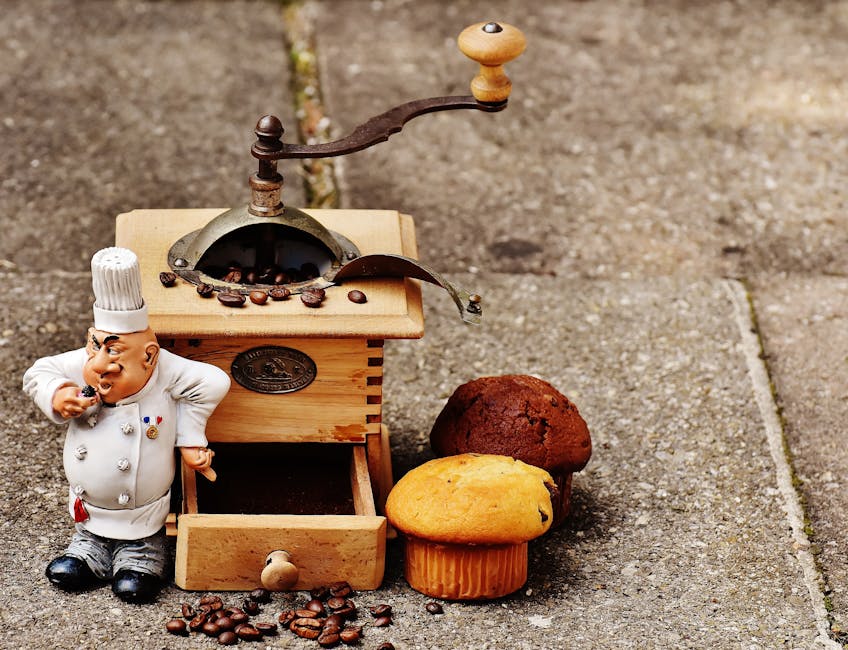
Frank Sinatra sang a song that had the lyric Little things mean a lot. Today's photo shows a coffee grinder with some little things around it. The miniature chef and muffins add a lot to the picture. 
When we write a story, a memoir, a poem, or an essay, little things can make a good piece shine. They can also make the difference between an editor accepting or rejecting a submission. 

There was a period when English teachers began giving a grade only for the content of a written assignment. The grammar, spelling, punctuation--the mechanics--didn't count toward the grade. The first time I heard of this, I was livid. Those mechanics, those many 'little' things make the difference in a good paper and a poor one. 

You might have a lot to say in whatever it is you write and that's good. If you don't pay attention to the little things, that's bad. What are the bits and pieces that will improve whatever you write? 

Passive Verbs:  Our first drafts are filled with passive verbs like was, is, are. When you edit, change as many passive verbs to action ones as possible. Action verbs are visual for the reader. Besides that, action verbs are more interesting. When you replace a passive verb, it's sometimes necessary to change the order of a sentence to make it work. You cannot always pluck the bad out and drop in the new one in the same spot. 

Length of Sentences:  One of the greatest problems for some writers is writing overly long sentences. I have noted that one sentence looks like a full paragraph. If you attempt to read it aloud, you'd be gasping for breath before the final punctuation mark. If you have a sentence like that, it's quite easy to break it into two, or even three, shorter sentences. We should also attempt to balance sentence length. If you have a long sentence, let the next one be short. No reader is going to count how many long or short sentences you have, but it gives a smoother flow to your work.

Spelling:  No one should have a spelling error with today's technology.  Use a spell check program when writing on a computer or tablet. I signed up for Grammarly and have been very pleased with what it offers. I cannot link it here as it goes automatically to my personal account. Just go to grammarly.com to get started. They have a free version and an upgraded paid one. I have the free version and have been satisfied.

Punctuation:  Commas bring the most confusion in this category. Some writers grab a handful, toss them in the air, and let them land wherever. Not literally, but it sometimes appears as if that is the way the commas were inserted. Learn the rules--google to find sites for help. Grammarly is helpful in punctuation, too. Don't use too many exclamation marks or you lose the ooomph they are meant to give. It's worth learning the rules and using them.

Grammar:  Again, this is something that requires one to learn the rules and apply them when writing. There are all kinds of things to be concerned about--compound verbs, subjects and objects, using adjectives and adverbs properly, and more. Many writers had the benefit of a top-notch grade and high school education where they learned all these things. Many others either did not have the exposure to a highly credited program in school or didn't bother to pay much attention. Kids are like that, as we all know. If you struggle with grammar, work on it now to improve your writing skills.

Redundancy:  Repeating words too close together makes for boring reading. Repeating a thought by using different words in consecutive paragraphs doesn't fool anyone but many do this. Sometimes, a writer does it to ensure the reader 'gets the point' and sometimes they do it because they don't know what to say next so why not keep on with the same thought said in a different way. 

There are other little things that will make or break what you've written. This list is quite long enough. Go through your files, select one of your favorite pieces of writing and read through it looking for all of the above. I guarantee you'll find at least a few that qualify for the list above. I know that anything I pull from my files would have problems here and there. No one writes perfectly but we surely can strive to write as best we can. It will definitely show in the final product. 

Wednesday, May 30, 2018

Repeating Words

Image result for free image of many words floating
What we strive for in our writing

Today is our first day of addressing the mechanics of writing--the how you say it part of writing a story, article or essay. 

In my online writing group, one of the things critiquers mark over and over again is repetition of words. Using the same words two, even three times in one sentence or within perhaps two sentences or paragraph is a very common error. It's one we should catch when we edit our own work but, as we read what we've written, our eyes glide right over those repeated words. 

Yes, there are times when we use words close together to make a point. Note the first sentence of the paragraph above. I said ....over and over again. It's used for emphasis. Now, take a look at the sentences below and you'll see words that should be changed. 

A.  Bill left his shoes under the bed, climbed into the bed and fell asleep immediately.
      Better:  Bill left his shoes under the bed, climbed in and fell asleep immediately. 

B.  I've left the bread on the table for you next to the peanut butter on the table
     Better:  I've left the bread on the table for you next to the peanut butter. 

C.  Susan exited the stage she had danced on only hours after she found her ballet shoes and she knew she could be in the recital.
     Better:  Susan exited the stage danced on only hours after her ballet shoes were found and the recital went on.

D.  Timothy noted the long stretch of stairs ahead, climbed the stairs, then looked down the stairs to see if anyone had followed.
       Better:  Timothy noted the long stretch of stairs ahead, climbed them and looked down to see if anyone had followed.

If you've already told the reader about the 'bed' as in Example A, there is no need to repeat 'bed.' Sentences written with repetition of words can end up being boring.

Is it possible we repeat words to make sure the reader knows exactly what happened? Is it possible we don't give our audience enough credit for figuring things out on their own?  

Do we sometimes repeat words because we find it easier than thinking up a new way to say the same thing without using them again and again? (yep, I did it again but for emphasis!)

I think we often make this error subconsciously. What we must do is be conscious of looking for the problem as we revise and edit our writing. 

Just for fun, pull out a story or essay from your files and look through it to see if you have been guilty of repeating words. The vast majority of us are going to find some, myself included. 

Tuesday, January 5, 2016

Polish Your Writing With Proper Mechanics


Yesterday's post contained a list of things writers need to pay attention to to get the most appealing story they can for their readers. Today, let's zero in on just one point in that list. I stated:

    Proper mechanics of writing--people notice when it's poor

I have seen many writers, especially those relatively new to the field, who have great story-telling abilities but they seem to have either forgotten or never learned the basics of writing. Remember those--the boring stuff? Oh yeah, lots of you thought English grammar, punctuation and word usage was the most boring subject in the world. Well, perhaps it is for a good many people but it's also very important. Doing it right makes you a polished writer.

I must admit that I sometimes cringe when I read posts on facebook that are filled with bad grammar, abuse of tenses, miserable punctuation and more. I know what you're thinking--What does it matter? It's just someone making a comment on a post or posting their own news. Well people--I happen to think it does matter. If a child reads a book filled with poor mechanics of writing--and yes they are out there, they sometimes do get published--they will take it for granted that everything is just as it should be. 

How often did your parents or teachers urge you to set an example for others with your behavior? It's the same with the mechanics of writing. Set an example for others. 

Notice that the books pictured here are for grammar school kids. Yep, that's where we all first learned these building blocks of writing but a lot of people seem to forget all that once they grow up. 


So, what do you do if you need to brush up on your mechanics? You can't slip into a sixth grade classroom and soak up what the classroom teacher says. This time, you're on your own. There are books and online sites that can help. Use your favorite search engine to find. Purchase a book that you can refer to when you're not sure about a grammar question. Most of these books and online sites have exercises to re-enforce the lesson. Do them! Do them every time. We learn as children through repetition. Guess what? We learn through repetition as adults, too. 


Don't overlook the helps you have whenever you write a story, article or poem on your computer. They're sitting at the top waiting for you to make use of them. They aren't going to jump out and grab you. It's up to you to learn how to use them and then do it on a regular basis. On every post I write, I use spellcheck. I find typos more often than actual misspelled words but I sure am glad I find and correct before publishing the post. 

I've heard people claim that they never really learned all that 'stuff' in school. If not, that's too bad, but you can still learn now or brush up on what you absorbed all those years ago. 

Review the mechanics of writing. Pay attention to spelling, punctuation, tenses, and word usage. Work on being a polished writer if you want your work to shine when you send it to an editor.


Tuesday, July 14, 2015

Be Careful Not To Repeat Words

This woman looks puzzled and why not? She might have written a great story or essay but there are so many little things to be checked on before she can think of submitting to an editor.

One of the little things I notice when I critique the submissions in my online writing group is the unconscious repetition of words. We all do it--especially in first drafts.

Example:

Susie punched the time clock and hurried down the narrow hallway to her workspace. Her workspace was a jumbled mess but it was hers to do with whatever she wanted. At least, she told herself that whenever guilt threatened to creep in. She could scatter papers all over this workspace as long as she could sort things out enough to get her work done.

Better:

Susie punched the time clock and hurried down the narrow hallway to her workspace. The small area was a jumbled mess but it was hers to do with whatever she wanted. At least, she told herself that whenver guilt threatened to creep in. She could scatter papers all over the desk as long as she could sort things out enough to complete her assignments.

Repeating words when we write is part laziness and part not paying close attention. It's often done in a first draft because we're concentrating on the story we're writing. That's the star of this production. When we edit our work, we should consciously look for possible repetition of words. Read the example paragraph aloud. The work/workspace repetitions become a bit tedious, a little boring.

If you notice that you've used one words two or three times in one or two paragraphs, do something about it. Rephrase to use other words that get the same meaning across to the reader.

Pronouns are almost always repeated and it's not easy to get around that. One thing you can do is to use the proper name (Susie) in some parts and the pronoun (she) in others. Be careful not to start multiple consecutive sentences with She... If you write a paragraph that has six sentences in it and five begin with She...it turns out to be pretty boring. You might have to rearrange some of the sentences to correct that problem.

The repeating of words is a very small thing in the great world of writing and submitting your work. Even so, too many little items done poorly will result in multiple rejections. Write a great story but also concentrate on the little parts that make the mechancs of your writing impressive, too.

Friday, February 8, 2013

Clean Up Sloppy Writing


Some writers have great story ideas, spend lots of time working them out before submitting to an editor. They spend so much time working on the content that they become guilty of something I call sloppy writing. 

That's when little attention is paid to the mechanics of writing. You know what they are--those boring things your middle school, high school and college teachers tried to pound into your head. They're all part of what makes a good story a better one. 

Keep these things in mind when you write and self-edit:
  • Redundancy:  Say what you mean once and then move on. Don't keep repeating even if usuing different words. 
  • Spelling:  Use spellcheck even though it takes a bit of time. 
  • Punctuation:  Some writers toss commas into the air and let them stay wherever they land. Learn where to use them and where they do not belong. 
  • Quote marks:  There are rules for using them--reivew them
  • Parts of speech:  Nouns, verbs, adverbs, adjectives are all important to the way your story reads. Weak verbs add nothing to a story, too many adverbs or too many adjectives detract from your story. 
I could write a post on each of the points in the list above. In fact, I think that next week. I will do exactly that. They may not be of great interest but paying attention to all of them will enhance the quality of your stories, articles and even poetry. None of us wants to be accused of sloppy writing.


A Memoir to Enjoy

  I recently read a book that I enjoyed so much that I wanted to share it with others.  Kenneth Goetz offers us his memoir titled A Streak o...