Showing posts with label blog for writers. Show all posts

Tuesday, April 26, 2022

Stringing Pearls as You Write


 Today's post is a repeat, one that I wrote quite a few years ago but is still relevant today, especially when writing your family stories.

We do not remember days,

we remember moments


I read the quote above at the bottom of a Happy New Year greeting I once received. It fit perfectly with the topic I'd selected for today's post. I wish that the person who wrote this quote had been named. Sadly, it is anonymous.

We do remember the special moments in our lives with a clarity that I find amazing. I've had special moments that have stayed with me for the many decades I've walked this earth, and it's been those moments that have created memoir stories that seem to be perfect for many anthologies.

Each one of those special moments is like a pearl, and as writers, we can string them together to create a memoir of our lives. The individual moments shine in our memory bank like the pearls on a necklace. They gleam and step forth clearly so we can write about them.

One of my favorite pearls is a story I wrote for a Chicken Soup Tea Lovers book. My grandmother and I had afternoon tea at the famous Walnut Room at Marshall Field's department store in Chicago when I was four years old. Only a young child, I still remember it as clearly as if it happened yesterday. Because the memory remained vividly in my mind, I found I could recreate the event well enough to have the story published.

Another is a story about a valentine box my dad made for me during my second-grade year. I believe I remember it so well because a revelation hit me while Dad and I spent time together making the box.

Yet a third special moment memory that produced a publishable story is about the first time I had surgery. I was four and staying in the hospital proved frightening until a beautiful and compassionate nurse eased the experience for me. She set me on a path of service to others for the rest of my life.

The events that impressed us the most are the ones we remember as though they happened only yesterday, not years ago. Those moments are the individual pearls that we string together.

When an event occurs in our life that has some importance in shaping our character or signifies love and family, the memory becomes more important than the mundane things in our days. The memories are stored until we pluck them out and add one more pearl to our life's necklace. All it takes is a little trigger to bring the memory forth. Once it's there, it's up to you to write the story.


Monday, August 23, 2021

Emily's House-A Book Review


I have long admired the poetry of Emily Dickinson. When I saw that there was a new novel based on her life, I reserved it at my local library. The author, Amy Belding Brown, based her fiction story on facts, adding things she thought might have happened or some she would have liked to be true.

We see Emily and her family members through the eyes of an Irish maid, Margaret Maher, who actually did work for the Dickinson family for 30 years. The book is as much Maggie's story as Emily's. Maggie, so named by the family who refused to call her Margaret, had a roller coaster relationship with Emily, mostly because the poet was reclusive and of a different nature than most. One minute she was Maggie's close friend, and the next she berated the maid and hurt her deeply many times. 

Even so, we see the relationship of maid and employer slowly evolve into a deep friendship. Emily lived with her parents and her older sister in a house named Homestead. Her brother was married by the time Maggie came to work for the family. He and his family lived nearby and were frequent visitors to the house.

Maggie's sister and her family live nearby in Kelly Square, a place where the residents are all Irish, most of them immigrants. Her two brothers are in California mining for gold. Maggie longs to join them, but continues to stay in Amherst, Massachusetts near her sister and working for the Dickinson family. 

Patrick Quinn is a love interest for Maggie. Her long on and off relationship with him is not factual, more the imagination of the author. Still, he lends something to the story. It was a bit difficult at times to decide what was fact and what was fiction. The author clarifies much of this in an addition at the end of the novel.

Emily is the family baker, tends her garden with love and care, and writes her poems on scraps of paper. As reclusive as she is, she shares much of her thinking with Maggie, who at first considers her quite strange but comes to view her as 'Emily being Emily.' 

The book gives an excellent  picture of life in the late nineteenth century for both the privileged and the Irish immigrants of the time. 

The prose flows well. I found the book hard to put down at times as I followed the lives of the individuals in Emily's family and Maggie and her own family. I also reacted emotionally in several parts of the story. Reading this book made me want to look up some of Emily Dickinson's poetry again.

It is obvious that the author did a great deal of research. There are many biographies and other books about Emily Dickinson, but I would put "Emily's House" high on the list. 


Thursday, August 12, 2021

For Wannabe Writers


Normally, I gear my posts here at writers from beginners to pros. Today, I'd like to talk to wannabe writers, and I hope the writers who read this will pass it on to someone who would like to write, but... They are the people who have thought about writing but never got started, the ones who were a bit leery of dipping their toes into the writing pool, and especially those who think they are too old to start writing. 

As our poster for today tells us, you're never too old to set another goal and dream a new dream. Age is nothing but a number. How you feel inside is far more important. Famed artist, Grandma Moses started painting at age 77. Her husband had died, and she was looking for something to fill her time. Little did she know that she would attain fame in the art world.

I wanted to write for most of my life, but I didn't take that first step of my writing journey until I was in my fifties. Was I too old? I wondered but decided not to let it stop me of attaining a long held dream. I felt as though it might be the last piece of a puzzle that showed all I'd done in my lifetime.

The big question then was how to begin. I knew I needed to do more than sit down and write. There is a lot more to being a writer than putting words on paper or in print. I tried a number of things to help me move farther into the writing world. They are listed below:

 Step 1:  I did a little research on a correspondence course school that promised to teach me how to write for children.

Step 2:  I enrolled and began a course that took 18 months. No email in those days for me so the lessons and letters went by snail mail. By the time I'd finished the 10 Lessons in the course, I was hooked for life.

Step 3:  I read every book I could find at the local library about the craft of writing.

Step 4:  I joined a small critique group in our community

Step 5:  I worked up the courage to begin submitting to children's magazines

Step 6:  I learned how to accept rejection and move on to the next project immediately.

Step 7:  I subscribed to newsletters and magazines for writers, joined an online critique group, and joined a writers association

Step 8:  I rejoiced when my first sale occurred, and I kept moving along the path of my writing journey.

I am still traveling that path, although I'm much further along now. I've been writing for over 25 years now and plan to keep going as long as possible.

If you've had the desire to write but have never pursued writing, consider trying now. You'll never know if you like it or if you have some talent until you try. All writers start out with some pretty lame writing, but follow some of those steps above, and you'll get better at this game of writing. Our writing journey is a long one. It has bumps along the way, but we can get over or around them and keep going. 

One of the nicest things about trying something that you've never done before is the fact that you're satisfying a longtime urge. Is it possible that you try writing and discover it's not for you? Yes, it is. It's also very possible that you'll love learning to be a writer. You won't know unless you give it a try.

If you have a certain kind of writing that you'd like to do, go for it. But, do try other genres, as well. I set out to write for children. I have done that, but I also tried other kinds of writing and learned that creative nonfiction is my strongest suit. 

And, by all means, do not ever use the "I'm too old." excuse. You are never too old to attempt something brand new to you. Doctors will tell you that trying something new is a good way to keep your brain in good shape as you get older. So stop being a wannabe writer and jump in. 


Thursday, July 29, 2021

Writers--Self-Doubt Is Your Enemy


Self-doubt is the subject of today's poster. Who should we blame for self-doubt? There's a clue in the first part of the word. Self! No one else sprinkles you with this debilitating characteristic. It's not the fault of an editor or another writer or those who critique your work.

Nope. Anyone who suffers from this problem can blame only one person. Look in the mirror and you will see the person who sowed the seeds of self-doubt, nurtured them, and watched them grow. Harsh words perhaps, but to overcome this problem, you need to face facts.

How do we let self-doubt begin? We use the words of an editor or a person who critiques our work hurt us, pull us down, and make us feel unworthy. Instead, we should heed the words as a lesson to be learned. These people are not attempting to bat us down. On the contrary. Their intention is to help us see what needs to be worked on, how we can become stronger and better writers. That only works if we, as writers, accept it as meant.

Attitude plays a major role here. If your outlook is that every person who critiques your work is intent on making you feel like you are a terrible writer, then you definitely will feel that way. If you think that editors and critiquers are trying to push you out of the writing business, then you may soon convince yourself that you should quit. Stop where you are on your writing journey and return to square one. 

I feel sorry for any writer who thinks like that. You become your own worst enemy. With each new critique or comment from an editor, you push yourself deeper into the hole of self-doubt. Next comes self-pity. Believe me when I tell you that the only one who comes to a pity party is you, and it can be pretty lonely. 

Beginning writers are of two types--those who are inspired and passionate, ready to conquer the world of writing and those who are scared to death, worrying that they are not good enough to be a real writer. The second group begins with self-doubt. What do you think will happen as time goes on? They will feed it and allow it to become more and more worrisome. They may even develop that dreaded disease called Writer's Block. 

How do you stop doubting yourself? Try the following:

A.  List your successes, not your failures. Every writer has failures now and then, but it doesn't mean you are a bad writer. It means you need to work on the problem areas, learn all you can from reading about your craft, and take the words of a critique person as an aid in learning.

B.  Go to that mirror again. Look into it and repeat over and over something like "I am a writer. I will be a better writer. I will learn from my mistakes." Say it often enough, and you'll begin to believe it.

C.  Accept praise when it is given. Do NOT put yourself down when someone compliments you on your writing. Be happy and thankful for any compliments given.

D.  Keep a journal and write something good about your writing life every day. Dwell on the positives. Once a week, read all you have written for that week. 

E.  Believe that all writers can improve their writing. Because there is room to be a better writer does not mean you are a bad writer. Not at all.

Don't let self-doubt become an enemy to your creativity. Remember that YOU are the one who is in control. You have a choice every day. Tear yourself down or lift yourself up. The cure doesn't happen overnight. It's gradual, but any progress is helpful to the self-doubting writer.


Tuesday, July 20, 2021

The Importance of Sensory Details in Your Writing


Today's post is an article that I wrote for a Children's Writer's Newsletter a few years ago. Although originally geared to people who write for children, the information works just as well for those who write for adults. I interviewed two people I considered experts in their field for the article. 

The Icing On The Cake

A cake with no icing is about as appealing as toast with no butter. The basic food is there, but the special something that makes it taste so good is missing. The icing makes the cake sweeter, prettier, and more appealing like the birthday cake pictures in today's post. A story may have a good plot, but without the little extra, it may end up being rather ordinary.

Sensory details enhance a story like the icing on that cake. We use our five senses hundreds of times a day without being conscious of doing so.Think about the many everyday things you do that involve your senses.When you look out your kitchen window and see a bird, your mind registers more than the fact that you saw a bird. You know that it is a bird, you know the color, the size, and perhaps the sound it makes, you know how oft the feathers would feel if you stroked it. We see, hear, smell, taste and touch with our daily experiences, so why not include them in our stories?

Children relate to things in their personal surroundings. They know that the bristles of a brush might feel scratchy. They squeal with delight at he sound of the ice cream vendor, and they wrinkle their noses when taste-testing a new food not to their liking. Include these experiences in the stories they read, and you could end up being a sought-after author-the writer who made the story come alive.

Margaret Shauers, author of many children's stories and regular columnist at Write4Kids, says "The way humans communicate is through shared experiences and emotions, and we experience life through the five senses."Ms Shauers has a word of warning. "We rely too much on sight and need to hone our skills at the other four. Keeping a sense diary helps-a short sentence or two about each sense every day." She admits that it is easiest to include sight and sound in children's stories. Touch runs a close third, but taste and smell are senses she must concentrate on when she writes.

Look at the sentences below. Which example in each set is more interesting?>

A.  Sam saw a big wave.  Or   Sam's heart leaped in his chest when he spied the huge wall of water headed his way-taller than his basketball goal at home.

A few added words allow the reader to see the wave headed for Sam.

B.  Sally heard thunder.    Or   Sally covered her ears when thunder boomed overhead and echoed across the prairie. The wind whistled through the tall grasses as she raced toward home.

We know that the noise is very loud if Sally has covered her ears, and we can discern the sound in the grass, too, through the active verb form.

C.  The dead mouse smelled bad.    Or    The rotten stench of the dead mouse made Susie gag, and clap her hand over her nose and mouth.

Gagging and covering her nose and mouth illustrates the nasty smell so much better than simply telling the reader the mouse smelled.

D.  Tommy didn't like the vegetable.    Or    The slimy, green spinach sat on Tommy's tongue and refused to move any further. He'd never be able to swallow the bitter stuff.

Here we not only know what the taste is, but we can also see the vile veggie Tommy is trying to eat.

E.  Jody petted the cat.  Or   Jody giggled when the cat's soft fur tickled her hand as she stroked him.

The senses of both touch and hearing are evident in this last sentence.

Did you notice that the first sentence in each group was a telling sentence, while the next one showed what happened. Using sensory details remedies too much telling.

Picture book author, Barbara Santucci, pays close attention to sensory details in her three picture books--Anna's Corn, Loon Summer, and Abby's Chairs.Ms Santucci says "The more sensory details we include, the richer our writing becomes, and the more able we are to show and not tell the story plot and the emotions we are trying to convey." Anna's Corn is a story built around the sound of corn growing in Anna's grandfather's field.There is, of course, a good deal more to the story, but the music of the corn Anna remembers figures strongly in this tale of loss.

Ms. Santucci adds "Our writing should create concrete and vivid images in the minds of readers that help them experience the emotions of the characters, thereby creating a mind and heart connection between the story and the reader."

That "mind and heart connection" is what a children's author strives for. People who write for adults want the same connection.

Adding lively sensory details will achieve that connection more easily.For most of us, it's not a given. We need to practice writing those sensory details so that they become second nature when writing a new children's tale. Let sight, sound, smell, taste and touch be the icing on the cake in your stories.

Exercises:

   Keep a Sense Diary. Write a short sentence or two about each sense daily.

   Practice writing phrases that include sensory details

   Watch for sensory details when you read.

   Be observant. Take note of the sensory details in your daily life.

By Nancy Julien Kopp Nancy - November 25, 2014 (original publishing date)  


Monday, July 19, 2021

Passive vs Active Verbs


NOTE:  I think we are not going to stop getting two copies of each post until July is over. I have tried to eliminate one to no avail. 

We all use many passive verbs in everyday conversation. Consider how many times you include the words was, is, were or some variation of them. We do it subconsciously as a method of economizing our speech. Those words are short, and we know the point of what we’re saying lies in the words that surround those bland verbs. Hmm, maybe we can even call them 'blah' verbs. They all derive from the passive ver 'to be.'

But as writers, we need to find verbs that show the reader something, verbs that bring out sensory details. Using too many passive verbs is the mark of a new writer. I profess to guilt in that department, too, when I first started writing. It is also the mark of a lazy writer. The passive verbs come so easily while the active ones take some thought.

Which of the following sentences do you find more interesting? Which ones give a better picture to the reader? 

A. She is sad.

B. Sadness engulfed her.

A. We went to the beach.

B. We motored to the beach.

A. We were hot in the sun.

B. We roasted in the blazing sun. 

A. Alice turned around; her skirt moved, too. 

B. Alice twirled until her skirt billowed. 

The B sentences all bring a mental picture to mind and allow the reader to get into the scene far better than those passive verbs in the A sentences. In the final set, A has semi-active verbs, what we might call weak verbs. Again, the ones used in B are far more interesting and give a more vivid picture.

When you finish the first draft of a story or essay, look through it and mark the passive verbs. Then try to find active verbs to replace them. Use a thesaurus if you need some help. Read your work from beginning to end, and you’ll see how much stronger and more interesting it sounds once you change many of those passive verbs. Work on using active verbs whenever possible. 


.


Thursday, July 15, 2021

Everyone Can Write About Mothers


I have heard my mother's words slip out of my mouth more and more as the years go by. I think it happens to a great many of us. Sometimes the things we say that mirror our mother's comments are ones that irked us when we were younger. Sometimes, they are bits of wisdom she offered to us.

Rather than merely repeat things our mothers said, why not write stories about your mother? Most of you who read this blog regularly know that I am a great proponent of writing your family stories. But today, I'm narrowing it down to your mother. 

You can write about your mom for yourself, for your family, or for publication. I have written many stories about my mother for our family, but a good number of them have also been published in anthologies. Writing the stories for your extended family is a wonderful gift. 

If you have any thought of writing to publish your work about the woman who raised you--it could be your birth mother, a stepmother, or a mother who adopted you--start now to submit within the next few months for Mother's Day. Magazines usually want a 6 month window prior to the holiday you are writing for. So, if it's a Christmas story, send it no later than June. For Mother's Day, get it submitted by November. 

Write funny stories about your mom, or a sad time in her life, or a time when you were in big trouble with her. How did she react? What did she look like? What expressions did she have in the situation? Did she ever lose her temper? Did her sense of humor save the day at times? 

Write about her cooking skills or lack of them. Her housekeeping--good or bad? Was she a carpool mom or did she tell you to walk to school? What were her hobbies? Her favorite movies and songs? How did she dress? 

When you write a story about your mother, include details that give a picture of her. In these stories, you want to show, not merely tell the story. Let your reader, whether family members or readers of a publication, 'see' her through your words. 

Not everyone has a wonderful mother. Some people don't get along well with their mothers. Should they write stories about her, too? I would encourage them to do so. Not necessarily for publication or even to share with other family members. They should write it for themselves to help understand the difficulties in question. If she is no longer living, it can be a step in healing those hurt feelings than tend to linger.. 


Wednesday, July 14, 2021

Writers and Attitude


(Blog Note:  I think (hope) I have deactivated the feedburner email subscription so you should now start getting only one copy of each day's post from MailChimp) 

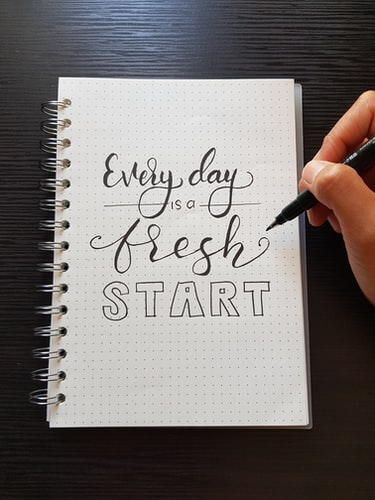
EVERY DAY IS A FRESH START. I think that sentence, taken from today's poster, is worth being written in caps. It's that important that we make the sentence an important one, perhaps even our mantra. Maybe we should ask our muse to wake us up each morning whispering in our ear: Every day is a fresh start. 

Think about it. Writers have problems to contend with on a daily basis. If you write, you have to skirt around roadblocks. You have to get across bumps in the road and learn how to handle what feels like an earth moving situation now and then. 

What problems do I mean? Rejection is one of the biggest. Mostly because we can allow a rejection to deflate us like a pin-pricked balloon. There's no question that rejections hurt us, anger us, or send us into temporary depression. Any of those things depends on our outlook. View it as defeat, and you're in trouble. Look at it as a lesson, and you can weather the storm much better. No matter what day you receive a rejection from an editor, remember that 'every day is a fresh start.' Put yesterday behind you. It's done. You're on to new and better things.

We all have problem areas when we write a story, essay, poem, or even a factual article. I've recommended many times that a writer walk away and leave whatever trouble that presented itself. The longer you sit and ruminate, the worse things can look. Leave it and remember that 'every day is a fresh start.' The solution may seem more clear if you wait until a new day to tackle the problem.

What if you're looking for new story ideas and you come up blank? It happens even though there are stories all around us. If you can't find anything new to write about on Wednesday, Thursday might bring some success. It's a new day and a fresh start. 

Remember that nothing in this writing game comes easy. We have to work hard to come up with story ideas and writing that is clear, concise, readable, and more. It doesn't happen every day of the week. But it might occur tomorrow when you have a fresh start. Put the problems behind you as you begin each new day, each chance for a new beginning. 

We can apply this quote to other things in our lives, as well as our writing journey. We can leave a trail of 'what ifs?' and 'why did that happen?' behind us. It's the positive person who prefers to look ahead and start each new day as a fresh start.

Monday, July 12, 2021

Set Your Writer's Voice Free


I've often posted a freewrite exercise here. For those who aren't quite sure what that is:  We use a prompt, usually a single word or a phrase. The writer is to start writing, no thoughts ahead of time. Write continuously for a minimum of 10 minutes without stopping. It doesn't matter what you write. Let it come from the recesses of your mind to your fingertips. Set a timer to help you know when to stop.

One of the big benefits of this type of exercise is that you may pull deep thoughts from your subconscious, ones you keep buried under normal circumstances. You also free your emotions and can bring forth some strong writing. When working on a story or essay, many writers tend to keep their emotions in check, refusing to let the reader see the real writer. It's then that someone critiquing your work will tell you to 'dig deeper.' They are trying to tell you that you've only skimmed the surface of your subject. It's more common than you think.

It's when we release those deeper thoughts and emotions that our writing becomes stronger and worth being published. As the poster for today says, it sets your writer's voice free. Suddenly, the real you appears. The more often you do a freewrite exercise, the easier it will be to let your writer's voice shine through. We establish a habit.

What if the majority of what you write in that ten or fifteen minutes seems like gibberish, worth nothing? It can happen, but you can also end up with the bones of a story or personal essay. You might find that you've written some excellent phrases. Those phrases might end up in a poem sometime.

Remember to write continuously without stopping. That is key for this exercise. Keep your thoughts moving as though they are on a wheel that keeps spinning. 

Prompts for a Freewrite Exercise

 A. Words

blue

lemons

regret

shock

flowers

bulldozer

Phrases for a Freewrite Exercise

a sip of tea

running through  a rainstorm

the grace of a woman

the strength of a man

a soothing lullaby

a bloody battle withiin


Friday, July 9, 2021

Writing a First Draft


I've got an idea for a story to send to a Chicken Soup for the Soul book. I've been trying to get a first draft written, but I get a few paragraphs and then decide it is no good. Quit. Start again another day. I realized yesterday that I should have finished each of those first attempts. Get a full first draft done and then revise after it sits for a few days.

The poster today tells us that the first draft is just a working piece to help you create a strong finished story. Some writers end up with multiple first drafts for one story idea. Is that wrong? No. You do whatever works for you. You might snip this and that from each draft and weave them together for the final one. 

There are times when we write a first draft that is almost a finished product. We only need a few minor edits. It happens, but I can't say I've done it a majority of the time. I think the kind of of first draft that needs little editing comes when we work on the story idea in our mind for a fair amount of time. It's one reason we find it hard to fall asleep at night. In the quiet darkness of our bedroom, we can sift and sort the story idea mentally for....often too long a time. 

Work on that idea in your head while doing household tasks that don't require much mental effort on your part. Unloading the dishwasher takes little mental acuity. Grab a dish or two and keep working on the idea in your head.

I have read a good many quotes by writers about first drafts. That should tell us the importance of writing one. No writer should sit down at a keyboard, write the story, and submit to a publisher all in one fell swoop. Nope. You need to go through this process step by step.

Write a first draft.

Let it sit for a few days.

Proofread, edit, and revise

Let it sit a little longer.'

Do a final edit.

Let it sit another day or two, then submit.

This all comes down to taking time to write what was once only an idea in your mind. Don't rush! Remember in school when you rushed to write a paper last minute? Was it your best work? Probably not. 

Never negate the importance of the first draft. It is the beginning of the process which leads to a finished product. 

Tuesday, July 6, 2021

Travel Articles and Essays

Where in the world...?

If money was no object, responsibilities, and more proved no object, where in the world would you like to go? Why? How? With whom? And more!

The above is a lead-in to writing about your travels. Readers like travel stories which take them far from home through the words and experiences of a writer. Most of us do have limitations on travels, but that doesn't mean we can't dream about going. 

As writers, we can help people feel like they have visited an exotic place on our earth or just a local attraction.You can write a good travel article on a town 10 miles down the road from you. How you write the travel essay is key. Write a chronological day by day diary, and it's probably not going to be too exciting. I don't enjoy reading about another person saying things like 'we went here' and 'then we went there.' I want them to bring me with them, let me see and feel what they did. 

Good travel stories have emotion, vivid description, historical background on occasion, and something meaningful to the writer. The writer should make the reader feel like they are visiting the place side by side. Easy to say, but not so easy to do. Believe me. I've written several travel essays, and some turned out better than others. None are fantastic. I'm still working on that! 

The old show vs tell works in these kinds of articles/essays just as it does in fiction. Telling me about a marketplace in Morocco is one thing, but showing it to me is quite another. Showing me will allow this reader to feel like I am there with you. 

We know that creative nonfiction uses fiction techniques in relating an experience. You can use those same techniques in travel essays. If you are only planning to write an article, you might want only factual material. Make it a creative travel essay, and the world is yours in how you can approach it.

My husband and I visited Nova Scotia one summer. I wrote a travel essay about our visit to a very special little village. I'll paste it below for you. Is it more than factual for you? I hope so.

A Morning in Peggy’s Cove
By Nancy Julien Kopp

Early morning traffic in Halifax, Nova Scotia is not difficult to maneuver with two of us in charge. My husband, Ken, drives, and I read maps and signs, acting as navigator on this sunless June day. We make our way easily through the Canadian coastal city and travel beyond to the road that will take us to Peggy’s Cove.

I’m eager to see this tiny fishing village which friends have recommended, and I check the map once again to gauge the distance.

“You must be sure to go to Peggy’s Cove,” said one friend upon hearing we were planning a driving trip to explore Nova Scotia, one of Canada’s easternmost provinces.

“Don’t miss Peggy’s Cove,” said another.

Thus, the village is high on our list of places to visit.

Road-signs mark the route clearly, and soon we turn off the main highway onto a secondary road. We wend our way along the curving stretch of road. I search the sky for an absent sun and silently wish it would make an appearance. More clouds roll in, some dark and seeming to threaten rain. It is the first such weather we experience on our trip. Prior to today, the sun has spread its gentle warmth and renders our daily excursions most pleasant.

I wonder, as the car makes each twist and turn in the road, what can be so beguiling about Peggy’s Cove. I know that it is the site of the 1998 Swissair jet crash, but surely more than that steals into the hearts of those who visit.

One more bend in the road, and the fishing village appears. It is small and picturesque, the few homes and fewer businesses situated on hills near the water. The town seems to stand guard as the ocean slaps against flat-topped boulders that line its edge. Sea terns perch serenely on rooftops and dot the hillsides, while fishing boats line the harbor area.

We come to the end of the road, and Ken parks the car. We emerge into air that carries a chill and a fine mist, as well as that special scent of the sea. There is no doubt in my mind that I will traverse those huge boulders to the lighthouse standing near the water’s edge, but I wish I had worn sturdier shoes.

I pick my way carefully across the boulders to the whitewashed lighthouse, which sports a cheerful red top. A few other tourists step cautiously across the great boulders. Some sit silently on the rocks gazing out to sea, their thoughts known only to themselves. What a wonderful place to ruminate, I muse, as I study those who are seated, their thoughts sealed within themselves.

I reach the lighthouse and peer inside the open door. To my amazement, I find that it is now a government post office. I exchange greetings with the clerk, purchase post cards and Canadian stamps, then retrace my path a short distance. I can see the ocean waters on my left and on my right, even though I am facing the village. As though called, I turn and look out to what is now a calm and friendly-appearing sea. The mist has ceased, and the sky brightens a little.

I watch this piece of nature that sustains the village inhabitants who fish its waters daily. The sea calls to them like a siren of mythical tales. She promises a bountiful harvest, entices them into deep waters, and produces more fish than can be counted at times. But in the wink of an eye, she can become menacing and dangerous. Churning waves tossed upon the flat-topped boulders, angry and vengeful, have swept more than one person to a watery grave. Signs posted here warn of such a possibility. Hard to believe, as I gaze at the now peaceful scene before me.

Only the day before, I noted the detailed story of the tragic Swissair crash while reading a Halifax newspaper. The widow of the pilot, who guided the doomed flight, was featured in the article. She and her children have visited Peggy’s Cove more than once since the accident occurred. On their first visit, men from the village transported the Swiss woman and her two small children out to sea where the plane crashed. The family scattered flowers across the water, and the small son said he is glad his daddy is in such a beautiful place. The Sea, I think, must have smiled to hear his words.

I say a silent prayer for all who perished at Peggy’s Cove, then slowly make my way back across the unique path of boulders, passing close to an iron anchor imbedded in the rocks. The air feels warmer as the clouds part, and a welcome sun emerges.

I meet Ken, and he holds out a hand and helps me travel the remainder of this precarious pathway. We meander slowly down the narrow road together to visit a small gift shop, take pictures of the fishing boats, and investigate a magnificent sculpture carved in stone which depicts the life of the fishermen who live here.

Finally, we visit the memorial site of the Swissair victims commenting softly to one another, as we stand shoulder to shoulder, reading the plaque. A few other tourists join us, but no conversations take place. Instead, each one focuses on a personal meaning of the site which tragedy visited. The entire village resembles a place of meditation rather than the usual tourist chatter and banter.

Walking back to our car, I inhale the scent of the sea once more, and I know that this small village and the sea around it are now etched in my memory and on my heart forever, yet another of life’s blessings. Quaint, picturesque, charming, even somber--it is all of these and more. I am now another who will urge travelers to be sure to see Peggy’s Cove in Nova Scotia. 


Thursday, July 1, 2021

A Door to the Writing World

What is behind the door?

When I opened my devotional booklet this morning of July 1st, the writer began with thoughts on the booklet's name--Portals of Prayer. She said a portal can be a passageway, an approach, an entrance, a gate, or a door. Being the writer I am, thoughts of all those synonyms for portal made me ponder on all of them as they relate to the writing world you and I belong to. 

When we approach a door, we don't always know what is behind that entry. If it's a familiar place, of course we know what we will see when we grasp the handle and push it open. On the other hand, in our writing world, we often stand outside an entryway not knowing what is on the other side nor having any confidence that we are making a good move to enhance our writing successes. We must find the keys.

Let's look at the writing itself. When we first begin our writing journey, we stand on the outside of the portal, hoping to write our way into the writing world. The only way to do that is to write, edit, then submit in hopes of unlocking the door. With our first success, the door stands ajar. To open it all the way, we need to keep writing, editing, and submitting. No haphazard writing here and there, but regularly.

If we want to continue down the path that leads from the inside of the entryway, we must keep on finding story ideas. They're all around us, but it's up to us to use our writer's eye to find them, pull them in, and think long and hard about where we might go with the kernel we've seen..

The door to the writing world is never going to open if we only stand in front of it and wish we could open the entrance and find the path behind it. Thoughts alone will never give us the key. I can't tell you how many wannabe writers spend years only thinking about writing. The desire is there, but so is the fear that maybe they can't do it, or maybe it is the wrong time in life, or maybe no one will like what they write. I was one of them, which is why my writing journey started later in life. Regrets? You bet. I wish I had started much sooner.

Your goal should be to write, edit, and submit often enough to march right through that door with no hesitation. Set your goal, push the door open, and continue your writing world journey. There will be bumps in the road, highs and lows, but I doubt you'll regret starting the journey. 


Wednesday, June 30, 2021

Blog Notes and a Writing Exercise


I don't know about you, but for me, June passed in a flash. There were so many things I hoped to get accomplished this month, but my list is nowhere near complete. Ah well, there is always July. 

One of the big matters on my list was to get my subscriber list transferred over to a new email service since Google is terminating the one that goes with my blogspot.com service now. Why they have chosen to do this, I don't know. I do know that they have given a major headache to many a blogger. 

Most bloggers are not technology people, not unless they're writing about technology. But cooks, artists, moms, daycare providers, and writers are usually not well versed in what it takes to switch over to a new service, and that's after you figure out how to export your subscriber list. The second part for me is done. The first one is half-done.

I am planning to use Mailerlite as my new email service. I filled out pages of questions a few days ago, but it still was not enough. I'm working on getting the final pieces to the puzzle. If you do not get an email with my post tomorrow or Friday, it is because all is not completed yet. I may need to call (scream) for help from an IT person. 

Sadly, those IT people do not come running at your first call (scream) so I can't give you an "It's all done now." date. Writer Granny's World will be back in some form sooner or later. Sooner, I hope.

Meanwhile, how about a writing exercise today? Descriptive prose is something we all would like to master, whether we're writing fiction or a personal essay. We certainly need descriptive writing in poetry, as well. 

Exercise:  Select any word from the list below. (hopefully, you'll do several). Write a paragraph that describes the word. Don't overload on adjectives. Work on showing rather than telling whenever possible. The more you do this type of exercise, the more natural this kind of writing will be when you are writing on your own. 
  1. firecrackers
  2. trash can
  3. football player
  4. ballet dancer
  5. old house
  6. roses
  7. lemonade
  8. monkey
  9. five-year-old
  10. flag
  11. tractor
  12. umbrella
  13. snow storm
  14. flood
  15. pizza
  16. passenger train


Wednesday, June 16, 2021

Writers Don't Always Write a Good Book


Another post from the past:

I read a wonderful book recently, which shall remain nameless for reasons apparent further into this post.

It was a real page turner and so well written that it grabbed me in the opening pages and held on until I closed the book after finishing it.

I decided I'd like to read something else by the same author, so I looked up her credits and found that the book I'd just read was her second published novel. I checked out her first book at our library and was eager to read it.

What a disappointment it was. It was a historical novel, like the other book, but set in an earlier time. It had all the elements of what should have been a good novel. There was a little romance, a mystery, a ghost, descriptive passages, an interesting setting. But I had to littering slog through it. There was an abundance of unnecessary material, and I got frustrated waiting for something important to the tale to happen. I kept plugging away at it thinking it was going to get better. It didn't. Finally, after going two-thirds of the way through the book, I flipped to the final chapter to see what happened to the characters. It was then that it hit me that I didn't really like any of these people, could not relate to any of them. The whole dreary thing disappointed me.

It made me wonder why an author cannot write a winning story every time. Maybe it's like a racehorse who cannot win the race every time they fly out of the starting gate. And maybe we shouldn't expect an author to write the same kind of story (an interesting one) every time. The ones who stay in our minds and who make lots of money writing have the ability to do that. Maybe we shouldn't expect it of every author.

I don't write novels,, but I do know that some of my essays and inspirational creative nonfiction is better than others. It would be wonderful to have a winner every time, but that might happen only in a perfect world.

I reminded myself that even though this author had written one excellent book and one not so hot, she did get two novels published which is more than a good many writers can claim.


- September 12, 2014 (original post date)  


Tuesday, June 15, 2021

Thinking About Theme

Summer Flowers


Today's post is another from the past. It addresses the subject of 'theme' which can be confusing.

Writing is a gift given by God to only a few people.

The craft of writing can be learned by anyone with a desire to write.

Some truth rings in each of these statements. There are definitely people who seem to have a natural ability to write prose that sings, but with study and practice, along with a desire to learn the craft, anyone can write prose that is worthy.

It does not necessarily follow that because you can speak, you can write. Good writing comes down to identifying what tools you need to learn the craft and putting them to use.
An understanding of theme is one of those basic tools.

Theme is often misunderstood or even ignored by the beginning writer and also by some who claim experience in the writing world. In her book Write Away, Elizabeth George says “…most novels are unified around their theme. This—the theme—is the basic truth about which you are writing, the idea you’re playing with..., or the point you are attempting to make.” This internationally best selling novelist goes on to say that even if the theme isn’t addressed directly, the unification of the subplots will make it clear to the reader.

The theme in fiction and nonfiction is the central idea, or focus, that runs through the entire story.  For instance, most fairy tales use the theme of good vs. evil. We select a theme from both good and bad principles of life—guilt, greed, revenge, kindness, service to others, and unconditional love are all possible subjects for a theme in a story. Try making a list of conceivable themes for future stories.

The story you write should illustrate the theme without preaching to the reader. Few readers want to be told what the theme is. It’s much more fun to figure it out as you read. The theme should come through in subtle ways. If it doesn’t, it’s time to go back, rethink and revise. Ask yourself what message you want the reader to take away.

Some people confuse theme and plot. An author friend who writes historical fiction says that what your characters do in a story is your plot, but what they learn is the theme. The plot should illustrate your theme and leave a lasting impression on the reader.

Do you select a theme and write a story around it? Or should you write a story and see a theme emerge little by little? There is no set rule. Either way works, but you must be careful that you don’t scatter too many themes throughout the story. All that it does is to confuse the reader who might think: What in the world is she trying to tell me? Pick a theme and stay with it.

When you pick up a book for your own pleasure, read with a critical eye. Look for theme in every piece you read. Search for the message the author sends and ask yourself if the plot of the story brought out the theme. With practice, you’ll find it easier to mentally critique the stories you read, and writing your own stories with a theme in mind won’t be nearly so difficult.

Some Points To Remember

1. Theme is the central idea, or focus, that runs through the entire story.
2. The story should illustrate the theme.
3. What characters do is a plot, but what they learn is the theme.
4.  Let the theme come through the story in subtle ways; don’t preach.

- October 18, 2018 (original publication date)  


Monday, June 14, 2021

Waiting Reaps Dollars for this Writer


Several years ago, I posted a personal essay on a website for writers where anyone could post whatever they’d written. Some were very amateur in substance and execution while others were well done. I received an email from an editor who had read the piece at Our Echo (www.ourecho.com). She invited me to submit my essay to a Guideposts anthology. This was a paying market, whereas the other was not. They accepted my personal essay and sent me $50.

In midsummer of 2019, I happened to notice a listing for a magazine called Kaleidoscope published by the United Disability Services. Their guidelines at https://www.udsakron.org/kaleidoscope-magazine/submit-article/ stated that they liked stories written by people who had a disability, but would accept stories about disabilities from other writers, too. I pondered a while and then decided to submit “The Perfect Grandchild” since it appeared to be a fit for the magazine, and their website indicated they accepted reprints. 

Months passed with no response so I placed a big NO next to the listing in my Submissions Chart and moved on. More than a year later, an editor from Kaleidoscope contacted me with the news that they ‘might’ want to publish “The Perfect Grandchild.” If interested, I was to fill out a long form with information about me. Again, they restated that publication was only a possibility. 

What was there to lose? Nothing. I returned the completed form and then waited several more weeks. With no word from them, I figured it was a no-go deal. Not long after I had crossed the possibility off my list, I heard from the editor who said he would like to publish my work in the next issue. Again, came the statement inferring it might be pulled at the last minute. 

I felt a little like that donkey and the carrot dangling in front of its nose only to be unreachable. Another lesson in frustration.

A year and a half after I had originally submitted to Kaleidoscope, I received a link to the new issue of the magazine, including my story, and a check for $75 arrived shortly after. The quality of the magazine and the stories published in it pleased me. 

Even though it took some time and a lot of wondering on my part, “The Perfect Grandchild” found a home once again. We know very little happens in a quick 1-2-3 fashion in our writing journey. My two keywords as I have traversed my writing path are ‘patience and perseverance.’ I had to use a measure of both when submitting to Kaleidoscope. Would I do it again? Absolutely. 

Recently, I had a letter of acceptance from Chicken Soup for the Soul for a story I submitted in November of 2019 for a dog-themed book. I had long since considered it a NO. Yet, here was the letter saying “The Four-Legged Nanny” would be in a new book titled My Heroic, Hilarious, Human Dog to be published this coming September with a $200 check to follow. 

Perhaps it was put in a list of stories possible for later or an editor remembered it. I have been published 23 times in Chicken Soup for the Soul anthologies, so my name is familiar to the editors. Another positive for submitting to the same publication over and over. Their guidelines at https://www.chickensoup.com/story-submissions/story-guidelines are detailed but clear. 

I learned two lessons through these experiences:  Reprints work and never count a submission out even when more than a year has passed since submitting.


Tuesday, May 4, 2021

Writing Your Opening Paragraph


Today's poster is a bit tongue in cheek. We know that we, the writers, are the ones who must finish whatever writing project we started. That muse we like to blame isn't going to do it. Your neighbor will not run over and show you how to write better than ever. It comes down to you once again.

What do you do when you cannot find a good beginning sentence, or parapgraph? Do you obsess over it? Do you rewrite over and over, then walk away in frustration and anger? It's not the solution to a problem many writers have.

Instead, leave that opening paragraph and move on to the rest of the story, or whatever you're working on. Get through the whole piece. Often, something you have written in the body of your story will trigger an idea for the opening. As said many times, let that draft simmer a day or two or three before you read through it. It's then that you are ready to revise and edit. 

That opening paragraph may, or may not, work with the rest of the piece. By reading it a few days after the draft was written, you'll know it's a go or if you need to cme up with something better. Writers know that the opening is important; it's where you hook your reader. 

Why, then, do some writers open with poetic prose that offers pretty words but no substance? The writer has given no hint of what the rest of the story will be about. Has offered no question that the reader hopes to have answered. It becomes words that have no relation to the rest of the story.

I've been working on a travel piece that didn't have the right opening. I sent it to my online writing group for critique. More than one person suggested putting part of my ending paragraph in the beginning. Surprised me, but when I looked at it, I could see the merit of doing so. Once again, other eyes on your writing can be very helpful. 

In your opening paragraph, you can pose a question, tell an anecdote, use an interesting fact, or use an emotional appeal. In addition, you should use sensory details to enhance what you've written. Make your verbs active. Use all the 'good writing' details in that very first paragraph. Make it shine! 

Yes, the opening paragraph is important, but don't let it derail you from the rest of the story. 


Monday, May 3, 2021

Writers and Teacher Appreciation Week


This is National Teacher Appreciation Week .Let's focus on the teachers that we writers look back on as ones who inspired us to become a writer and those who taught myriad things about the writing world. 

I taught third and fourth grade and emotionally disturbed children for a period of five years after I graduated from college. In numbers, that's not very many years. I had the good fortune to be able to be a stay-at-home mom after our children were born. Even so, I didn't walk out of that last classroom with the thought of ditching my teaching abilities. I've used them over the years in leading various organizations. I've called on my teaching experience when I do public speaking about writing and writing family stories. I've used those abilities when I lead a workshop at a writing conference. 

One of the reasons I started this blog for writers centered on helping other writers thorugh the knowledge I'd gained over the years and being able to use those long-ago teaching skills once again. I love teaching through the written word. 

Let's get back to those teachers you had in your school years that inspired you to become a writer. Did you get notes from a teacher across an assignment complimenting your writing ability? That would certainly encourage you, wouldn't it? Did a teacher take you aside and talk to you about the possibility of pursuing a writing career? 

Did a high school English teacher make books and stories come alive for you? Make you want to do the same for others? Did an English teacher show so much enthusiasm for the writing world that she/he made you want to be a writer? 

Take a moment and look back at the teachers you had in your grade and high school years, maybe even college. Can you single out a few who inspired you to enter the writing world?

What about later in life when you took writing as a serious venture? Was there a person who helped you learn your way through the writing world? It doesn't have to be a professional teacher. It could very well have been another writer. I've learned a great deal from other writers, especially those in writing groups. Their aim is not necessarily to teach, yet they do so in many ways.

One of the early online writing groups I belonged to had a moderator who was tough on those in the group. She didn't use soft and pretty words to make us work harder and do better. Nope. She seemed harsh at times, critical, and almost unfeeling. Even so, I learned a great deal from her and remember her with great fondness. There were members who could not take her method of teaching, and they quit. They considered her words personal criticism rather than lessons to be learned. Those of us who stayed reaped the benefits.

Some of the strictest, toughest teachers we all had over the years were the ones who actually taught us something, the ones whom we remember, and the ones who ignited a spark within us. They were able to dig deep and bring our best work forth. 

During this National Tacher Appreciation Week, be thankful for the teachers you had who helped inspire you to write and those who helped you learn to be a better writer. 

As for appreciating all teachers this week, we should. There is far more to teaching than standing in front of a classroom and talking. Only teachers know all the things they do that no one ever sees. Teachers have a tremendous responsibility, and most take it seriously. Let's be serious in our appreciation, as well. 

Wednesday, April 28, 2021

Develop Your Own Style of Writing


Today's quote is attributed to Susana Kearsley, a Canadian author of Historical Fiction and Romance. I beleive her experience as a published author leads us to put some thought into what she's telling writers. It all boils down to two little words--Be yourself. 

Her suggestion that we tell a story, whether it be fiction or personal essay or memoir, as if we were sitting across the table from a friend and relating the story to her. We'd use our conversational voice, not a stilted, formal voice that might not appeal to readers. Tell the stroy as you would to a friend, and you'll draw your readers in quite soon after the opening paragraphs. 

Never try to be another writer. Don't make attempts to write as Hemingay did, or as John Grisham does, or as Louise Penny. Write as the person you are. Write with your own voice, not that of another writer, even though you may admire that person.

Think back to your high school days when you had something exciting to tell your best friend. You called her on your family phone, or you cornered her in the school hallway by your lockers, to inform her of the latest happening. Did you speak in formal language? Of course not. You used contractions, abbreviations, and slang., even sentence fragmaents. The formal language was saved for writing essays or term papers in your English class.

Write like the person you are. If you do, your writing will stand out because it is not formal and stiff but more to the warm and welcoming side. 

Think about this. If you read four books a month (lots of us do!), every one of them has a different voice telling you the story. The four authors are individuals which makes what they write different from the other writers. 

Develop your own voice, which can also be termed 'writing style.' Your aim is to have a reader think, or say, "I like the way she/he writes.' Be your own writer, one who offers what she/he has to her/his readers in their own style.

Tell the story with enthusiasm and excitement. If you do, your reader will feel that, too. 

Tuesday, April 27, 2021

The 'Withouts' in Writing


"WRITE WITHOUT FEAR. EDIT WITHOUT MERCY." Our quote for today is short but mighty. Let's look at each part as it stands on its own.

WRITE WITHOUT FEAR. When inspiration hits, and you're ready to write your first draft, do so with no fear whatsoever. Your idea needs to be put into words. Those words are the ones you will read over and over as you seek to polish your story, essay, article or poem. Don't worry about what you've written. It's merely a beginning. It's your platform that you will build on with the next part of the quote.

A house needs a good foundation. That draft you write with no fear is your story foundation. Does it need strength? Yes, if you want the rest of what you build to stand strong. Does it need to be perfect? No. We all know that first draft is nothing more than a beginning. Not perfect, but your idea should have been thought out to the point where you see some merit in your draft. 

You'll write without fear because you know it is not the end product. You'll know that you can edit as many times as you like to make your draft become publication worthy.

EDIT WITHOUT MERCY. The quote uses a period after each admonition. I think I might change this second one to an exclamation mark because it should be emphasized. No mercy when you slash, cut, and slice your original draft. We all know how hard it is to cut precious words we've written, but it is often necessary if you want a strong final piece.

Recently, I subbed a new travel essay to my online writing group. I asked them to let me know what might might be added and what should be deleted. Several people critiqued my submission, and they did exactly as I'd asked. There were a few surprises in store for me. Some of what I deemed important, others did not. Some of what I thought I covered thoroughly needed a bit of clarity. As the person who lived the experience, my mind's eye saw it clearly, but in a few spots, I didn't make it completely clear to the reader. (and this, dear writers, is why you need other eyes on what you write.) Now, I know exactly what to work on when I edit and revise my early draft.

When you edit, remove the personal thoughts. Try to be objective, or at least, as objective as possible. Read your work as if it had been written by Willa Writer down the street. What would you tell Willa to cut or add? Where would you suggest she show rather than tell? Remove as much of the personal you as possible. 

Read your edited copy aloud. You'll catch a few more spots that need further editing. I cannot emphasize enough how much this 'read aloud' exercise helps a writer find trouble areas. 

Take the poster's advice and 'write without fear' and 'edit without mercy.' You'll be doing yourself a favor. 

Book Review: Second Bloom

       I recently read Christina Hamlett's newest book titled Second Bloom. 'Intriguing title' I thought when I first picked it ...