Monday, March 5, 2018

Q &A With Kathleen Pooler, Memoir Author


Image result for Ever Faithful To His Lead Kathy Pooler photo

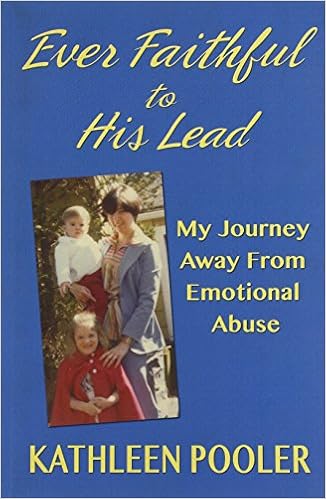
A few weeks ago, I was a Guest Blogger for Kathy Pooler whose memoir is pictured. Read more about it here. I asked Kathy if she'd consider doing an interview for my blog. Gracious lady that she is, she agreed without hesitation. The interview will run over two days. Part 1 is below. Not only memoir writers will find this of interest. All writers can gain some knowledge and insight from this writer's answers to my questions. 


Interview with Kathy Pooler, Memoir Writer

Nancy:  Did you have any writing background before you started to write your memoir?

Kathy:  The only background I have is a lifelong desire to write. My career was in nursing. I think my passion for writing started when I was around nine- years-old and wrote plays to perform in front of my maternal grandmother and all her Italian lady friends. They chattered in response and though I didn’t   understand a word, their enthusiasm motivated me to keep doing it. Soon after, I received a pink journal with a lock and key and I have been journaling ever since.  In 1999, I took a Writer’s Digest course, Getting Started in Writing which jumpstarted my writing career. When I decided to write a memoir, I took online courses in the art and craft of memoir writing from 2009 to 2012 through The National Association of Memoir Writers with Linda Joy Myers.


Nancy:   What made you decide to write the book?

Kathy:  We all have challenges and struggles in our lives that help to shape us into the adults we become. After surviving two divorces from emotionally abusive men, one of whom was an alcoholic, cancer and a son with addiction, I looked around at the life of peace and joy I was living and decided I must tell my story to give others in similar circumstances hope for themselves. No matter how far down into the abyss you may go, there’s always hope for a better life.

Nancy:  How long did it take from start to finish?

Kathy:  Memoir writing is a marathon, not a sprint. It has been a slow unfolding of past memories with new discoveries along the way. As I mentioned above, I journaled through all my challenges from the time I was in high school. Many of these journal entries became the seeds for my memoir.  I started writing in earnest in 2009 and published my first memoir, Ever Faithful to His Lead: My Journey Away From Emotional Abuse in July of 2014. 


Nancy:  Did you have a professional editor, or do it yourself?

IKathy:   feel strongly that professional editing is essential in producing a marketable book. I need an objective, professional review and would never rely on myself to edit.

When I complete my first draft, I put out a call to fellow writers and friends to be beta readers. This gives me feedback from a reader’s perspective. After incorporating the beta readers’ suggestions and when I feel my manuscript is ready, I send it to a professional editor for the evaluation of the content, story structure, narrative arc and writing. I will then hire a copyeditor to check for grammar and punctuation and a proofreader for the final review.

Nancy:  How many publishers did you submit to before being accepted at Open Books Press?

Kathy:  I was lucky. The small publisher reached out to me after seeing a comment I had made on a popular writer’s blog, Writer’s Unboxed. I had an established platform through my weekly blog and he requested I submit my manuscript to him. Before that, I had explored other publishing options, including traditional and self-publishing and already decided to aim for a small publisher.

Nancy:  What have you done to promote your book?

Kathy:  I think the most important thing is to take the time you need to write a good book and I hope I’ve done that. I participated in online and onsite book tours, book signings at local venues, such as libraries, counseling centers, senior centers. In one case, a coworker’s mother who worked at a local counseling center read my book and recommended to her director that I come to speak at a staff meeting which I did. This meeting was broad cast to two other counseling sites. As a result of the newspaper article about the meeting, a reporter from the newspaper requested to come to my house to interview me for a full page Sunday feature story.  Other opportunities came my way, such as requests to speak at a local nursing association’s dinner meeting and an invitation to be  keynote speaker at an annual fundraising event for the local domestic violence shelter.

Please Come back tomorrow for Part 2 of the interview

Friday, March 2, 2018

Does Seeking An Edit Help or Hurt?


Why does an author cringe at the thought of having someone else, either another writer or a professional editor, edit the manuscript?

In the case of a book, picture this: 

Author gets story idea.
Author outlines book.
Author slaves months, maybe years over the manuscript.
Author hires an editor to go through the beloved manuscript.
Editor takes a long time to do the job.
Author waits impatiently.
Editor returns manuscript with so many marks that it looks like a flock of chickens ran through it.

What's next? The author must go through the entire manuscript, correct and revise, add or toss out. Guess what? That's not much fun. It might feel like starting from scratch. It can be defeating, or deflating. You could feel like there's a ten ton weight pressing down on you. It's time to make a decision. Revise and re-edit or toss the project in the trash.

Do not make this decision on the same day the manuscript is returned. Take some time to consider the situation from all angles. Take the old Pro and Con route. Make a list of each for either dumping the project or continuing to work using the suggestions the editor you hired has given you.

If your ultimate goal is to have the story published, then it's almost a given as to what you'll decide to do. Even so, it's not easy to accept the fact that you thought you had sent the 'perfect' manuscript to the editor but it wasn't. It's the reason you wanted that editor--to help you find the mechanical errors and trouble spots.

When we're down with a virus, we call the doctor for help. He prescribes some medicine. Take it and you'll eventually get better. Let it sit on the counter untouched and you'll continue to be sick. As much as I hate to see a critique of my work come back with all kinds of marks, I know I'd better swallow the med and make that piece better than it was.

Being both a writer and one who critiques other peoples' writing (via my online group), I know that it's far easier for me to locate trouble spots in the work of others than in my own. 

Thursday, March 1, 2018

New Month, New Story Ideas Needed, So...

Image may contain: flower


We greet our third month of the year today. Not spring yet but getting close. In my part of the world--central Kansas--we'll see daffodils like the ones above before the end of the month. 

Do you need story ideas? Looking at a new month and pondering on what you did as a child when the third month arrived can help you come with with an idea. You Can do one of two activities to spark your imagination or to find some inspiration.

1.  Use these questions to trigger your memory. Use them in a memoir piece or base a fiction story on any one of them:
  • What kind of climate changes did you see in March where you grew up?
  • Did the bulletin boards and decorations change in your classroom on March 1st?
  • Did your family celebrate St. Patrick's Day? If so, how? If not, why? 
  • Did you still wear winter clothing or switch to lighter jackets etc?
  • Did you ever fly a kite? Where?
  • Did you ever make your own kite? 
  • Did you have any religious holidays in March?
  • What kind of flowers bloomed in your part of the country in March?
  • What does the Ides of March mean to you?
  • Do you remember when your parents worked on taxes in March?
  • Did you celebrate the first day of Spring in March?
  • Any special foods you ate in March? 
2.  Another activity is to free write about March for 10, 15, or 20 minutes. Write about this new month now and in the past, what it means to you, what you can expect to see--whatever comes to mind. Start writing and keep going until you run out of ideas. 

I did this exercise a few years ago and this is what came of it:


Musing On March

Most people know that old saying "If March comes in like a lion, it will go out like a lamb." And it works in reverse, as well.

Today in Kansas, March slipped in like a sweet little lamb. She brought clear skies, sunshine and a temperature to reach 68 by mid-afternoon. What bliss after one of the worst winters Kansas has had in a long, long time.

Along with all those good things, March winds are going to blow today. They'll whip through the trees, which are still recovering from the devastation of the December ice storm. The wind will roll across the Flint Hills with glee, bending the prairie grasses like pieces of cooked pasta. The wind will skip across rivers, stir up the sand traps on golf courses, create havoc with hairdos and swirl dirt piles when found. It doesn't matter a bit, however, because those south winds bring warm air from the gulf to our state. So, blow wind, blow. Send kites dipping and dancing through the sky.

Our town has a St. Patrick's Day celebration that grows larger every year. A Blarney Breakfast, races for runners and walkers, and plenty of green beer highlight the day in an area near the Kansas State University campus. Irish music blares through loudspeakers, and on that particular Saturday, everybody is Irish! As for me, I'm Irish every day--at least half my heritage is from that green, green land.

This year, we also celebrate Easter in March, a holiday that is both religious and commercial. Whether you celebrate one part of both, it's an important part of the year. For me, Holy Week reigns, and I plan the rest of my activities around church services on Thursday, Friday and Sunday of that week. But I love the commercial part, too, the many decorations and early spring flowers, trees budding, lambs’ births--all those things that tell of rebirth and awakening. But don't all those things stem from the Easter story of the Resurrection? For me, they do.

One more thing March may bring is another snowstorm or po
ssibly another ice storm. Kansas almost always gets snow at least once in this third month of the year. I remember one bad ice storm that frosted trees and shrubs in the middle of March one year. The best part about March snow or ice is that it rarely lasts more than one day.

Welcome March!

belle and boo

Wednesday, February 28, 2018

Your February Writing Life

Image result for free image Goodbye February


I am known to be a person who looks ahead, not behind. I'm one who wants a positive spin on most things in life. Why? I've learned that looking back and regretting what youdidn't  accomplish and putting a negative tone on life doesn't do me one bit of good. Why let myself be dragged down by the If only's of the past? 

That said, there are times when it is prudent and helpful to take a look at the recent past. Today is the final day of the shortest month of the calendar year. Before we look ahead to next month, take a few minutes to assess your writing life this past 28 days. 
  • What good things happened as you moved along your writing journey? 
  • What things dragged you down?
  • Did you do anything to change or fix those things?
  • Did you assess the how and why of the negatives of your writing?
  • What was the happiest moment in your writing life in February?
  • Did you meet any of your goals this month?
  • How many submissions did you make? (Hopefully, 'zero' is not your number!)
  • What did you do to improve your writing life?
  • How can you improve that next month?
  • How much reading did you do? (A biggie for writers--read, read, and read!)
  • Did you help another writer?
  • Did another writer help you? 
  • Was time to write a big problem?
  • Did you create time to write? 
  • What was the most uplifting moment of your writing life this month?
  • Did you attend a writer's meeting of any kind?
Once you've answered the questions above, you can easily set some goals for March. Next month has three more days in it than this one. A gift for you!

February is sliding away today. Gone are the hearts and flowers of Valentine's Day. No more President's Day recognition. Maybe no more big weather events. It's possible the winter bugs we all seem to pick up will flee.

When March arrives, I will look for crocuses and daffodils to start their journey above grouond, gladdening hearts and announcing that spring is not far away. It's the month we all become Irish for one day. It's the month that teases us with pleasant days only to blow an ice or snow storm our way even though Spring officially begins in the third week. The best part of March is that April is nearly here. 

Whatever the month, put writing in your To-Do List.

Tuesday, February 27, 2018

Are You The Queen of Unnecessary Words?

Image result for free image or clipart of scattered words


It's the simple things that can help you have a polished piece to submit to an editor. Using unnecessary words makes for 'clunky' writing. We have all done it without even thinking. From brain to fingers on keyboard, those unneeded words come tumbling through. We don't consciously think about them. They seem to happen quick as the flash on an old camera. 

I confess to being the Queen of Unnecessary Words in my early writing years. I am less guilty of adding these extra words today, but I admit that a few sneak into my writing once in awhile. Hey--nobody's perfect!

Some examples: (Unnecessary words are underlined) 

A. Right near the bike trail, I found five shiny new pennies. 

B.  Near the bike trail, I found five shiny pennies.


A.  The girls brought them to the circus with them. 

B.  The girls brought them to the circus.


A. Billy entered in the  calf roping contest.

B.  Billy entered the calf roping contest.


A.  I just don't want to eat my vegetables.

B.  I don't want to eat my vegetables.


A.  I sat down on the pink chair.

B.  I sat on the pink chair.

Some words that add nothing to a sentence: 
  • really
  • then
  • and so
  • even so
  • just
  • actually
  • in order to 
  • because of
These are only a few. Sometimes a sentence must be slightly restructured to eliminate the unnecessary word(s). Some words can be omitted without changing the sentence. Google more on this subject. It's so important that you'll find many articles addressing the problem.

Why is it important to edit all unnecessary words from your story, essay or article? The top reason is to make your sentences stronger which will increase the strength of the entire piece. It's true.


Monday, February 26, 2018

Many Dream Of Writing But...

Is your dream to be a writer?


Many people want to be writer and see their words published. Probably there are more who only dream of writing. They'll do it someday. That's what they tell themselves. I know because I was one of those people for far too many years. I let life get in the way, let other things take precedence over that desire to write about so many topics. 

That's only partially true. There was another reason that I never started on my writing journey until I was in my fifties. Fear that I couldn't do it well enough to be published or to be competitive with other writers kept me from dipping my toe in the writing waters. Fear of failure is real and something many who want to write must deal with. 

I finally got over that self-doubt. How? It was partly because I realized time was moving on and I knew if I didn't give it a try soon, I never would. Did I never doubt myself again? I most assuredly did. Many times. But I learned to look ahead rather than back to the beginning moments. I gave myself pep talks. Mentally, not out loud where others might wonder who the heck this woman talking to herself might be. 

We've all heard the quote that tells us Today is the first day of the rest of your life. Start now before there's not much left of a lifetime.

What if you have tried writing and want to do more but all you've done is write a few short stories, a smattering of personal essays and family stories? What if your dream is to write a full length novel? Do exactly what our poster says--take one step every day to achieve that dream. And that means that you'd better write something every day. If all you do is write the outline of the first three chapters, you've taken a step. The next day, do three more for your outline or write a first draft of chapter 1. Take some step toward your goal of writing that novel every day.  Even mentally working out a problem area in your novel is a positive step. 

Why take a step every day? If you miss Monday and Thursday some week, it's going to be easier to miss Tuesday, Thursday and Friday the next week. Before you know it, you're writing only one day a week, then once a month, and finally chuck it all. Your desire wasn't as great as you'd thought, after all.

If your dream is to be a published writer, don't try it unless you're willing to devote time and to work harder than you've worked on some other parts of your life. Make no mistake. Writing is not easy which is exactly why you need to write something every day. It's always easier to do something by bits and pieces than to bite off too much. 

If your dream is to be a poet, write a short poem every day or two verses of a longer poem. The point is that you need to make learning to write poetry and actually writing it a part of every day. It needn't be hours worth devoted to poetry. Any amount of time spent is worthwhile. 

Write or do something related to writing, like reading about it, taking a workshop, meeting with other writers for a critique session part of each day. Dreams do come true if you work at it.


Friday, February 23, 2018

Hitting A Problem Area When You Write


Have you ever run into a real snag when writing a story, a chapter, a scene? Or an essay, a poem or a how-to article? Of course you have. It's a part of our writing journey. We hit potholes more often than we'd like. 

The bigger question is this--What do you do when you run into a problem that appears to be a wall so high you think there is no way to climb over it? There are choices that need to be made when this situation occurs. You can do any of the following:
  • sit down in the road and cry like a two year old who has been told NO or is too tired to go on
  • give up writing 
  • back up and think about the problem for a few minutes
  • give up after that few minutes because the answer did not suddenly appear
  • spend some real time thinking about the problem, make a list of possible ways out, then put it aside for a day or two 
  • ask for help from another writer (they sometimes see more clearly than the writer)
  • take a detour--eliminate the problem situation altogether
  • use a large dose of perseverance and keep working until you've found a workable solution
  • walk away from the problem; come back when you're not so frustrated
In my younger years, I enjoyed sewing and making clothes for my daughter. Reading and interpreting pattern directions sometimes brought problems. I'd try to do what it appeared to say but it didn't always work. With each successive try, I'd rip out the former stitches and do it again. I learned that it was better to walk away and come back later in the day, or even the next day. So often, what seemed so difficult suddenly appeared to be just a step by step process to success. It was a good lesson for me when I started writing. If it doesn't work at first, step away; come back later and the answer could be crystal clear. 

Giving up is easy and persevering can be tough. If you do persevere and work your way through a problem area in your writing, you'll come out the winner. Remember that perseverance and patience are buddies in your writing life. They walk the path with you, hand in hand. 


A Memoir to Enjoy

  I recently read a book that I enjoyed so much that I wanted to share it with others.  Kenneth Goetz offers us his memoir titled A Streak o...