Showing posts with label Memoir writing. Show all posts

Thursday, March 29, 2018

Memoir Needs Facts and Feelings, Too

Image result for free image of Isabel Allende
Isabel Allende

A memoir forces me to stop and remember carefully. It is an exercise in truth. In a memoir, I look at myself, my life, and the people I love the most in the mirror of the blank screen. In a memoir, feelings are more important than facts, and to write honestly, I have to confront my demons. Isabel Allende
 (Quote posted at Brainy Quotes)


Memoir appears to be continuing its popular trend. Recently, I talked about writing and publishing short memoir pieces as well as the book length ones. Whether short or long, one part of the quote stood out for me and rings true for both. 

It was the sentence 'In a memoir, feelings are more important than facts.' Ms. Allende is not saying that facts are not important. you and I both know they are mandatory in memoir. However, to write a memoir people will read, the author's reaction and feelings to whatever occurred are the choice nutmeat in the hard shell of truth. 

Readers want to know what happened but also how the author felt, how he/she handled the situation. Was the author depressed, angry, elated, mournful? We want to know the problem but the problem alone is not what readers seek. Problems beg for solutions. Solutions to our lifetime troubles involve feelings. Our feelings lead us to the solution. Hopefully, it will be a satisfying one. 

Readers are looking for the human side. They want to be able to relate to whatever happened to the memoir author. 

We often mention that memoir can be a step in healing a deep hurt. What does that involve? Feelings. 

All memoirs are not tragedies but a good many are. Even someone who writes a memoir about a blessed, happy life needs to include feelings. In this kind of book or short piece, the feelings will be of a different kind than in those that address a sad life or situation. 


Whether we write fiction, personal essays, or memoir, it's our innermost feelings we must reveal to the reader, but perhaps most of all, to ourself. 

Monday, March 19, 2018

Memory Moments Are Monumental


When we look back on the years of our lives, the special moments seem to stand out more than the big events. It's those clear moments that we should write about. The snippets of time that stayed with us reveal much about us, the kind of person we are, the parts of life that are important to us. 

I could write about my college graduation with facts and figures, the beastly hot day etc. No big deal. But if I write a personal essay about the way my dad's chest puffed out more than usual and the glow in his eyes let me know how proud he was of me as I left the stage with my degree in hand. He, who had only gone as far as having 4 months of high school now had a daughter who was a college grad. That's a moment I'll never forget. I imagine he kept it in a safe spot in his memory bank, too, pulling it out now and then to relive the moment.

I could write about the life event of a first grandchild being born but I would prefer writing about one emotional moment when I picked up my less-than-one-day-old granddaughter, looked into her blue eyes and experienced the most overwhelming emotion in my life. My thought at that split second was This is the child of my child. It was just a flash but has stayed with me. An entire personal essay could be written about that tiny slice of time.

When those special 'memory moments' come back to you, do more than smile and enjoy them. Pounce on them! You can base a story, a poem, a memoir piece or an essay on each one. Show your readers the lesson you learned in that moment. Help them feel the emotion you felt. Trigger moments of your readers' memories with your own story. 

Don't neglect the big things in life but please pay very close attention to the little memory moments that define who you are. When one of those moments pops up in your mind, don't just enjoy it. Jot a few notes for a possible piece to write, then go back later and bring the moment to life. 


Monday, March 5, 2018

Q &A With Kathleen Pooler, Memoir Author


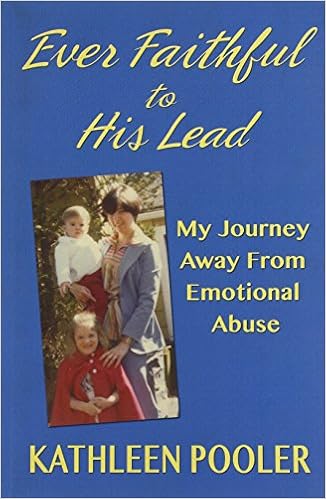
Image result for Ever Faithful To His Lead Kathy Pooler photo

A few weeks ago, I was a Guest Blogger for Kathy Pooler whose memoir is pictured. Read more about it here. I asked Kathy if she'd consider doing an interview for my blog. Gracious lady that she is, she agreed without hesitation. The interview will run over two days. Part 1 is below. Not only memoir writers will find this of interest. All writers can gain some knowledge and insight from this writer's answers to my questions. 


Interview with Kathy Pooler, Memoir Writer

Nancy:  Did you have any writing background before you started to write your memoir?

Kathy:  The only background I have is a lifelong desire to write. My career was in nursing. I think my passion for writing started when I was around nine- years-old and wrote plays to perform in front of my maternal grandmother and all her Italian lady friends. They chattered in response and though I didn’t   understand a word, their enthusiasm motivated me to keep doing it. Soon after, I received a pink journal with a lock and key and I have been journaling ever since.  In 1999, I took a Writer’s Digest course, Getting Started in Writing which jumpstarted my writing career. When I decided to write a memoir, I took online courses in the art and craft of memoir writing from 2009 to 2012 through The National Association of Memoir Writers with Linda Joy Myers.


Nancy:   What made you decide to write the book?

Kathy:  We all have challenges and struggles in our lives that help to shape us into the adults we become. After surviving two divorces from emotionally abusive men, one of whom was an alcoholic, cancer and a son with addiction, I looked around at the life of peace and joy I was living and decided I must tell my story to give others in similar circumstances hope for themselves. No matter how far down into the abyss you may go, there’s always hope for a better life.

Nancy:  How long did it take from start to finish?

Kathy:  Memoir writing is a marathon, not a sprint. It has been a slow unfolding of past memories with new discoveries along the way. As I mentioned above, I journaled through all my challenges from the time I was in high school. Many of these journal entries became the seeds for my memoir.  I started writing in earnest in 2009 and published my first memoir, Ever Faithful to His Lead: My Journey Away From Emotional Abuse in July of 2014. 


Nancy:  Did you have a professional editor, or do it yourself?

IKathy:   feel strongly that professional editing is essential in producing a marketable book. I need an objective, professional review and would never rely on myself to edit.

When I complete my first draft, I put out a call to fellow writers and friends to be beta readers. This gives me feedback from a reader’s perspective. After incorporating the beta readers’ suggestions and when I feel my manuscript is ready, I send it to a professional editor for the evaluation of the content, story structure, narrative arc and writing. I will then hire a copyeditor to check for grammar and punctuation and a proofreader for the final review.

Nancy:  How many publishers did you submit to before being accepted at Open Books Press?

Kathy:  I was lucky. The small publisher reached out to me after seeing a comment I had made on a popular writer’s blog, Writer’s Unboxed. I had an established platform through my weekly blog and he requested I submit my manuscript to him. Before that, I had explored other publishing options, including traditional and self-publishing and already decided to aim for a small publisher.

Nancy:  What have you done to promote your book?

Kathy:  I think the most important thing is to take the time you need to write a good book and I hope I’ve done that. I participated in online and onsite book tours, book signings at local venues, such as libraries, counseling centers, senior centers. In one case, a coworker’s mother who worked at a local counseling center read my book and recommended to her director that I come to speak at a staff meeting which I did. This meeting was broad cast to two other counseling sites. As a result of the newspaper article about the meeting, a reporter from the newspaper requested to come to my house to interview me for a full page Sunday feature story.  Other opportunities came my way, such as requests to speak at a local nursing association’s dinner meeting and an invitation to be  keynote speaker at an annual fundraising event for the local domestic violence shelter.

Please Come back tomorrow for Part 2 of the interview

Monday, May 2, 2016

Two Important Things In Memoir Writing

M E M O I R

Memoir writing has been in vogue for several years and it still appears to be going strong. Celebrities write entire books to share their story with fans. A memoir differs from an autobiography in that the memoir can focus on one area and is filled with emotions and viewpoints while the autobiography is generally fact-filled, chronological and covers a full life, not just a potion.

I have noticed over the years that the Memoir category in our state authors contest always has the most entries. That also means it's the most competitive and when one places in that category, he/she can be proud. We all have memories that can be turned into a memoir piece of 2,000 words or less for a contest or a magazine. The topics within are boundless. Reach back for memories of school days, the home where you grew up, your extended family, influential friends, moving from place to place or staying in one all those years, your marriage, births of your children. The list can go on and on. 

For me, two things become extremely important when writing a memoir piece if you want it to be of interest to others. 

1.  Tell not only what happened but inform your reader how it affected you and your family members or friends. What was learned? If you tell what happened and ignore the next part, you're writing a slice of life piece which could be of far greater interest to you than to your readers. But, if you let them know how you were affected and what you learned, they are more apt to key in and relate it to their own experiences. In the personal essay, we need to gift our reader with a universal truth of some kind, and I think this can apply to memoir writing, too. 

2. Show your reader what happened. Show your characters' traits. You can tell me that Grandpa had a mean streak but I'm going to 'get it' a whole lot better if you illustrate his character trait. Show him kicking a cat down the stairs or swatting a dog who got in his way. That will make your reader wince, especially if he/she is an animal lover. Show the reader what your mother was like after she fed 10 hungry field hands every mid-day during harvest time. Don't say something like My mother looked tired after the weeks of harvest and feeding the hands every day. Show us her posture, the circles under her eyes and maybe the smile that accompanied them because she was grateful for the help. Show us what she wore as she spent hours in the kitchen preparing those hearty meals. Show your memories so that the reader can begin to feel how you were affected.


Thursday, February 27, 2014

Why Do We Write Memoirs?


The perfect wall art for the memoir writer. And who are the memoir writers? Anyone who writes family stories could be considered as a part of this group. I like the phrase in this quote that says to taste life twice. When we write memoir stories, or family stories, that's exactly what we do. But why?

Those memories that stay with us as we move through the adult stages of life remain because, in some way, the experience or the person impressed us greatly. That impression could be filled with the joy of the moment you're remembering or still give you the heebie jeebies because that moment was so terrible. Whichever it may be, these long ago happenings leave a visible mark upon us and it's beneficial to revisit the experience.

We savor those good memories and are happy to taste them twice but what about the sad, or even tragic, ones? Why do we want to relive them? I think that it helps us to understand the event, and the people involved, better when we can look at it from a completely different age. Our own further life experiences help us see whatever happened in a new light. Maybe reliving a difficult time is opening the door to forgiveness. If forgiveness is not possible, then maybe understanding can help soften the sharp edges of that particular memory. I doubt there is one of us that has nothing but happy memories. If so, then it's likely he/she blocked out the ones that hurt because they aren't ready to think about them yet.

I once went to a movie expecting only to be entertained, and I was until the final scenes which were so emotional, so tragic that it triggered something long buried in my memory bank. I sat in the dark theater with tears streaming but not from what I observed on the big screen. My anguish stemmed from a love/hate relationship with a close family member. I drove home from the theater and grabbed a pad of paper and a pen, then poured out my feelings about this person in a free verse poem. More tears but also a peacefulness that I can only attribute to bringing these memories to the surface, writing about them and recognizing that they were a part of what makes me who I am. Forgiveness was not there. Not then but it did come at a much, much later time.

Besides leaving a history for your family now and those in future generations, another reason to write memoir is to allow readers a glimpse into your life, to let them compare their own lives to yours, to help them see that maybe their experiences are similar. We humans are a curious lot and we like to learn about the lives of others, espeically famous people. It's why there are so many biographies (and autobiographies) written as well as memoirs. It's also a delight to history buffs who are able to learn about a different era.

Even writers of fiction, poetry, essays, educational articles and children's stories can also write memoir pieces. A memoir does not have to be booklength. Many anthologies, like Chicken Soup, publish many a memoir story of 1200 words or less. My own annual state writers club contest has a category for Memoir of 2000 words or less. Don't feel overwhelmed at the thought of writing an entire book. Take it one story at a time and one day, you'll have enough material for an actual book.

Monday, January 27, 2014

Do You Read Memoirs?


      George W. Bush Museum in Dallas
                                                                                       Father and Son in Courtyard

We went to visit the SMU campus and the George W Bush Museum today in the southeastern part of Dallas. Our oldest granddaughter will be attending Southern Methodist University next fall so we were especially interested in seeing the campus and I'd been wanting to see the Museum ever since it opened.

Ken and I have visited several presidential museums over the years. Each one is a little different, each one is a portion of our history. Each one has touched my heart in numerous ways. 

Many memoirs have been written by presidents and first ladies through the years. One that I especially enjyed was Barbara Bush's book. Such a wise, witty woman with a tongue that could be both sweet and acid, fitting the situation. No phony but an honest, kind and courageous woman. 

If you have not read memoirs in the past, consider doing so soon. As well as a  slice of history, they are a glimpse into someone else's life. We can't help but compare these lives to our own. There are major differences but also enough similarities that we can identify with the person whose memoir it is. We see reasons for actions and gain an appreciation of what these political figures had to deal with. Famous? Yes. Even so, they are also real people who act and react just as many of us do and would given the same situations. 

We tend to judge celebrities from the things we read in the papers and see on TV. They're one-sided views. Reading their memoirs gives us another viewpoint. Memoir writing is quite in vogue now. Give it a try--pick out someone you admire or even someone you don't. Read their story in their own words. 

Consider writing your own memoir. I have written bits and pieces, especially for Chicken Soup books that qualify as memoir. I once attended a workshop where the presenter said that ...memoir writing allows us to chew life twice. I think those who write memoirs end up seeing life in various lights. I have surprised myself in some of the revelations I've found in writing about my life through the years. 

Tomorrow, we move on to Fredericksburg, Texas down in the Hill Country. More on that in my next post.

Tuesday, October 5, 2010

A Second Helping

During the convention I attended this past week-end, something one of the workshop presenters said has stayed with me. It keeps popping up in my mind at the oddest times. It must mean it's saying something special to me. Why else would it come to me while I'm unloading the dishwasher or emptying the trash?

The workshop dealt with writing memoir, and even though there was a lot of good material presented, the one thing that I remember the most is this. Writing memoir is like tasting life twice. We, who write memoir, have the great good fortune to relive the important things in our lives through the written word. Surely, they are important parts of our lives, or we would not remember them so clearly. Something about the event impressed us so much that it stays in our mind until we reach in and pull it out again.

It might be a pleasurable happening or could be a tragedy we experienced. Either way, writing about it allows us to re-examine that part of our life and perhaps see it from a different perspective after many years have rolled by. If it's a happy moment that we experienced, we get to experience that euphoria once again. If it's a sad time, maybe we taste it again with new understanding. Maybe we can finally realize what it did to us as a person.

Tasting life a second time through memoir brings benefit to both the writer and the reader. During the award ceremony at the convention, the contest manager mentioned that Memoir was the category with the greatest number of entries. He also said that, if you placed in that category, you should feel very satisfied as it was the most competitive.

I received an Honorable Mention for my story "Grandma, Raspberries and Cream" which allowed me to go back and taste an experience with my grandmother and grandfather again. It was not a happy time, as Grandpa was dying of cancer and had asked to see me, a child of nine. He lived in a boarding house and my grandmother had come to nurse him in his final days. They had been separated for many years, but she never hesitated to come when he needed her. I traveled alone on a train to spend a few days with them. There was so much at the time that I didn't understand, but I found that writing about it all these years later made many things more clear.

Try writing a slice of your past life. Enjoy your second helping.

Friday, June 4, 2010

A Food Story Success

A few months ago, I learned that a story I'd sent to a memoir site's contest had earned an Honorable Mention. The editor wrote that the story would be published on the site sometime in June. Yesterday I received a notice from Matilda Butler, editor at http://www.womensmemoirs.com/ telling me that my story was up.

So of course, I clicked right on over to the website to see how the story looked. I was most pleased to see "Love On A Plate" in print and pictures to go with it--one of me at age 10 and another of my grandmother. The story is about Grandma and some special muffins she made. The recipe is included. You can read it at
http://womensmemoirs.com/memoir-scrapbooking/kitchenscraps-love-on-a-plate-by-nancy-julien-kopp/

The editor is urging readers to leave comments in the special section after the story. So, if you feel so inclined, please do so.

The womens' memoir site features food memory stories on a regular basis. Surely food comes in as a big category in our family memories. We all have favorite foods our mothers, grandmothers or aunt made. And we even have some that we don't ever want to eat again. Either way, they give us a story to be written and saved for posterity.

Wednesday, March 31, 2010

A Problem With Memoir Writing

I have done a lot of memoir writing. In fact, a majority of my Chicken Soup stories are memoirs. I nearly always submit the stories to my critique group, and it's a good thing I do.

One of the biggest problems with memoir writing is that I remember the incident and all the things about it plainly. I knew the people involved, their characteristics and actions, but the reader does not. So, they are often left with questions or wanting to know more about a character or a situation.

Recently, I submittted a story about my grandparents, who had lived separated for many years. When my grandfather was dying of cancer, my grandmother made a trip to his town to take care of him in the final weeks of his life. In the story, I mention a landlady at the rooming house where he lived. One of the critiquers wanted to know if she was "the other woman." --the one who caused their marriage to break-up. I can see where a reader might be looking for that kind of explanation. In reality, the split happened probably twenty years earlier and the landlady was only there to collect the monthly rent and say a hello now and then.

To go back and explain all that would only add more than needed to thiis particular story. It might be a full story on its own. There were a couple other questions from the critiquers, too. They questioned reasons behind things that had happened.  As the writer of the story, I need to decide what of those things they asked about are important enough to be addressed. Or are any of them that important to the story itself? Would adding several more parts to the story detract from the original intent?

If you are working on a memoir story, try to read it with objective eyes. Ask yourself what else might be necessary in order to clarify the story itself. But I would add that you  need to be wary of adding too much detail. There's a fine line between too little and too much. With practice, you'll learn where to draw it.

A Memoir to Enjoy

  I recently read a book that I enjoyed so much that I wanted to share it with others.  Kenneth Goetz offers us his memoir titled A Streak o...