Friday, January 30, 2015
Do You Have A Story For One Of These Books?
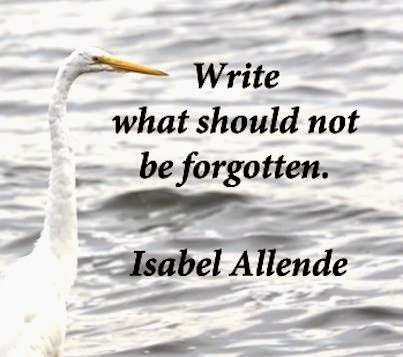
The poster pic above has nothing to do with today's post but it sure seemed perfect for the way I'm feeling this morning. The week has been filled with many things I've had to deal with. Nothing awful, nor major in importance--just 'stuff' to take care of and worry about. Plus, the week has flown by like a tornado across Kansas. Whoosh!
The real topic of this post is to remind you of the books Chicken Soup for the Soul has in the works. Deadlines are all workable for you to start on a new story or work on an old one to whip it into better shape. Following is the list of possible books:
1. Dreams and Premonitions: Deadline March 15, 2015
2. Make Your Own Luck: Deadline March 31, 2015
3. Stories About the Christmas Season: Deadline March 31, 2015
4. Think Possible: Deadline April 30, 2015
5, Volunteering and Giving Back: Deadline February 15, 2015
Go to this page to read about the kinds of stories wanted for each book. Then check the story guidelines to refresh your memory. Be sure to check them again after you have written your story to see if it fits the requirements of a Chicken Soup story.
When your story is written and edited, use the submission page to send it. There are several lines to be filled in by you. Check them carefully before you hit the Submit button at the end of the page.
I'd say Good Luck to all who enter but I think Good Writing would be a better sentiment. You and I both know that it isn't by luck that our work is accepted. Good writing is the key element--that and following the guidelines.
Thursday, January 29, 2015
Take Time When You Write
Flash fiction came into being because too many people claimed they didn't have time to read full stories. They missed reading so the short-short story filled the need. Poetry contests limit entries to a line count that excludes a good many poems. We want this to be a quick read is what most of us derive from that requirement. There are even calls out for fiction of 100 words or less. Now, that's almost flash-flash fiction!
I'm sure you've noticed that magazines are considerably skinnier now. Part of the reason is cost to the publisher but I think that allowing the reader to get through the magazine in less time is also a factor.
The same thing is happening with newspapers. Again, cost of production is a major factor, but fewer and fewer people read the newspaper, preferring to get their news in bits and pieces online and on tv. It reminds me of that old Dragnet tv show where Sgt, Friday was known to quip, Just the facts, ma'am, just the facts. That's about all the news that a large chunk of our population is willing to read now.
In this speedy world we now live in, do you rush through your writing projects, too? Do you try to make them as short as possible? I hope not. We may be writing flash fiction for those 'have no time' people to read, but we need to take enough time to make it a minimum of words that are worthwhile. Hurry through a writing project and it will show. An editor will spot the I zipped this thing out in an hour story in a flash.
He who hurries through a writing project, who does not take the time to revise and edit more than once, who dashes it off without a backward glance is going to be the one holding a rejection letter in hand (or in an email).
It's all too easy to have the hurry-up attitude in your writing because of all the other speedy things in our lives. Slow down and give your writing time. Hurry through other parts of your life if you must, but take some time when writing.
A word about writing flash fiction or even flash-flash fiction--it might be short to read but it's not at all easy to write a full story in a very few words. If you've ever tried it, you know. If you haven't writtten anything like this, give it whirl and you'll realize how difficult it is to write thise bare-bones stories.
SLOW DOWN WHEN YOU WRITE
Wednesday, January 28, 2015
Ever Needed An Attitude Adjustment?
You've heard me expound on the importance of attitude in your writing life many times. You'll hear me say it again today and probably in future posts as well. Does that let you know how important I consider attitude to be? It should.
The poster above tells me that having a good attitude toward our writing world starts like many other parts of life. It begins with one day, or a small step and grows day by day to become months, years and the rest of your life.
The beloved children's story, The Little Engine That Could, is a fine example to children but also to those of us who are long past childhood. Watch a video of the story by clicking on the book title. You can also order the book at Barnes and Noble online. If you've never read it, do so. If you've read it long, long ago, give it another read or watch the youtube film. It's such a simple story but can set our path for life in showing us what having the right attitude can help us achieve. Sometimes, the simplest things offer us the greatest tools for life.
And make no mistake--your attitude toward your writing is one of the tools in your writers kit.
Approach a writing project with a negative attitude and guess what will happen? Keep putting yourself down as a writer and guess what will happen? Look at a new project at out of reach as clinbing Mt. Everest and guess what will happen?
Is a good attitude going to make every writing project easy? Definitely not. It will, however, make it easier than if your attitude is negative. Being positive will help you over the bumps in the road on your project.
Give some thought today to your attitude. Is it always positive? Or is it even sometimes positive? Is it something you work on? Check the poster again and start making any improvements needed today. So many things happen one day at a time.
Tuesday, January 27, 2015
Is Their A Magic Formula For Editing?
Yesterday, I wrote the first draft of a story aimed for a forthcoming Chicken Soup for the Soul book. It has the right amount of words to satisfy the CS editors. There is dialogue sprinkled throughout, another one of the traits the CS editors like. I wrote to the theme of the book. I wrote in first person.
So far, so good, but the story lacked something crucial. It had no life, had no heart in it. Disgusted, I saved the draft in a file and moved on to something else. I knew that I had to let it simmer awhile before reading it again. Usually, I see the story from a different perspective when I do that. What seemed completely baffling the day I wrote the draft will most likely become more clear a day or two, or three later.
I've learned that it doesn't pay to beat myself over the head on the day I write that first draft. It will most likely end up with me being frustrated and angry with myself and a story that is no better than on the first writing.
It pays to edit at a later time. How much later doesn't matter. The important thing is to let the story sit before you attempt your revisions and editing. As the poster tells us, editing is the right thing to do. Not only right--it's crucial!
But what happens when you stare at the first draft for an exceedingly long period of time and you're still in the dark as to what to do to make the story better? Go ahead and stare for as long as you like, be like the person in the poster below. There are times when 70% of your ediitng process is staring at your work. The hope is that you'll suddenly see the way out of the dark tunnel and your fingers will fly over the keyboard making the needed changes. Does it always happen? No, but it will work a good deal of the time.
My next job today is to stare at that draft I wrote yesterday. I hope that I'll see the places where I can add or change to make my story better. I want to make it one that I can send to my critique group to get some objective eyes on it. Then, I'll make further revisions and send the story to the Chicken Soup editors for the final judgement.
How about you? What's your editing process? Have you found a magic formula for editing that turns your stories into publishable pieces? If so, let us know your method.
Monday, January 26, 2015
Preserve The Past
Novelist, Isabel Allende makes a good point for writing your family stories. All the past history in your family should not be forgotten. But it will be if all you do is tell the stories at family dinners. Sooner or later, the elders in the family will have passed on and many of those stories will be gone, as well.
There are multiple things in our families that should definitely not be forgotten. My writer friend, Terry Needham, writes about a terrible storm in the Hays, Kansas area that took a mother from her family far too soon. She froze to death when she and her husband got lost trying to make it home in a blizzard. The woman was Terry's grandmother. That episode is but one of the family stories he includes in his book When I Was A Child. He has woven the story of the children who were left motherless in a masterful way. This author definitely wrote what should not be forgotten.
Many of us will never write a complete book of our family stories and publish it. Even so, you can write these stories for your own children and grandchildren to read and keep. But nothing says you can't write a full book of your own family stories. Many have done so. Memoir upon memoir sells in all the bookstores and at Amazon.
Every family has its share of tragic happenings as well as some that are humorous or just plain heartwarming. Write enough family stories and the reader will begin to see each family member more clearly. Was Grandpa a crotchety old guy on the outside with a heart of gold? Or was he just plain mean like my mother's grandfather was? Did your Great Aunt Gert dress weirdly? Tell off-color jokes? Or swear like a sailor? I have an aunt that was so unique that I doubt she has an equal anywhere. I have yet to write about her but she's on my To-Do list of things I need to write.
Weddings should figure in the family stories you write. Did your great-uncle desert his bride-to-be? Whose wedding cake toppled over before the reception? Which child was a flower girl who refused to set one foot down the aisle? Who passed out at the altar while saying wedding vows? Lots of things happen at weddings. Include them in your family stories.
Same thing for funerals. Not all the things that happen at funerals are sad in nature. Funny things occur, too. They might not seem as funny at that time but later make a good story.
Our school days give us lots to write about. Consider how many years you went to school? And the different stages you went through during those years. Funny, sad, scary and thrilling things happened to us during the time we were being educated.
Weather creates stories within families, too. It certainly did in Terry Needham's book. Memorable weather experiences stay in our memories forever, but you'd better write about them so the younger members of your family will learn about the episode.
How about the places where you lived? Those should not be forgotten. Some folks stay in one place for a good many years but others have moved around the country or even within a small area. Some have lived overseas for a period of time. What interesting tales can be told about places we've lived and the moves we've made.
If anyone in the family served in the armed forces, there are surely stories to be told. What happened during basic training or when deployed overseas? Did your family member thrive on the military life or detest every moment? Did he/she make lifelong friends while serving? Did they learn a skill that carried through to the remainder of their life?
I could go on, but you get the drift. All the people who think there is nothing of interest in their family history might be surprised once they try to write about the people and places. Don't let them be forgotten. It's up to us who are left to preserve the stories and celebrate the people in our families.
Friday, January 23, 2015
Take An Ounce of Courage and....
The poster above urges us to try. True that we'll never know what might happen until we do.
The problem is that sometimes it takes courage to make that first step. What holds us back? Try these for starters.
1. What if I try to write something and it turns out to be a piece of junk?
2. What if I write something and it's a wonderful story and then I have to measure up with all the rest of my writing?
3. What if I'm just fooling myself that I am actually a decent writer?
4. What if I write a good story but then have to find a place to submit it? That's hard work!
Let's look at each of these worries. And don't kid yourself, these are the kinds of things that many writers do find of great concern.
1. So what if what you write turns out to be a piece of junk? There's no rule that, once you write it, you have to show it to anyone, have to submit somewhere, or even like it yourself. The big thing is that you actually took that first step and wrote something. Go for it!
2. If you have written something you feel is really good, you'll do it again. Maybe not every time but you will definitely write a good story again. All writers have files of writing that they are proud of, writing that could be better with some work, and writing that is a 'forget-it' type. Nobody, or almost nobody, writes a blue ribbon winner every time they put forth the effort to write. Maybe what you put into the writing is part of what group it will fall in. The harder you work, the better the piece is most likely to be.
3. It's possible that you are fooling yourself, possible that you may never make it as a published writer. But that's OK. At least you took the first step. You tried. It's also very possible that you are better than you think you are. We tend to put ourselves down more than we should. So, don't be too hard on yourself.
4. Yes, dear Writer, it is hard work to find a place to submit your work and then make the submission. You don't wave a magic wand to find a home for what you writer. If only! You must study the markets and look for the best match for your story. You need to make a list of possible markets for each story, poem or essay you write. Lists and more lists. Some writers whine that all they want to do is write. That's fine if you don't care about being published but if you do want to sell your work or see it in print, grit your teeth and get on with the search for a place to submit.
So, take an ounce of courage and try. You'll never know what might happen until you do.
Thursday, January 22, 2015
A Photo Prompt Exercise That Might Be Hard To Resist
This wonderful picture was on the front of a Christmas card we received last month. It absolutely melted my heart when I slipped it out of the envelope. On the back of the card, I learned that the artist is a woman named Lisi Martin, born in Barcelona, Catalonia. Her paintings depict the wonderful world of children.
Use this picture for a photo prompt exercise today. Study the little girl and the rest of the picture for awhile before you begin to write. Then begin writing and keep going as quickly as you can. Do a freewrite just as we do for some Random Word exercises. Later, you can edit and revise your story.
If I were teaching a writing class, I'd love to use this photo prompt exercise and then have each person read what they wrote after studying the picture. If anyone would like to share with our readers, copy and paste your story in the Comment box.
Subscribe to:
Posts (Atom)
A Memoir to Enjoy
I recently read a book that I enjoyed so much that I wanted to share it with others. Kenneth Goetz offers us his memoir titled A Streak o...
-
Don't worry, I haven't lost it. The reason I am putting up a Christmaslike poster two days before Thanksgiving is a sane one...
-
Today's quote says 'I will take at least one step everyday towards achieving my dreams.' For writers, that dream may be writing...
-
Snow drifts after our blizzard Yesterday we had a blizzard in Kansas that roared in from Colorado and traveled on to other Midwester...


.jpg)