Thursday, February 9, 2017

A Different Kind of Writing Exercise

Painting by Julie Mehretu

Earlier today, one of my friends, who happens to be a poet, started a new kind of game on facebook. She assigned each of several people a noted artist. We were to find a painting by that person and repost. The idea is to instill some beauty into the posts that lately have been negative, angry and more. I googled my artist, one I had no knowledge of prior to today, and selected one of her paintings to post.

Later, I got to thinking that this abstract art might be an interesting photo prompt writing exercise. Usually, we have a scene of a place or someone in the scene to prompt our thoughts into being able to write a paragraph or more.

So, today, spend some time studying this painting, then freewrite whatever it brings to your mind. It could be prose or poetry--your choice. I think we might all be surprised what this painting might bring forth from the depths of our brain bank. Give it a try. Share in the comments section if you like.

Have fun with this one.

Wednesday, February 8, 2017

Memoir Musing For Writers and Non-Writers

Image result for pinterest memoir writing

A lot of people feel like the quote above. My  life? In a memoir? You've got to be kidding! Your life might be more interesting than you think. I contend that it's not necessarily what happened to you but how  you write about it.

There are memoir or life story workshops going on everywhere, or so it seems. One of the standard activities at senior centers or senior living places is an ongoing class to help older people capture their lives through words--to help them leave a written record for their families. I'm all for it as, even though stories get told around a dinner table, they will eventually get lost. Write them and they're forever.

I once gave a program on Grandparents Day to a women's group. I asked people in the audience to tell us one thing they remembered about their grandmother or grandfather. The stories that were told were all fascinating. Some were amusing while others tugged at the heart. A few were sad. The point is that every one in that group had a story to tell and the others were interested in hearing it. I urged them to write the story after they returned home. I imagine only a few actually did so. Maybe none. If you can tell a story, you can write it!

The question here for today is how are you going to write a memoir story that is also an interesting read? I'm referring to a short piece highlighting one event or experience, not a full book of an entire life.

First and foremost, keep in mind that writing a memoir, whether a story or a book, means that you are telling the truth. What you write had to have actually happened. Do memoir writers embellish the facts? I'm sure many do. The important thing is to keep the embellishments small; stick with the truth as much as you can. Those added decorations to the story may not be lies at all; we may remember something that occurred fifty years ago a little differently now than when it happened.

Don't merely report what happened in actual sequence. A memoir like turns into exactly that--a report. It's not a story. Use the same techniques you would in a fictional short story.

A few things to keep in mind as you write:
  • Start with a bang! Grab your reader's interest right away.
  • Organize your story with a beginning, middle and ending. In other words, introduce what happens, build on it and then bring it full circle to end.
  • Use active verbs instead of passive like was, is, are to make the story visual and more interesting.
  • Use adjectives to describe but keep them to a minimum. Less is always better than more with words like these
  • Add sensory details--show them rather than telling your reader about a smell or sound etc.
  • Let your feelings about what happened come through your story; in a memoir we are tasting life twice and often baring our souls as we do so.
  • Readers like surprise endings; try to finish with something unexpected.
Like any story, your first draft will not be perfect. Whether you have never written before or if you're a professional who gets paid for writing, your first draft is the bones of your final story. Like any fiction story, you must also edit and revise until you are satisfied.

My state authors group has an annual contest with several categories. The highest number of entries is always in the Memoir category. And they come from people of all ages. Don't ever think that you have to be in the winter of your years to write a memoir.


Tuesday, February 7, 2017

Should You Write For Free?

Image result for pinterest writing quotes


In the writing world, there is a never-ending debate on whether to write for free or only when paid. It is almost a given that, if they had a choice, most any writer would opt for being paid for their work. 

Those who say to never write for free have valid points. Why give away something that you've worked hard to produce? A writer deserves to be paid for work rendered. No one will take you seriously if you write for free. Writing is a job and people get paid for jobs. We've all heard writers make statements like these. Is there any truth in them? Yes, of course, but there is also another side to the argument.

New writers have a difficult time getting clips. If they write for free at first, they are going to find it easier to get published. Once published in several places, they'll have clips to add to their bio when submitting work for pay.

Some writers want nothing but being able to say they've been published. There's no law that says they have to add ...but I didn't get paid. If publication is your only goal, it's fine to write for free.

There are times when we write as a help to a charity or group that we support. If you agree to write a newsletter without pay, you're doing it out of the goodness of your heart and because you care about whatever the group may be. There's nothing wrong with writing for free for this reason. I submitted to an anthology last year that accepted my story but there was no pay. Instead, all royalties went to an internationally known charity group.

I write blog posts five days of the week for no pay. No dollars, that is. I do get benefits. It pleases me to help other writers in some small way. It helps me promote my own writing. Writing something five days a week keeps my writing muscles in good working order. I can't pay guest bloggers, nor do I receive any pay when I write a guest blog for someone else. That's fine. Often, it's a good trade with unseen benefits.

I have to agree with Mark Twain's quote above. Go ahead and write for free but keep working to find that editor who is willing to pay for your work. That will happen when you grow as a writer and fine tune your writing to bring it up to the professional level.

Don't let the naysayers about writing for free get you down. We all have choices in life and they have chosen to never give away something that they worked hard to produce. I respect their decision but it doesn't mean that I have to do the same at all times. I can choose to write for free and so can you. Even so, I love it when an editor is willing to pay for my submission.


.


Monday, February 6, 2017

A Good Read

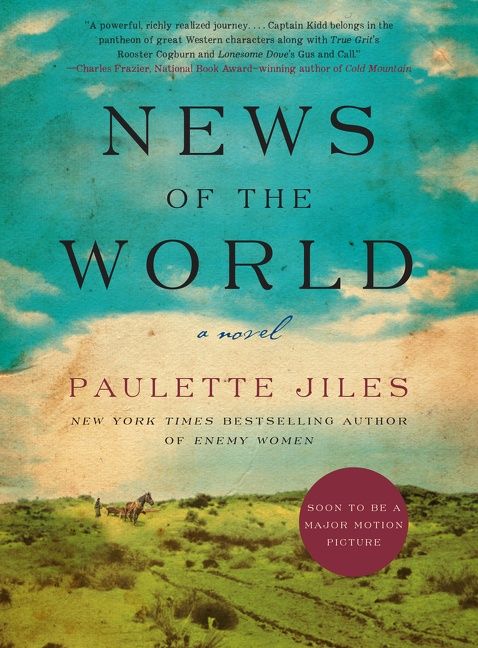
Image result for news of the world paulette jiles book cover


I read a short blurb about a novel in Book Page several weeks ago. News of the  World by Paulette Jiles sounded like something I'd enjoy reading. It was published in 2016 and had a few holds on it at our local library. I reserved it, then forgot about it.

Last week, the notice came from the library that the book was ready for me to pick up. By then, I'd forgotten what the story was about. When I claimed the book, it surprised me that it was of a smaller size than the usual and also just over 200 pages.

I started reading a few days later and found myself wanting to read longer than the time I'd allowed. The story grabbed me immediately and held me captive through the final page. The book is historical fiction with two well-drawn main characters and a cast of fine extras.

In 1870, Captain Jefferson Kyle Kidd travels through northern Texas reading parts of several newspapers to the town folk who pay coins to hear him. He is a widower, tired of war and waiting for two daughters to join him in Texas. He's offered a $50 gold piece to deliver a ten-year-old girl to her relatives near San Antonio.

The trip is over 400 miles, filled with dangerous areas to travel through, but worse is the thought of spending all that time with the child, who had lived with the Kiowa Indians four years, who had forgotten English, who wanted nothing but to return to her Kiowa family, they who had actually traded her for blankets and silver. The old man and girl travel by wagon with one horse pulling and another tied to the back. They have a handgun and a rifle, neither of which is in very good condition.

The story follows the Captain and Johanna as they travel south from the far northern part of Texas. It takes a long time to gain the child's trust. to teach her rudimentary English, to explain to others what he is doing. They stop in towns where the Captain rents space available and reads his news of the world to those who are interested. They meet enemies of one kind or another more than once but also kind people who help them.

The Captain regrets his decision to transport Johanna time and again but guilt and something he can't define push him on. Slowly, the old man and the little girl develop a relationship that grows deeper the farther south they travel. Even so, he cannot wait to deliver her and consider his job finished.

What the Captain discovers when he finally brings Johanna to her only surviving relatives angers him so much that he decides to take drastic action to right the situation.

Paulette Jiles has created characters that bring out many emotions in her readers. We learn to care about them. We cheer when they come out on top of a bad situation and we nearly cry when they have major difficulties. The book shows post-Civil War Texas. It gives us a glimpse into the little known occupation of being a newspaper reader. It lets us savor the developing relationship between an old man and a frightened, confused child. It's the old western story--good guys and bad guys--all over again.

Something bothered me as I read, but it was not the story. Instead, I noticed that there were no quote marks used in any of the dialogue. My writer's mind didn't like it and also wondered why it had been done that way. I did get accustomed to the style as I turned page after page, so it can't be called a huge problem.

I read this National Book Award finalist book over two evenings. I'm a fast reader, but it shouldn't take anyone very long to read this fine novel. I didn't want the story to end, and I must admit, I cried in the last couple of pages. Always the sign of a good book--at least for me.

Friday, February 3, 2017

What Will I Get From An Online Critique Group?

    
Image result for free image of woman at computer


The following is an article published 9 years ago about online critique groups. I am posting it today with comments in parentheses and blue to add to what was written long ago.

The masterpiece is finished. You've written it, revised it, and revised it once more. The piece is ready to market. You're elated until doubt floats by, but you ignore it while you scour the market guide. It isn't long before doubt creeps into the back of your mind and settles in. Maybe my work isn't as good as I think it is. Maybe no one else will note the beauty, the joy, the passion of these words like I do.
It's time for an opinion from your peers. It's time to join a critique group, time to expose your manuscript to other writers. No matter where a writer lives, all have the opportunity to join an online critique group. How do they operate? What will the writer receive, and what will the writer be required to give in return?

I joined an online writers critique group several years ago and have no regrets.(true!) I have turned some so-so stories and essays into marketable pieces. I’ve now been in two groups, and being a member has become a major part of my writing life. I consider its members a family. But like all families, they don't hesitate to tell me when I have done a good job, nor do they hold back with criticism. In fact, they can be quite harsh in judging a submission. These groups have no “atta girl” philosophy. Praise is given when earned, but honest and fair criticism is also rendered.

The group I’m in requires participation on a semi-weekly basis. For each submission the writer is required to complete two critiques for other members.(now 2 subs per month/4 critiques) One of these must be a line by line (LBL) critique. Not all online critique groups operate the same way and with the same honest opinions. Members have related tales of(other) critique groups that do nothing but praise, never giving constructive criticism. Their aim is to pump up the writer and stroke the ego. All well and good, but it won't sell a manuscript that needs work.

To submit your precious words for praise and/or criticism puts you at high risk. The first time your work is harshly judged, negative emotions come raining down. Frustration, fear, and fury dart back and forth attacking your head, your stomach, and your heart. Depression becomes the companion of the day, and your old friend, doubt, takes up residence once again.

All is not lost, however. Once you swim through all the above, you stand ready to accept suggestions to make the piece marketable. Those who critique offer a clear(er) vision of what the manuscript needs. It may be a marvelous story but filled with unnecessary words that serve to detract. You might be vying for the award for the longest sentences in a manuscript or have too many awkward and choppy sentences. The critique may question areas that are clear to the writer but not the reader. Critique group members become masterful in pointing out passive verbs, places that tell rather than show, and unnecessary adverbs -easier to find in the writing of others than in your own. When we read our own writing, it’s that old “can’t see the forest for the trees” but red flags pop up easily when reading the work of another author.

I developed the habit of reading the critiques of other members. To do so was akin to taking a course in writing and critiquing. I put my observations to use in my own writing and have become a better writer. Writing exercises, grammar guides, and market information the group offers also enhance my writing ability.

My group has a closed membership with a waiting list.(sometimes) Members come and go, but there seems to be a core group of serious writers who continue to commit the necessary time
required. And rest assured that belonging to a group like this does take time.  Those who do not participate fully are asked to leave. A group like this is not for the sometime writer.

There are many online critique groups. Activate a search engine or watch for announcements in writers' newsletters. (This does not mean all are great ones/assess carefully. Try one and leave if you are not getting benefits.)

The group I belong to is trying something new. A full three-fourths of our members are meeting in a regional park outside Washington DC for a four day retreat. We will meet face to face for the first time. Several members will present workshops covering various aspects of writing, and a computer expert will be on hand to answer questions. We’ll wade into the writing waters and create even stronger bonds within the group. Participants will gather from the USA, Canada, Ireland, Shanghai and the Turks and Caicos Islands. (At the end of March, we will meet again after having several face to face conferences. The benefits of such a conference are pure gold.)

Decide what you want from a critique group. A pat on the back is nice, but honest criticism will aid your growth as a writer and push Mr. Doubt right out of your mind. (Join with the attitude that the criticism you receive is meant to help you become a better writer. )

(Another big benefit is that you can participate in your group looking like the lady above. I must admit that she resembles me on many a morning!)
----------------------------------------------------------------------


Thursday, February 2, 2017

The Power Of A Writer

Image result for free image of power


Have you ever considered how powerful you, as a writer, can be? Your words influence your readers in more ways than you might imagine.

I had an enlightening moment during my first year of teaching fourth grade. The school set aside two days for teachers to have conferences with parents. Over and over during that first, for me, conference period, I heard my own words coming back to me. Words from me to the students to the family at home. Equally surprising was the particular words or phrases that had interested the students. I realized then that my words had power and I knew I'd better think before speaking if I wanted to be a good influence.

As writers, we need to be cognizant of what we write. Readers, from children to teens to adults, are willing to accept what we write as gospel truth. So first and foremost, be truthful. We've all read about writers who plagiarized or told untruths and got caught. It's not a pretty situation. Sure, there are writers who tap out falsehoods on their keyboard and never get caught. It doesn't mean it's alright. It must be awful to wonder and wait to see if anyone questions the validity of what you've written.

I once did it purely by accident with a short story I'd sold to a well-known national newspaper. The story was told by the male protagonist in first person. My name as author appeared next to the title. A few days after publication, an editor wrote to me saying that a reader had written wondering why the story was told by a young adult male when the author's name was decidedly female. I learned that the section I had submitted the story to published only true stories, not fiction. Ooops! That was the day I realized the great importance of reading guidelines carefully and I have done so ever since.

The words we write have the power to help in the healing process. When we experience tragedies in our lives, we can help others going through similar situations. No, we can't miraculously heal or cure but we can certainly provide some insight, perhaps some comfort. It's why I firmly believe in sharing the hard times in life though writing.

Writers have the power to use their writing to help readers make decisions. The writer will never know how or why, but it does happen. Think about your own reading. Haven't you read something that triggered thoughts about your own dilemmas? Maybe seeing what a character did to handle a similar situation helped trigger thoughts of a solution for yourself.

When unjust events happen throughout our world, writers can write pro or con articles, essays, and even poetry that concerns the same. Look at the recent upheaval in our political world recently. How many op-ed articles or Letters to the Editor have you read that takes one side or the other? Some of those writers can sway opinions, while others only rant and turn the other side off in a big way. It's important to voice an opinion but take care in how you do it.

Those who write for children have power over young and easily influenced minds. Let's hope they use that power to help build strong, moral people. Children's writers carry a big weight. They want to entertain children but hope to teach as a second benefit. Once again, give careful thought to what you write for young minds.

As a writer, you do have power. Keep that in mind when you address a new topic. Long ago, Martin Luther, church reformer and leader of the Protestant movement, said, "If you want to change the world, pick up your pen and write."

Wednesday, February 1, 2017

Lots of Things To Write About In February

Image result for Hello February Goodbye January


I get a little flicker of happiness when it's time to turn the calendar page wondering what the picture at the top will show me. One on my computer desk show a mountain in the Czech Republic at sunset and the one on our office wall startled me at first. There are two sandhill cranes with feet in the water and wings spread wide, ready to take off. Neither one of the calendars brought February images to mind.

Give some thought today to what you'll write about this month: 
  • Will it be love and romance with Valentine's Day only two weeks away!
  • Or will you write something about two presidents whose birthdays fall this month?
  • How about writing about the weather in February where you live? Is it almost spring or still deepest winter?
  • Maybe you can write about the joy of gathering all the information that you need to file your income tax return.
  • What kind of birds come to your area this month?
  • What kind of crafts do you like to do this time of the year?
  • What about the foods you like to eat in February?
  • Write about your February closet. What kind of clothes do you need this month?
  • How about your memories of your growing up years in February?
  • You can write about February birthdays in your family.
Write for submission for publication or to add to your Family Memories book. Write fiction or creative nonfiction. Write a factual article or a poem. Write for your eyes only. Choose any or all of these but do write. In my area, it's not the best month to be outdoors so you should be able to sit at your desk and write instead.

February is short, only 28 days, so you'd better get started. Even if you are only continuing to work on something you started in January, it's fine. You're writing and that's our goal every month of the year.  

Welcome February! Let's write!


A Memoir to Enjoy

  I recently read a book that I enjoyed so much that I wanted to share it with others.  Kenneth Goetz offers us his memoir titled A Streak o...