Monday, December 3, 2018

Memories of Special Gifts Make Good Stories

Image result for Hello December poster to use for free


Here we are in the last month of the year and one of the busiest. I went to a Christmas party Friday evening and a Christmas Tea at my church Saturday. Definitely getting me in the mood for the season. 

One of the things the hostess of the Tea did was ask each person to tell about a Christmas gift that was very special at some time in our life. What a delight it was to listen to the 25-30 women  detail the time and circumstance and the gift. 

Stories ranged from engagement rings to dolls to pets and a few other things. So many prefaced the story by mentioning that there were very few presents given in their family when they were children because money was short. One woman told us about the Christmas her parents had no money for gifts so her mother made each child something from whatever she had on hand. This woman had received twin rag dolls that turned out to be one of her very favorite gifts ever. 

As the memories came alive, I couldn't help but wonder if any of these women had written the story somewhere for her family. Had she ever even told her own children or grandchildren about that special gift? It's precious memories like this that should--no, must--be recorded. As we moved from woman to woman and listened to their memories, I thought that many of them could turn into a story for a Chicken Soup for the Soul book. But would they? Most doubtful. 

I wanted to tell each one that they had a great story and I'd write it for them. But, no, that would not be the thing to do. She should do it on her own.

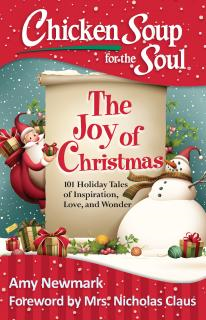
How about you? What Christmas, or Hanukkah, memories have you written about for your family or for publication? Why or why not? There are reasons for both sides. I did write a memory of a special gift I received when I was six years old. It was published in one of the Chicken Soup for the Soul Christmas books quite a few years ago. I'll post it below. Maybe it will trigger a holiday memory for you and give you something to write about for your own family or for another Christmas anthology.

********************************************************************************

My Special Christmas Doll

A special doll named Katherine lives in my four-year-old granddaughter’s room. The doll perches on the window seat, arms out and head cocked a bit. Muted red polish covers her fingernails, and a few of her fingers and toes are chipped. The doll’s dark blonde hair could use a bit of attention, for it looks limp and badly in need of a stylist.

 “This was my mommy’s doll,” Jordan tells me.

I pick up the doll, smooth the flower-print flannel gown she wears. “A long time ago, she belonged to me.” I give Katherine a little hug and place her on the window seat again.

Jordan grasps my hand. “I know that, Grandma. Will you tell me about her?”

I scoop Jordan into my arms. “Time for bed now, but maybe tomorrow we’ll talk about Katherine.” I tuck her into bed and kiss her twice. 

Later that evening, I sip a cup of tea and think about the doll Santa brought me more than sixty years ago. The decades slip away like quicksilver, and I am six years old again. My parents and little brother are asleep, still snuggled under warm comforters, but I’m tip-toeing down the hallway early on Christmas morning. It’s so quiet and very dark in the hallway, but I know my destination and continue on.

When I reach the living room, the early morning light filters through the windows. I kneel in front of the decorated Christmas tree, and a little shiver runs up my spine. It’s cold in our apartment, but the shiver comes from what I spy next to the gaily wrapped packages. Santa left me a beautiful doll looking very much like Shirley Temple. She’s dressed in a bridal gown made of a snowy, gossamer material. Tiny satin rosettes run from waist to hem, and lace adorns the neckline and sleeves. The matching veil, trimmed in lace, surrounds her head like a billowy cloud. A white nightgown and soft blue robe lie beside her. It’s the kind seen only in the movies. So pretty! Her dark blonde hair curls to perfection, and her eyes appear to glow. I inch as close as I dare, for I know I should not touch her yet, not until Mommy and Daddy wake up. For now, the anticipation of holding her seems to be enough. I name her Katherine while I wait for my family to wake up.

Years later, I learned that my mother had made the bridal gown and night clothes for the doll in the late hours on December nights. My grandmother was the one who took
hair she’d saved from my mother’s first haircut to a specialty shop where they created a wig for my doll. Hearts and hands joined in this special gift.

I played with Katherine for many years, then saved her in hopes I might pass my special doll to a daughter someday. My daughter, Karen, loved the doll too, even though she no longer had the original clothes. Once again, Katherine made a little girl happy. Karen secreted the doll away in hopes that she, too, could pass her on to her own child someday. Now, Karen’s daughter, Jordan, is the keeper of the doll. Though a bit tattered, Katherine’s smile is just as sweet, and her blue eyes still appear to shine. Even her wilted curls are precious to me and to Karen.

I think one day Jordan will feel the same, for she is our special family doll and always will be. I will tell my granddaughter about the Christmas I found Katherine under the tree, and later, when she’s older, I will relate the part of the story about Jordan’s great-grandmother who made special clothes for Katherine, and about her great-great-grandmother who saved her child’s hair to make into a wig for a doll.

This one cherished doll holds five generations of my family within her heart. Two created her, three have played with her, and all have loved her. I hope Jordan will have a daughter one day so that this chain of love might continue. 


Friday, November 30, 2018

A Two-Sided Coin


My morning hit a few snags,  so I am reposting an earlier, popular post today. It was published several years ago but is still relevant. 

Daily Devotions For Writers rests next to my printer, where I can reach it easily every morning before beginning to work. The life lessons the book contains offer advice, relate trials and also inject a bit of humor. Some of the writers talk of a revelation that came when least expected. Most of the devotions include a scripture verse and/or a prayer—sometimes a quote.

After reading the daily devotional book for a few months, I noticed that a pattern appeared to emerge in the guise of a two-sided coin. On one side of the coin, I sensed frustration from so many of the writers. It appears to be a universal theme for both seasoned and new writers. But flip the coin over, and satisfaction is evident.

Novice writers may experience the frustration in greater amounts than the satisfaction. It takes perseverance and patience to traverse the tunnel of disappointment. Doesn’t every writer dream of instant success? When rejection letters pile up faster than election campaign literature, what’s a writer to do? Confidence levels fall with alarming speed when new or even long-time writers don’t meet with some success. Doubt pays daily visits, and if a writer chooses to entertain him, he’ll stay.

Believe in yourself and your work. If you have something to say, a story to entertain or to make a difference in the lives of others, don’t let the early-days frustrations get you down. Make marketing lists, and work your way down that list until you either find an editor to accept a particular story, article, poem, or novel chapters, or have exhausted the list. If every editor you’ve selected rejects your submission, it’s time to take a look and determine why the piece didn’t sell. Make some revisions and try again. It’s rarely easy to look at your own work objectively, but it’s possible, and it will be to your advantage to do so.

Lack of time to write is one common frustration. Life tends to get in our way. Occasionally, the writer allows that to happen, for what better way to postpone a project that’s not coming easily? A serious writer creates time to write. Frustration also occurs when an idea forms in the mind but won’t translate into the printed word. From the brain to the fingers is not always a smooth road.

Once in awhile, a writer finishes an article or story, puts it aside for the required seasoning of a few days, then brings it out again only to find that it doesn’t say what she wanted to say at all. In fact, the writer is disgusted with the piece and is ready to hit the delete button. It’s the very reason writing books and editors advise setting a finished piece of writing aside for a few days. Then the writer reads it with a new perspective; sees with different eyes and gains satisfaction from the process of improvement. Isn’t it better that she hasn’t been one of those writers who dash off a piece and call it finished, then send it to an editor immediately? More than likely, it will come flying back with a form rejection letter. Avoid this kind of frustration by allowing yourself some time between a partially finished and a truly completed piece.

While frustration often looms over a writer’s head, it’s not all bad. Beneficial lessons present themselves through the haze of the stress involved. It’s up to the writer to discern the positive angles. Face your frustrations with open eyes and a willingness to turn them to your advantage.

One of the best parts of being a writer comes with the publication of your work. It’s comparable to a gift placed in a golden box and tied with a silver bow, your name on top. Here’s where the satisfaction side of the coin shows up. No matter how many times your work is published, it’s a pleasure. It definitely erases some of that frustration, which never disappears completely but can diminish and become of less importance with each success.

Sometimes satisfaction comes from the fulfillment in achieving a completed story, novel, article or essay. Many writers begin a project and never finish. I’m willing to guess that most writers have folders with half-done projects. But it’s those completed pieces that allow satisfaction to enfold us like a soft, silken shawl. Revel in it when it occurs.

What joy there is when inspiration hits while we’re doing a mundane household task, or driving a car pool. Maybe a character begins to form in your mind when waiting for a bus, or a word you’ve sought reveals itself during a conversation with a friend.

Another form of satisfaction comes when an editor assigns a project and we manage to  return it completed with all points covered. Writing on speculation is much easier than writing to a specified set of objectives. For assigned articles, a writer must do the research, write a first draft, revise and edit her work, then check to see if she’s covered everything asked for. Including all points asked for requires good concentration and writing skill, so any satisfaction at the end is well-earned.

Escaping into another world while writing is one more form of satisfaction. While writing, we create a place of refuge, creativity, and personal meditation that can prove emotionally fulfilling.

I will continue reading the daily offerings in the devotional book for writers, and I am certain I’ll continue to learn from other writers’ frustrations, as well as enjoy the happiness that comes through when they are satisfied. I’m going to plan to keep the satisfaction side of the coin face up. It’s a lot more fun than the other side and is bound to make me a more productive, more creative writer.


© 2008

Thursday, November 29, 2018

Five Tips To Get Published in Chicken Soup for the Soul Anthologies


I have been fortunate to be published twenty-one times in Chicken Soup for the Soul books, with number twenty-two coming up in January. Is there a magic formula for getting your story selected? No, but there are some things to pay close attention to that will make the odds of being selected tip in your favor. 

1. Read their books. The more you read, the better understanding you will have of what the editors are seeking. You’ll get a feel for what the editors want as you read numerous Chicken Soup stories and you’ll be entertained, as well.

2. Send only true stories that are humorous, inspirational or illustrate a life lesson. There should be something for the reader to take away. Make sure they are actual stories with a beginning, middle and end. An essay or a sermon will not make the cut.

3. Study the Guidelines. Note the word ‘study’ because scanning quickly through the lengthy page of Guidelines is not going to help you at all. Go to www.chickensoup.com and scroll down to the bottom of the page. On the far right column of the section titled More Chicken Soup for the Soul, click on ‘Submit Your Story.’ You will find three titles at the top of the page—Possible Book Topics, Story Guidelines and Submit Your Story. Check out the Possible Book Topics, then study the Guidelines and finally, submit your story via the online submission form. When the Guidelines say 1200 words, they mean 1200 or less, not any more. The editors are quite serious about every one of the Guidelines so you should be, too.

4. Start your story with action, not a long explanation of what you are going to write about. Jump right into the story and hook your reader. Make them want to continue reading.

5. Use dialogue, sensory details and emotion. If you have none, your story becomes a dull report. Keep in mind that too much of any of these overpowers the message of your story. Humor is great but don’t let it take over your story. Finding the happy medium is key.

If you do all of the above, the odds of being accepted will be in your favor. Even though I’ve been published in this well-known anthology many times, I’ve also submitted numerous stories that were not accepted. Keep the submission Ferris wheel going and see what happens. 

Note: If you have not heard from the editors two months after the story deadline date, you can consider it a rejection. They do not send rejection letters which is my one and only complaint of this fine series.


Wednesday, November 28, 2018

Writers--Consider A Sense of Place


When we write fiction or memoir, a sense of place holds a significant spot. Many How-To books on writing offer special exercises on this important part of a story or a memoir, or even an essay. I have posted two photos today that are totally different places. Anyone writing about either one would have plenty to work with.

At one of my online conferences, one of the workshop presenters spoke for nearly an hour on a sense of place and then she had us do a ten-minute exercise highlighting same. She was the editor of a travel website and who would put a priority on a sense of place more than someone in her position? Her presentation and exercise left an impression on me. 

I recently subbed a memory piece to my online writing group. When the critiques came back, I noticed one glaring thing. A sense of place was there but not strong enough. Part of that error was that I knew the place so well that I transported myself there as I wrote but I didn't bring my reader into the place with me. They are not mind-readers so it's up to me, the writer, to give them a clear picture of where the story happened.

Some points about a sense of place:
  • It draws the reader into the story, takes them to another world than the one they are in.
  • It helps let readers know how characters feel about where they are. It's not only a description of where the story happens.
  • The writer should use specifics to give a sense of place. Don't just say there were animals. Name them. Let the reader see the elephants, the zebras and giraffes in the game reserve. 
  • Dialogue specific to the place helps give that sense of place. Consider the Scottish brogue or the idioms used by the mountain folk in Virginia. 
My husband and I visited Peggy's Cove in Nova Scotia several years ago. The place is so picturesque and has a sad history, as well. I was so taken with it that I wrote a personal essay about our visit. The good part about writing the essay is that it gave me something to also use in a fiction piece. If I had a character who visited Peggy's Cove, I know that I could give my readers a real sense of place. You can read the essay here.

When you write a short story or a novel, what happens and to who is important but where it takes place ranks high on the must-include list. Give some thought to a sense of place when you write. 


Tuesday, November 27, 2018

Writers--You Are The Master of Your Time


I was trying to decide what to write in today's post when an ambulance arrived next door to us. They came to transport the man who lives there to a hospital. He has a condition that only gets worse and harder for his wife to care for him. Soon, he will need to go to Healthcare. My heart ached for both of them and it made me consider how quickly our lives can change and how all the things we had planned to do are suddenly no longer a possibility.

That is also the case in our writing life. We plan to do this project or that one but time slips through our fingers on a daily basis. We want to write our family stories so they will be preserved for our children and future generations but the desire never seems to come to fruition. There just never seems to be enough time.

We see a Call for Submissions and think of a story in our files that we could revise and polish and send in. Then Life steps in and the momentary thought slip-slides away like melting snow.

How many times have you read about a Writing Contest that sounded like something you could submit to? How many times did you only think about it? There just isn't enough time! you said.

If you're a professional writer, you must make a certain amount of time for your writing but those of us who write part-time aren't restricted. We use what extra time we have for our writing. Sometimes, even that bit evaporates before we can reach out and grab it.

Watching our friend deteriorate with the disease he has makes me aware that life can change so quickly and all those things we'd planned to do will never be achieved. It's not only age that threatens but illness and accidents, job loss, financial disasters and problems within our extended families.

This post appears to be a real downer, all negatives. If you read my blog regularly, you'll know that I am a person who tries to accentuate the positive whenever the opportunity arises. The positive I leave with you today is that you are the master of your own time. Consider the moments of your day that you do inane things that qualify as wasted time. You're not alone. We all do it. You can create time to write by rearranging your day. Get up earlier, go to bed an hour later, give up something social. There are ways to gift yourself with blocks of time to write.

Stop putting all those writing things you planned to do aside. Life is shorter than we think. Grab hold of it now and make the most of it. Write that poem that's been swirling in your mind. Get to work on those family stories. Continue to work on your memoir or short story or the book you're writing--or hope to write someday. Don't wait until you say I wish I had... 

Monday, November 26, 2018

A Blizzard and a Writing Exercise

Image may contain: tree, outdoor and natureImage may contain: snow, outdoor and nature
Snow drifts after our blizzard

Yesterday we had a blizzard in Kansas that roared in from Colorado and traveled on to other Midwestern states. The wind howled all day, creating fascinating drifts like these above. Gusts went as high as 65 mph producing snow art all over. The photos above are ones we took after the snow stopped. The at the top is between our house and a neighbor while the one below is just outside our front door. My poor little girl statue is standing in snow to her waist! 

This morning, there was a big drift against our front door, so Ken had to go out through the garage and shovel it away so our door could open. Now, the sun is shining and hopefully helping to melt some of the icy patches on driveways and roads despite the cold temp.

Description in writing is something we all should practice. I have listed words that can be used when describing a snowstorm or the aftermath. Write a description of a snowstorm or what was left when it ceased using as many of the words in the list below as you can. Maybe you can add some others to my list. Dig into your memory bank for storms of the past, ones that left an impression on you. 

Word List
  • crystal
  • sleet
  • snowflakes
  • fluffy
  • frozen
  • blanket
  • storm
  •  blizzard, 
  • pelt
  • fleecy
  • snowed-in
  • drifts, drifting, drifted
  • white
  • gleaming
  • sparkling
  • diamonds
  • snowfall
  • snow flurry
  • snow crystal
  • powder snow
  • fall of snow
  • icy
  • cold
  • wintry
  • dazzling
  • powdery
  • squall
  • blast
  • gust
  • bitter
  • blustery
  • menacing
  • gale
  • blast
  • blow
  • chilling


Wednesday, November 21, 2018

You Should Write A Book!


DUE TO THANKSGIVING TRAVEL AND CELEBRATION NEXT POST WILL BE MONDAY.


We were having dinner this evening with a group of people who have known one another for a long time. One of the women was the secretary to the Kansas State football coach from many years ago to just recently when she retired. She has served a number of football coaches and been a 'grandmother' to a great many young football players. A large number keep in touch with her after they graduate. We were reminiscing about some of the coaches she'd worked for when one man said, "You know what? You should write a book. I guarantee it would be a best seller." She just grinned. I piped up and said that I could help her, and she grinned a bit more but said nothing. Her eyes, however, were sparkling. I know she liked the idea but perhaps it all seemed overwhelming for a woman in her mid-80's. 

There are a lot of people who should write a book. Maybe some of the memoirists we have read started out that way. Perhaps someone told them "You should write a book." Some of them have done it, have published their book, and became public speakers when they needed to promote their memoir. 

What about novelists? Maybe one of them was always making up stories as a child and kept on doing it as a teen until someone said: "You should write a book."  And so they did. 

Just this past few weeks one of my close friends and her family had an experience that made me think they should write a book. It involves a needed kidney transplant, a surprise donor and a successful surgery. 

We see books published by celebrities all the time. Did someone say to them "You should write a book?" My next thought is wondering whether they actually wrote it or had a ghostwriter pen the book that is probably a success because of the name recognition. Look at all the people in the political world who have written books in maybe the past 10 or 12 years. Did they decide on their own or maybe someone across a lunch table in a restaurant said: "You should write a book."  The same with the sports world celebrities whose stories are of interest to others. Again, whether they write the book themselves or have a ghostwriter is immaterial. The sports personality had to provide the material that would make up the book.

Sure, lots of novelists, memoirists and nonfiction writers write books without anyone urging them. It's all their own idea from start to finish. Even so,  I have a feeling that there are more than a few books written because of someone saying: "You should write a book."

How about you? Have you ever said that to anyone? Has the question been directed to you from another person? If so, how did you react? If someone said it to me, I'd feel flattered but I'd have to take some time to ponder the possibility. 

Consider me saying to you "You should write a book." How would you react? Would you give it serious consideration because someone else thought enough of you to pose the statement? 


A Memoir to Enjoy

  I recently read a book that I enjoyed so much that I wanted to share it with others.  Kenneth Goetz offers us his memoir titled A Streak o...