Friday, February 9, 2018

The Lines A Writer Should Check Carefully

Image result for free image of linesImage result for free image of lines
Image result for free image of lines         


Are you wondering what in the world these images are all about? They're nothing but different kinds of lines. It was the best way I could think of to introduce today's topic which is Writer Guidelines.

I am reminded again and again how important they are and how easy it is to skip right over a very important part. That's especially true if the guidelines page is lengthy. We tend to read, or scan it, instead of reading slowly and carefully. I have some thoughts on both very short guidelines and very long ones.

Short Guidelines:  Writers who read these can absorb the information pretty well. The problem is that they seldom cover some of the questions the writer has about the publication. Things like: reprints, word count, theme, email in body of message or with an attachment, use of photos, use of side bars, and more.

Lengthy Guidelines:  The good thing is that there should be no question unanswered. The editors have spelled out exactly what they want and what they don't. But, writers get tired of reading paragraph upon paragraph and end up scanning much of what has been written. There can be so many guidelines that the writer misses some that are important. Writers sometimes decide the editors must be so picky that it isn't worth submitting to this publication.

If you have questions after reading those shorter guidelines, go ahead and email the editor and ask. I can't begin to count the number of times I've written to ask if they take reprints. To me, this should be spelled out in every guideline. It saves both writer and editor wasted time. In nearly every case, I have received a reply.

If the guidelines are book size (slight exaggeration!), read them, then go back and read paragraph by paragraph, jot down the main points that you must adhere to. This will help you decide if your submission is right for the publication or not.

There are writers who  ignore guidelines completely. If you are one, you do yourself nor the publication a favor. Again, this is time wasted for writer and editor.

I learned long ago to use a search engine like google or bing to find writer guidelines for a certain type of piece I'd written. And yes, it does take time to select several and read them. The benefit is that you are more likely to sub to a publication that is open to what you've written.

Will reading guidelines ensure your submission will be accepted? No, it will not. It will make the odds greater in your favor, however.

I've been using the word 'read' but when you have lengthy guidelines, you'll do better if you 'read' and then 'study' them.

One publication I've sold several stories to has the longest guidelines I've ever seen. They even include sample stories to illustrate what they want. I've also noted a few that limit the guidelines to Send us your best work. Isn't that a given?

Give some thought to perusing the guidelines carefully the next time you are ready to submit.


Thursday, February 8, 2018

Being Grateful For Many Parts of My Writing Journey


It's not Thanksgiving, but today I do have a grateful heart. No, I didn't get good news from an editor nor did I finish writing a book. Even so, I am deeply grateful for all that my writing journey has brought.

I've been on this journey for about 25 years now. Consider this my 25th Writing Anniversary. No flowers or champagne. My celebration will all be inward as I think about what has happened in that quarter of a century.

  • I have grown immensely as a writer
  • I have learned terms I never knew before
  • I learned how to market my writing through trial and error
  • I obtained my writer's voice
  • I have been published many times
  • I have enjoyed writing workshops and conferences'
  • I have led writing workshops
  • I have done writing related public speaking
  • I have appeared on a TV show regarding my Chicken Soup stories 
  • I have won a few awards for my writing
  • I have joined critique groups of various kinds
  • I have been in one online critique group for over 15 years
  • I have made countless friends because I started writing
  • I have been helped by many of those friends
  • I have helped many of them, too.
  • I have written a blog 5 days a week for over 9 years
  • I have learned to use my writer's eye when I read for pleasure
  • I now see story ideas everywhere I go
  • I started writing children's fiction but have branched into several other categories
  • I have been rewarded in many other ways
  • I am proud to be a writer
As for this blog, I appreciate every reader, everyone who leaves a comment and all who have signed up as a Follower. It gives me a thrill when I open the blog and note that one more person has signed on as a Follower. 

Take some time today to consider your own list of what has happened to you on your writing journey and what you are grateful for in your writing life. Keep the list to read again whenever you get discouraged about your writing journey. It happens to all of us now and then. The list can be a good boost. 

Wednesday, February 7, 2018

New Call For Submissions From Chicken Soup Publishers


 Chicken Soup for the Soul publishers have added some new titles. Right now, there are calls for submissions to 10 books. It amazes me that they keep coming up with new titles. Granted, some are new stories on themes used before. 

The book cover above is on the Mom theme and there have been several of those. You'll find another in the list they have posted. Other repeats are angel and miracle stories, always popular with readers. 
And of course, more books that need cat and dog stories. And of course, another Christmas themed book. 

A couple that are completely new had the wheels in my head turning in top speed. Maybe these two will trigger a memory for you that would make a good story to submit. 

A completely new title will be on the theme of Grandparents. The call says that when a grandchild is born, grandparents are born, too. They are looking for true stories from grandparents and also from grandchildren about their grandparents. They can be humorous or heart touching but must be true. I've repeated the 'true' requirement because it is so important. No fiction in a Chicken Soup story. Step-grandparents and honorary grandparent stories are also acceptable. 

Another book will be titled The Golden Years--Life After 60. For this one, they are looking for stories about new careers, volunteer opportunity stories, travels, new sports cars, and all the things you do now that you never had time for. 

The Best Advice I Ever Heard is a book that has a deadline date of February 28, 2018. That gives you three weeks to come up with a story about advice given to you or some that you gave to others.

Take some time to study the list of books that need stories. Note the deadlines. You'll find all this information on this page.

One important piece of information. I have noted numerous times that the editors from this anthology series say that the sooner you submit a story for a book, the better chance it has. If you wait until close to the deadline, they may have already found the 101 stories they need to fill the book. An old cliche, but maybe it's true that The early bird catches the worm. 

Last--for those who have never submitted to Chicken Soup, you will not receive a rejection. Why? The editors say they don't like to deal with negatives. If you have not heard from them by two months prior to the release date of the book, then your story did not make it. Considering they get up to 6,000 submissions and choose only 101, your chances of not making it are greater than being accepted. But, if I can do it, so can you. So give it a try. If your story is short-listed, you'll receive a notice but that doesn't mean you're in for sure. After that, they cut a few of the stories and publish the remaining ones. 


Tuesday, February 6, 2018

More On Memoir Writing


Image result for free image or quote on writing memoir


I had the pleasure and privilege of being a Guest Blogger on Kathy Pooler's memoir blog/website. The post went up yesterday and will be there all week. Kathy told me to pick the topic so I went with why we write and why we read memoir. You can read it here. Kathy did a  splendid job with the layout and my photo and a nice intro about me. She's a new friend and a lovely person. I recently read her memoir Ever Faithful To His Lead and enjoyed reading about how she triumphed, with the help of God, over more than one bad marriage.

Some of the comments I received on my post at Kathy's blog and facebook pages where I posted a link were quite interesting to me. It seems that a majority of people consider memoir writing to involve writing an entire book. I write short memoir pieces, focusing on one part of life in the past. It' might only be 1200 words but it's still a memoir piece.

I always encourage writers to start small and work up to writing a full length book, whether it be a novel, a memoir, a book of poems or a nonfiction how-to book. If you begin with a major project like a book, you could easily become discouraged. It's a whole lot easier to pick a snippet of a lifetime and write about it.

Consider writing the bits and pieces that would make up a full book one at a time. When you have a reasonable number, arrange them in the best order and you're well on your way to a full book. I've thought about doing it many times but have not gotten there yet.

Granted, a full memoir book is based on a particular theme--abusive behavior of a loved one, loss, poverty, triumph over travesty. So, you would want all the snippets you've written to be geared to that theme. Or it could just be a full book about growing up in Tanzania or New York City or on a Montana ranch. Nothing is set in concrete. It's your writing journey (as talked about here yesterday)

Ever been around a table at a family gathering or when old friends get together and heard the phrase Remember when....? We all have. Those conversations are the stuff memoir stories are made of.  You cannot, however, just talk about them, laughter or tears included, someone has to write them. Why not you?

Some people are still confused by the difference between a memoir and a biography. A good article that explains the difference can be read here. Note that the explanation can apply to full books or those short pieces I've talked about.

Monday, February 5, 2018

Writers--It's YOUR Journey


Writers are often asked questions that they'd rather avoid. Things like Have you published a book yet? Why haven't you published a book? Why do you bother to write; you seldom sell anything? Maybe you're wasting your time writing. It's been years and you haven't accomplished much--no bestseller.

It's the non-writers who ask questions like this. Their attitude is often one that shows they have little understanding of what the writing journey is all about. Some non-writers think we sit down, whip out a story or essay and send it to an editor and they whoop and holler about its greatness and send a check. Wouldn't that be nice? 

Non-writers don't have any idea of how many times a piece is written and rewritten before it is ever submitted. Nor are they aware of the number of times a writer submits the same story until it finally gets published or ends up gathering dust in the writer's files. 

Non-writers have no realization of what it's like to be rejected multiple times. Even when we have the joy of being published, we still have to deal with the things that never made it. Yes, we learn to deal with rejection but it is still hurtful, defeating and darned frustrating. 

Non-writers have no idea how long we mull over an idea for a story before we ever write the first line. A writer's mind is always working on a new writing project. I once wrote (mentally) an entire story while attending a symphony performance. I could see it in my head from start to finish. I did write it and the story has been published more than once. No one in that audience would have had any clue that I was writing a story in my head while enjoying the magnificent music. 

Non-writers have no idea how many books on writing we read, the number of conferences we attend to learn more about our field or the amount of time we spend critiquing the work of other writers. 

Non-writers cannot understand the passion we writers have for our chosen path. It's too hard to explain to anyone. It must be felt and only the writer can do that.

Family members of writers can sometimes be the harshest critics. Not all, of course. Some families are extremely proud of the writer in their midst. Those who are the critical ones can put a writer down in subtle ways or worse. That hurts.

As our poster today tells us, not everyone will understand the journey we are on. And that's alright. It's not their journey. It's ours. If you and I feel good about what we're doing, that's all that is necessary. Be your own cheerleader if you want to. If you are happy with being a writer, keep putting one foot in front of the other on that path. You're not writing for your family or your friends or the guy next door. You're doing it for yourself and for what you can offer to the world through the words you put together. Be proud of what you do. 

Friday, February 2, 2018

Predictions For Writers

Image result for free image Groundhog Day
Groundhog Day 2018


The groundhog saw his shadow this morning so we're in for six more weeks of winter.  At least, that's what legend tells us. Old Phil is the Predictor in Residence in Pennsylvania. I kind of figured we'd have another six weeks of winter no matter what he told us today. It's a safe bet if you live in the northern half of the USA. 

Would you like to have a Predictor in Residence in your writing world? A being of some sort who would whisper in your ear and predict what editor is going to accept your submission for publication. If only! How about a fairy who can scatter a bit of pixie dust over us that will make us the best writer we've ever been before or hope to be? 


Even the fairy tells us we need a bit more than her sparkly pixie dust. She says includes Faith and Trust. I'd go along with that. You need faith in yourself as a writer and you should learn to trust your instincts as to what you write and where you submit your work. So, our sweet fairy is a predictor, too. 


Image result for free image crystal ball and gypsy

What if we could look in the crystal ball and know what our future as a writer will be. Would you really want to know? Would you work as hard if you already knew what the outcome would be? The crystal ball might tell you what the result of the next years will be but it isn't going to tell you how to get there. That's up to you, the writer. 

The real Predictor in Residence is you. Only you know how much effort you're willing to put into your writing journey. Do you want to move at a snail's pace or go by leaps and bounds like a jackrabbit? 

Have fun with all the imaginary predictions but be realistic about how you progress on your writing path. 


Thursday, February 1, 2018

A Book To Read and Remember


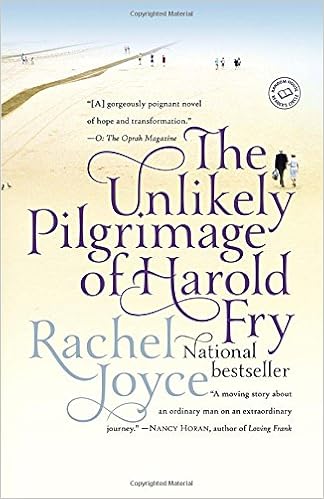
 I picked up a book in the New Books section at the library recently. It caught my attention for two reasons--the title and that the cover showed it to be a national bestseller. Two good reasons to read the summary and pop the large paperback into my book bag. I thoroughly enjoyed the story as I read.

It's been several days since I finished the book but bits and pieces of the story keep popping into my mind. I have to say that the story and so many looks at life and what it brings us left an indelible impression on me. 

Harold Fry and his wife, Maureen, are pensioners who live in a small village in the south of England. Their marriage leaves much to be desired. Maureen harps at Harold for the smallest of transgressions and he quietly listens and ignores most of what she says. Then, one day, a letter arrives for Harold from a woman he had worked with at the local brewery. He was a sales rep and Queenie had been in the accounting division. They were thrown together when Queenie was assigned the job of checking pub accounts in the places where Harold called upon the owners. Thus, they spent many hours on the road together. 

The simple letter informed Harold that Queenie was in a hospice in the far north of England, dying of cancer. He writes a short note to her and sets out to post it. Before he can slip it in the letterbox, a chance meeting gives Harold an idea. One that takes hold of him with a strength that he cannot fight. He decides that he will walk the 600+ miles to the hospice to see Queenie in person. She'll stay among the living as long as he is walking. He calls the hospice, informs a nurse and asks her tell Queenie he is coming. 

He sets out in the yachting shoes and light jacket that he is wearing, never returning home to tell Maureen. The rest of the story is about Harold's walk, the people he meets, the difficulties he faces over and over again, and the determination he has to finish what he set out to do. When the entire country gets wind of Harold's journey, chaos ensues but he manages to endure and move on again alone. 

As he walks, thoughts about his entire life keep popping into his head. The sad childhood he had, the joy of meeting Maureen, the event that changed their life together for the past twenty years, and much more. 

O magazine said this about the book--"A gorgeously poignant novel of hope and transformation."

The New York Times review said:  "The Unlikely Pilgrimage of Harold Fry is not just a book about lost love. It's about all the wonderful everyday things Harold discovers through the mere process of putting one foot in front of the other."

The reader gets to know both Harold and Maureen quite well as the book moves back and forth between the two--Harold's journey and her reaction. The book is beautifully written and filled with a look at life in general for all of us. Kindness is a theme we see often as so many strangers offer help to Harold as the journey progresses. 

Does Harold reach the hospice? Is Queenie still alive? Does he return to the same marriage he had? Was it a crazy idea to walk over 600 miles taking nothing but what you are wearing? So many questions that all get answered as you work your way through this wonderful story. An editorial review in the Minneapolis Star Tribune described the story as one of "...faith, fidelity and redemtion." I would heartily agree.

Book Review: Second Bloom

       I recently read Christina Hamlett's newest book titled Second Bloom. 'Intriguing title' I thought when I first picked it ...